

multicall

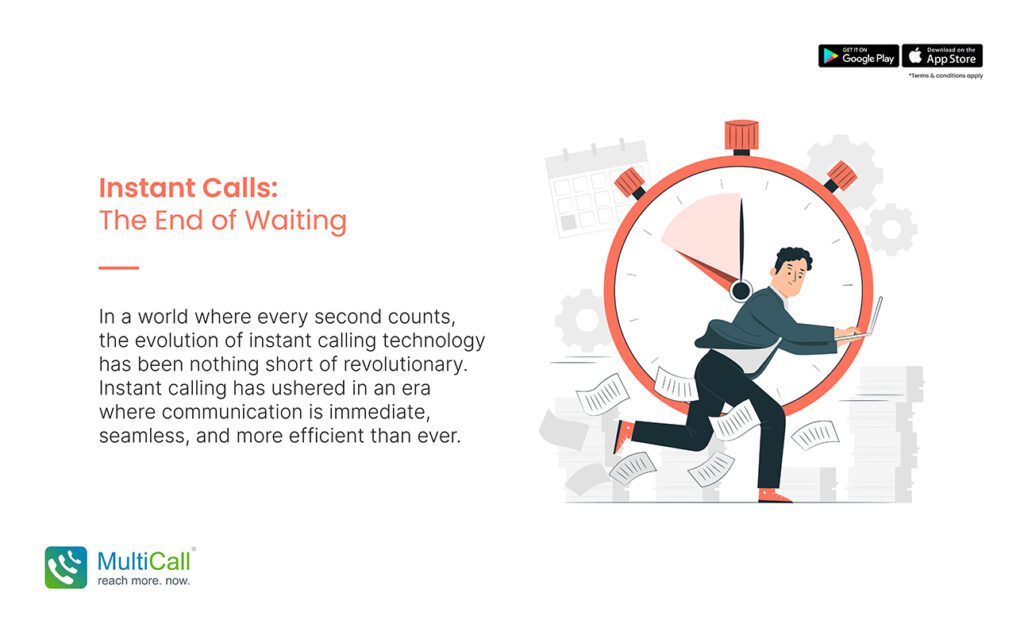
Instant Calls: The End of Waiting

In a world where every second counts, the evolution of instant calling technology has been nothing short of revolutionary. Gone are the days of enduring long waits and cumbersome processes to connect a call. Instant calling has ushered in an era where communication is immediate, seamless, and more efficient than ever. This change has significant implications not just for personal interactions, but also for business communications, customer service, and remote work.


The Shift to Instant Connectivity

Traditional calling systems often involved delays due to various factors like network congestion, manual dialing, or routing issues. Instant calling technology, leveraging advanced networks and smart algorithms, has effectively put an end to these waiting times. Today, a call is often just a click or a tap away, regardless of the geographical distances between the participants.

Benefits of Instant Calling

  1. Enhanced Productivity: In business environments, the ability to connect instantly with colleagues or clients translates to quicker decision-making and improved workflow efficiency.

  2. Better Customer Experience: Customer service has benefited immensely, with instant connections leading to faster resolution of queries and a more satisfying customer experience.

  3. Personal Communication Redefined: For personal calls, instant connectivity means being able to share moments and experiences in real-time, strengthening relationships despite physical distances.

  4. Facilitation of Remote Work: The rise of remote work has been significantly supported by instant calling, enabling teams to collaborate effectively from different locations.

Scenarios Where Instant Calls Shine

  1. Business Meetings: Organizing and conducting business meetings has become more streamlined, with participants able to join calls promptly without any waiting.

  2. Customer Support: Customer support centers now provide quicker responses, greatly improving customer satisfaction and loyalty.

  3. Emergency Services: In critical situations, the ability to make instant calls can be life-saving, providing immediate access to emergency services.

Maximizing the Potential of Instant Calls

– Integration with Workflows: Businesses should integrate instant calling features into their workflows for maximum efficiency.

– Training and Adaptation: Users and employees should be trained to adapt to and leverage the full potential of instant calling technology.

– Quality and Reliability: Continuously ensure the quality and reliability of the technology to maintain seamless communication.

Conclusion

Instant calling technology has effectively marked the end of the waiting era in communication. It has redefined expectations and set new standards for how we connect with others, both in our personal lives and professional environments. By embracing this technology, individuals and businesses can enjoy a level of connectivity and efficiency that was once unimaginable.

Contact Form


apple-store-app
google-play-app

YOU MAY ALSO LIKE

collaboration

Why Coordination Matters More Than Collaboration Tools

Many enterprises invest heavily in collaboration tools, expecting them to solve all communication challenges. While tools are helpful, coordination is what truly drives efficiency. Without clear coordination, even the most advanced platforms cannot ensure smooth workflows, timely decision-making, or productive teamwork.

Read More »
communication

 The Competitive Edge of Faster Internal Communication

In today’s fast-moving business environment, speed matters. Teams that communicate quickly can respond to challenges, seize opportunities, and make decisions before competitors. Faster internal communication gives enterprises a strategic advantage, improving collaboration and overall efficiency.

Read More »
communication

Communication Stability as a Business Continuity Tool

Business continuity depends on consistent and reliable communication. During disruptions, whether technical failures, natural events, or sudden operational challenges, teams must stay connected to maintain productivity. Audio conferencing offers a stable solution, allowing enterprises to continue operations seamlessly.

Read More »
voice backup

Why Enterprises Should Have a Backup Voice Strategy

Unexpected disruptions can hit any business. Internet outages, technical failures, or emergencies can stop normal communication, affecting productivity and decision-making. Having a backup voice strategy ensures enterprises remain connected, respond quickly, and maintain operations even during disruptions.

Read More »
real time communication

Why Real-Time Voice Communication Wins in Emergency Scenarios

Emergencies demand speed and precision. When unexpected events strike, whether in business, healthcare, or field operations, delays in communication can cost time, resources, and even lives. Real-time voice communication ensures teams connect instantly, make quick decisions, and respond effectively.

Read More »