multicall

call-scheduling-when-to-use-it/

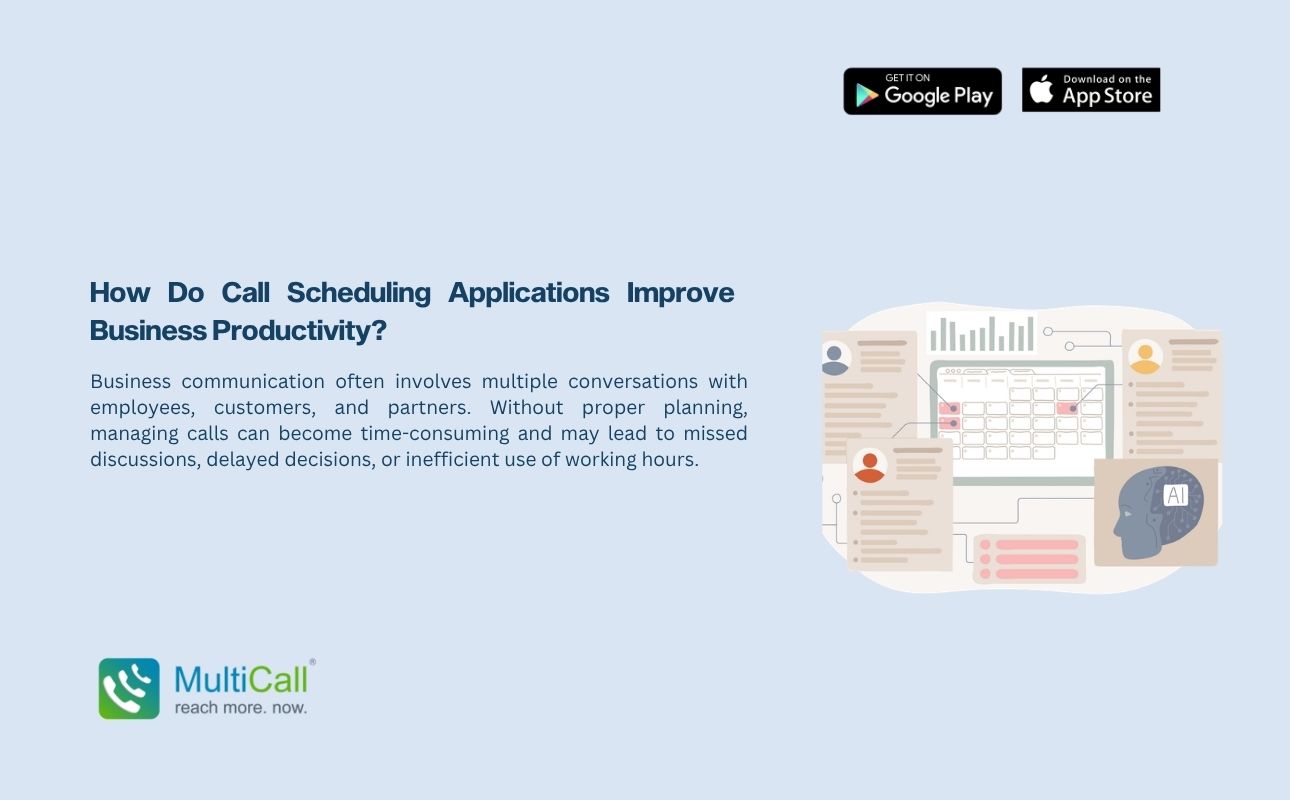
Scheduling is an art. It allows you to plan your activities in order to let you achieve your goals and priorities in the time you have available.

Done effectively, it assists you in keeping your goals SMART, and allows time for crucial tasks. But this isn’t just for your activities, its towards your calls too.

Call Scheduling effectively refers to the setting of a given timeframe toward the call you are planning. And given the importance of scheduling, it’s equally important to understand when to use call scheduling. So let’s get down first to the strategies of creating fair call schedules.

First, it’s important to talk to your teams, and understanding how each individual in it wants to work, and accordingly tailor the plan for your call schedules. Not doing so creates the risk of scheduling conflicts, which can be inefficient.

Next, it’s important to have a supportive tool that reflects the supportive team. In situations such as the current pandemic, individuals in certain cities can deal with aspects such as power outage, rendering certain tools unable to function effectively. This tool also needs to allow a support system that can let the individuals disconnect and reconnect again in the event of other emergencies or issues that may surface.

It’s also equally important to check in regularly with your team. In a fluid situation like the present, plans cannot always be set in concrete, be it for when the call is supposed to be, or for how long it is supposed to be. The tool to have should not only be effective for adjusting call schedules for your team, but for customers too.

The call scheduling also needs to consider a better work-life balance for the employees involved, and therein needs to be something that is portable, and which can be used on the move.

It is in considering the scenarios above, that MultiCall comes in as the tool that can step in for the same. You can call your entire team in one go without the hassle of entering PINs, or having to await a moderator. And here’s the best part; the participants of the call do not need to be connected with data or even have the app installed. This is critical in the context of scenarios such as the outages mentioned earlier. It maintains the benefit of portability, in that the app only requires your smartphone to be run.

First you get to schedule the name of the call itself; simply click on the name given (usually “Schedule Call” with the call number.

You can then select the date and the time at which you wish to execute the call.

You can also choose the profile you wish to use; this is essential especially when you consider allocation of call expenses.

You can also add phone numbers to utilize your Call-Me-On Feature.

In the ‘More Options’ tab, you have the ability to customize your upcoming MultiCall to a greater level. Should you wish to repeat your call, you can choose between the options of Every Day, Every Week and Every Month

Time is money; so is the duration of your MultiCall. You can customize this too, with a maximum duration of 120 minutes on a 5-minute basis. That’s a full two hours at your discretion!

Last but certainly not least, you have two switches. The first allows you to auto initiate your MultiCall. The second allows you to add the call plan to your calendar.

Remember, choosing the right people is critical in a group conference. As with Instant Calls, You can choose directly from Contacts, or add the same from existing groups, or via manual entry of their number.

Once you’ve set everything, click the ‘Schedule Call’ button, and you’re good to go! Happy MultiCalling!

Contact Form


apple-store-app
google-play-app

YOU MAY ALSO LIKE

audio

 Why Audio Communication Is Still the Backbone of Enterprises

Even in the era of video calls and chat platforms, audio communication remains the most reliable and effective way for enterprises to connect teams, partners, and clients. Clear voice interactions allow organizations to share information instantly, make decisions faster, and maintain alignment across departments. Audio remains the backbone because it combines clarity, accessibility, and speed in ways that other tools often cannot match.

Read More »
team

What High-Performance Teams Do Differently in Communication

Teams that consistently deliver results share more than skills and experience; they share effective communication habits. High-performance teams understand that clarity, structure, and timely collaboration are key to success. Audio conferencing plays a vital role in shaping these habits, allowing teams to stay connected, aligned, and responsive.

Read More »
voice

How Clear Voice Communication Reduces Business Risk

Effective communication is one of the most critical factors in preventing mistakes and mitigating risks within a business. Misunderstandings, delays, or misaligned instructions can cost companies time, money, and reputation. Clear voice communication helps organizations manage these challenges by ensuring that information is shared accurately and efficiently.

Read More »
enterprise

 Why Every Growing Enterprise Needs Structured Group Calling

As businesses expand, communication becomes increasingly complex. Teams grow, departments multiply, and projects span multiple locations. Without a structured approach to collaboration, miscommunication and delays can slow progress. Structured group calling provides a solution that keeps growing enterprises aligned, efficient, and productive.

Read More »
enterprise

How Smart Enterprises Simplify Communication Infrastructure

Communication is the backbone of any smart enterprise. Complex infrastructures, multiple tools, and dispersed teams can create challenges for smooth collaboration. Simplifying communication infrastructure allows businesses to reduce inefficiencies, streamline processes, and ensure that employees stay connected effortlessly.

Read More »
team collaborate

 Why Audio Calls Create Stronger Team Accountability

Accountability is essential for high-performing teams. When responsibilities are clear and communication is effective, teams can deliver better results, stay on track, and meet deadlines consistently. Audio calls provide a simple yet powerful way to strengthen accountability and ensure teams remain aligned on goals.

Read More »