multicall

call-scheduling-when-to-use-it/

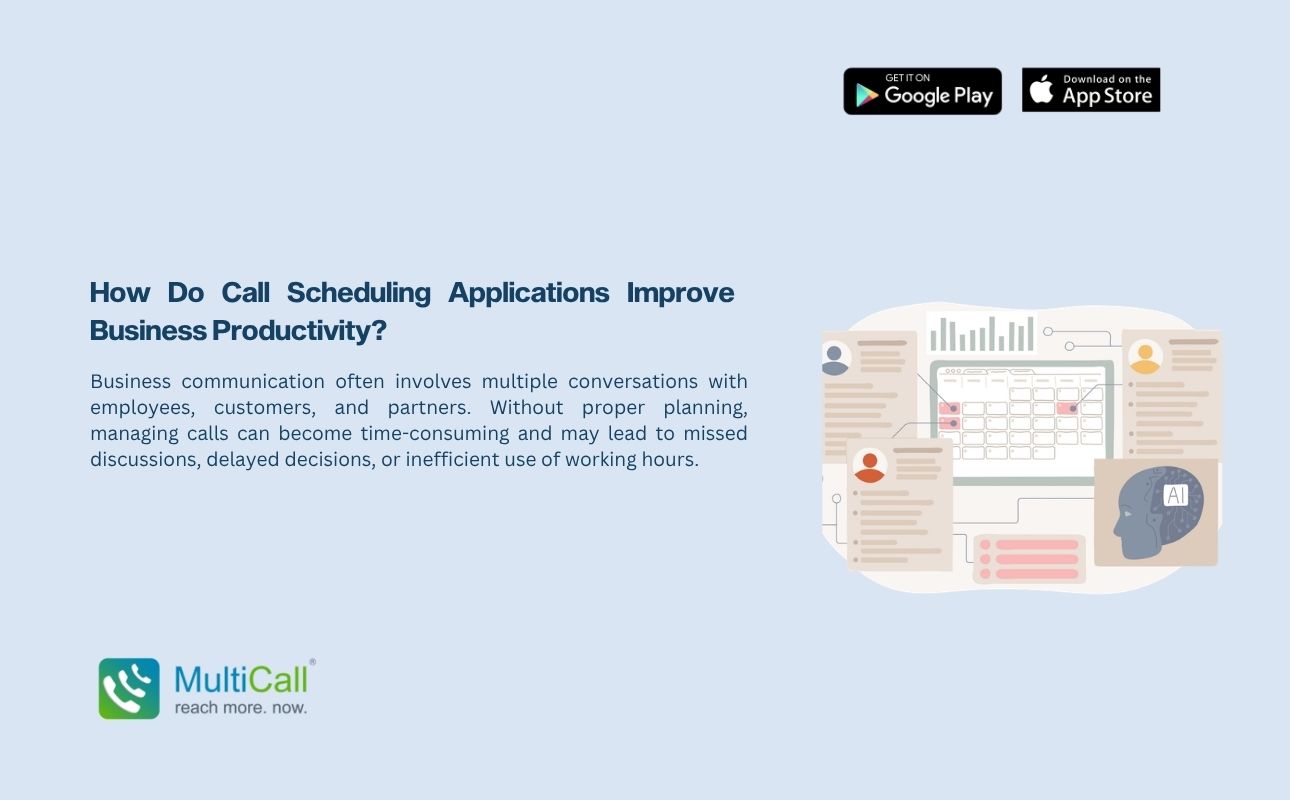
Scheduling is an art. It allows you to plan your activities in order to let you achieve your goals and priorities in the time you have available.

Done effectively, it assists you in keeping your goals SMART, and allows time for crucial tasks. But this isn’t just for your activities, its towards your calls too.

Call Scheduling effectively refers to the setting of a given timeframe toward the call you are planning. And given the importance of scheduling, it’s equally important to understand when to use call scheduling. So let’s get down first to the strategies of creating fair call schedules.

First, it’s important to talk to your teams, and understanding how each individual in it wants to work, and accordingly tailor the plan for your call schedules. Not doing so creates the risk of scheduling conflicts, which can be inefficient.

Next, it’s important to have a supportive tool that reflects the supportive team. In situations such as the current pandemic, individuals in certain cities can deal with aspects such as power outage, rendering certain tools unable to function effectively. This tool also needs to allow a support system that can let the individuals disconnect and reconnect again in the event of other emergencies or issues that may surface.

It’s also equally important to check in regularly with your team. In a fluid situation like the present, plans cannot always be set in concrete, be it for when the call is supposed to be, or for how long it is supposed to be. The tool to have should not only be effective for adjusting call schedules for your team, but for customers too.

The call scheduling also needs to consider a better work-life balance for the employees involved, and therein needs to be something that is portable, and which can be used on the move.

It is in considering the scenarios above, that MultiCall comes in as the tool that can step in for the same. You can call your entire team in one go without the hassle of entering PINs, or having to await a moderator. And here’s the best part; the participants of the call do not need to be connected with data or even have the app installed. This is critical in the context of scenarios such as the outages mentioned earlier. It maintains the benefit of portability, in that the app only requires your smartphone to be run.

First you get to schedule the name of the call itself; simply click on the name given (usually “Schedule Call” with the call number.

You can then select the date and the time at which you wish to execute the call.

You can also choose the profile you wish to use; this is essential especially when you consider allocation of call expenses.

You can also add phone numbers to utilize your Call-Me-On Feature.

In the ‘More Options’ tab, you have the ability to customize your upcoming MultiCall to a greater level. Should you wish to repeat your call, you can choose between the options of Every Day, Every Week and Every Month

Time is money; so is the duration of your MultiCall. You can customize this too, with a maximum duration of 120 minutes on a 5-minute basis. That’s a full two hours at your discretion!

Last but certainly not least, you have two switches. The first allows you to auto initiate your MultiCall. The second allows you to add the call plan to your calendar.

Remember, choosing the right people is critical in a group conference. As with Instant Calls, You can choose directly from Contacts, or add the same from existing groups, or via manual entry of their number.

Once you’ve set everything, click the ‘Schedule Call’ button, and you’re good to go! Happy MultiCalling!

Contact Form


apple-store-app
google-play-app

YOU MAY ALSO LIKE

Why Do Financial Institutions Still Prefer Conference Calls for Sensitive Discussions?

Financial institutions operate in an environment where every conversation matters. Whether discussing investment strategies, regulatory updates, customer information, or internal business decisions, communication must be secure, reliable, and uninterrupted. While video conferencing platforms have become common for daily collaboration, many banks, financial firms, insurance companies, and investment organizations continue to rely on conference calls for sensitive discussions.

Read More »

How Can HR Teams Conduct Company-Wide Announcements Without Technical Issues?

Emergencies leave little room for delays. Whether it’s a system outage, a natural disaster, a cybersecurity incident, or an operational crisis, businesses must communicate quickly and clearly with employees, leadership teams, and key stakeholders. In these situations, the communication method itself can influence how effectively an organization responds.

Read More »

Is There a Better Alternative to Sharing Meeting Links for Business Calls?

Business meetings have evolved significantly over the years. While online meeting platforms have made remote collaboration easier, they have also introduced new challenges. Participants often struggle with expired meeting links, forgotten passwords, software downloads, and internet connectivity issues. These small obstacles can quickly turn into major productivity losses, especially when meetings involve clients, executives, or time-sensitive discussions.

Read More »

How Do Enterprises Keep Large Teams Connected During Network Disruptions?

Business operations don’t stop when the internet slows down or becomes unavailable. Organizations still need to coordinate with employees, update customers, make operational decisions, and respond to unexpected situations. During network disruptions, communication becomes even more important because delays can lead to missed opportunities, reduced productivity, and operational challenges.

Read More »