
multicall

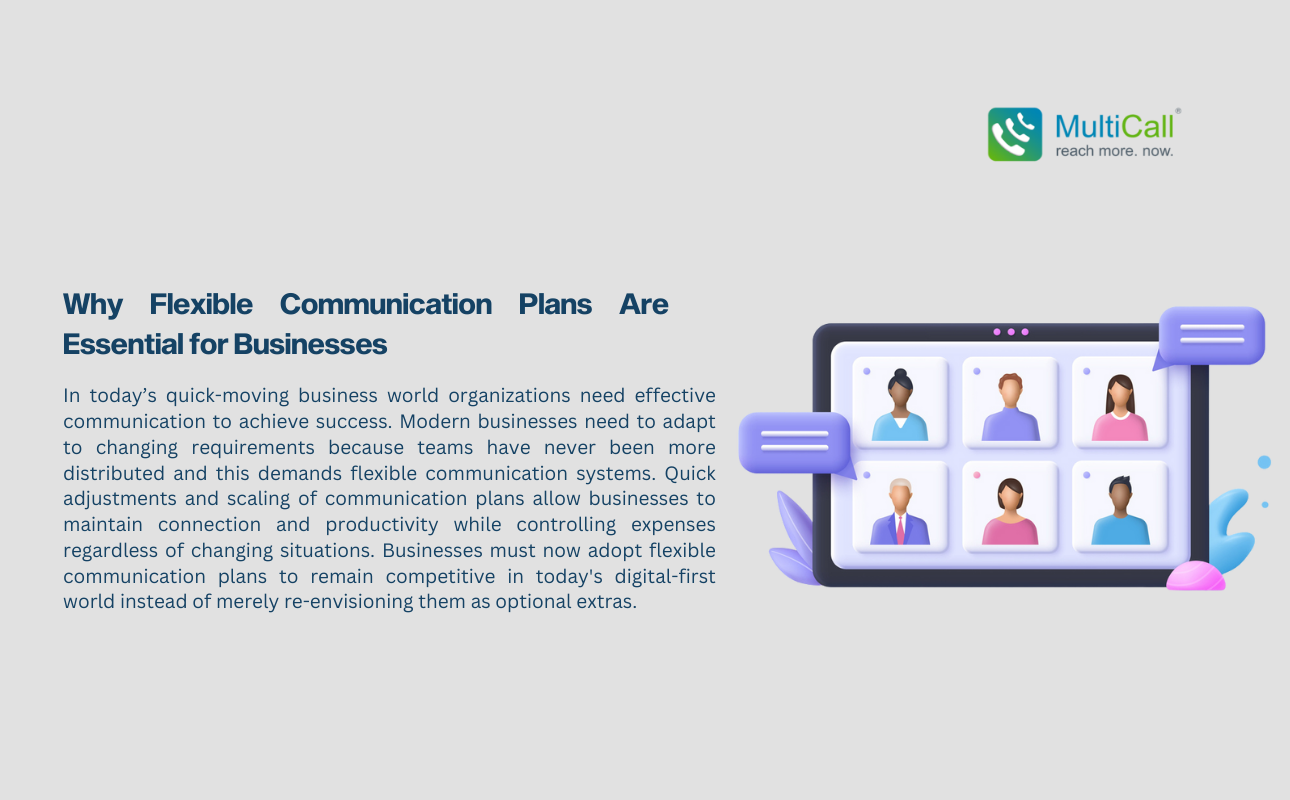
Why Flexible Communication Plans Are Essential for Businesses

In today’s quick-moving business world organizations need effective communication to achieve success. Modern businesses need to adapt to changing requirements because teams have never been more distributed and this demands flexible communication systems. Quick adjustments and scaling of communication plans allow businesses to maintain connection and productivity while controlling expenses regardless of changing situations. Businesses must now adopt flexible communication plans to remain competitive in today’s digital-first world instead of merely re-envisioning them as optional extras.

Adaptability for Varied Communication Needs

Flexible communication plans excel by allowing users to transition between multiple communication modes such as phone calls, group discussions and video conferences. Businesses can select the optimal communication method for each scenario through services that combine PSTN-based calling with video conferencing solutions. Teams can switch to video conferencing with Conclave for visual collaboration when a meeting needs more than audio without platform or system changes.

Customizable Solutions for Teams of All Sizes

All businesses regardless of their size require communication tools which scale to match their growth. Through flexible plans organizations have access to group call business communication and instant group calling apps which leads to better management of team communication. Customization options in your plans mean that whether your team size is small or global you will always have access to the necessary resources for effective connections.

Cost-Efficiency and Control

Businesses choose flexible communication plans mainly for their cost-saving benefits. Through prepaid plans or unlimited licenses companies maintain financial control without reducing their service quality. Through call scheduling applications teams can organize future meetings which helps avoid both time wastage and unexpected call expenses. Businesses can match their communication requirements to their financial resources with flexible plans which guarantee consistent service value.

Enhanced Security and Privacy

When selecting a communication plan businesses must prioritize security as a critical consideration. Flexible plans usually provide security options such as number masking during calls and secure group calling apps to safeguard sensitive data. Businesses that depend more on remote teams and external partners must prioritize secure communications.

Effortless Integration and Ease of Use

Businesses require tools that function seamlessly within their existing workflows to maintain productivity. Persistent login calling apps included in flexible communication plans help employees access communication platforms without needing to log in repeatedly. The result is an improved overall user experience because teams can concentrate on collaboration without technical challenges.

Conclusion

The evolution of communication solutions must parallel the growth trajectory of businesses. Modern teams require adaptable and scalable communication solutions that also offer cost savings which flexible communication plans provide. Businesses that use high-quality PSTN calling along with next-generation video conferencing and group calling solutions maintain seamless and efficient communication. Organizations aiming to maintain a competitive edge should invest in flexible communication plans because our world is becoming more interconnected.

Contact Form


apple-store-app
google-play-app

YOU MAY ALSO LIKE

video fatique

The Truth About Video Fatigue in Corporate Teams

In recent years, video meetings have become a standard part of corporate communication. While they offer visual interaction and engagement, they also bring a growing challenge known as video fatigue. Many employees experience exhaustion after long hours of video calls, which directly affects productivity and focus. Understanding this issue and finding better alternatives is essential for modern businesses.

Read More »
communication

 Why Businesses Should Rethink Their Communication Strategy

Communication is at the core of every business operation. From internal coordination to client interactions, the way a company communicates directly impacts its productivity and growth. However, many businesses continue to rely on outdated or fragmented communication methods that no longer meet modern demands. This is why rethinking communication strategy has become essential.

Read More »
communication breakdown

How Enterprises Can Avoid Communication Breakdowns

Communication is the foundation of every successful enterprise. When communication flows smoothly, teams stay aligned, decisions are made quickly, and operations run efficiently. However, when communication breaks down, it can lead to confusion, delays, and costly mistakes. For large enterprises, avoiding these breakdowns is essential to maintain productivity and performance.

Read More »
audio

Why Reliable Audio Infrastructure Is a Competitive Advantage

In today’s competitive business environment, communication is not just a support function, it is a strategic advantage. Companies that communicate faster, clearer, and more reliably often outperform others. While many organizations focus on tools and platforms, the real strength lies in having a reliable audio infrastructure that supports seamless communication at all times

Read More »
group calls

When Every Second Counts: The Power of Instant Group Calls

In today’s fast moving business environment, speed plays a critical role in success. Whether it is handling urgent issues, making quick decisions, or coordinating teams, every second matters. Delays in communication can lead to missed opportunities, operational disruptions, and reduced productivity. This is where instant group calls become a powerful solution for businesses.

Read More »
communication

What Real-Time Communication Looks Like in Large Enterprises

Large enterprises operate in complex environments where multiple teams, departments, and locations must work together seamlessly. In such settings, real time communication is not just an advantage, it is a necessity. It ensures that information flows quickly, decisions are made efficiently, and operations continue without disruption.

Read More »