Why Coordination Matters More Than Collaboration Tools
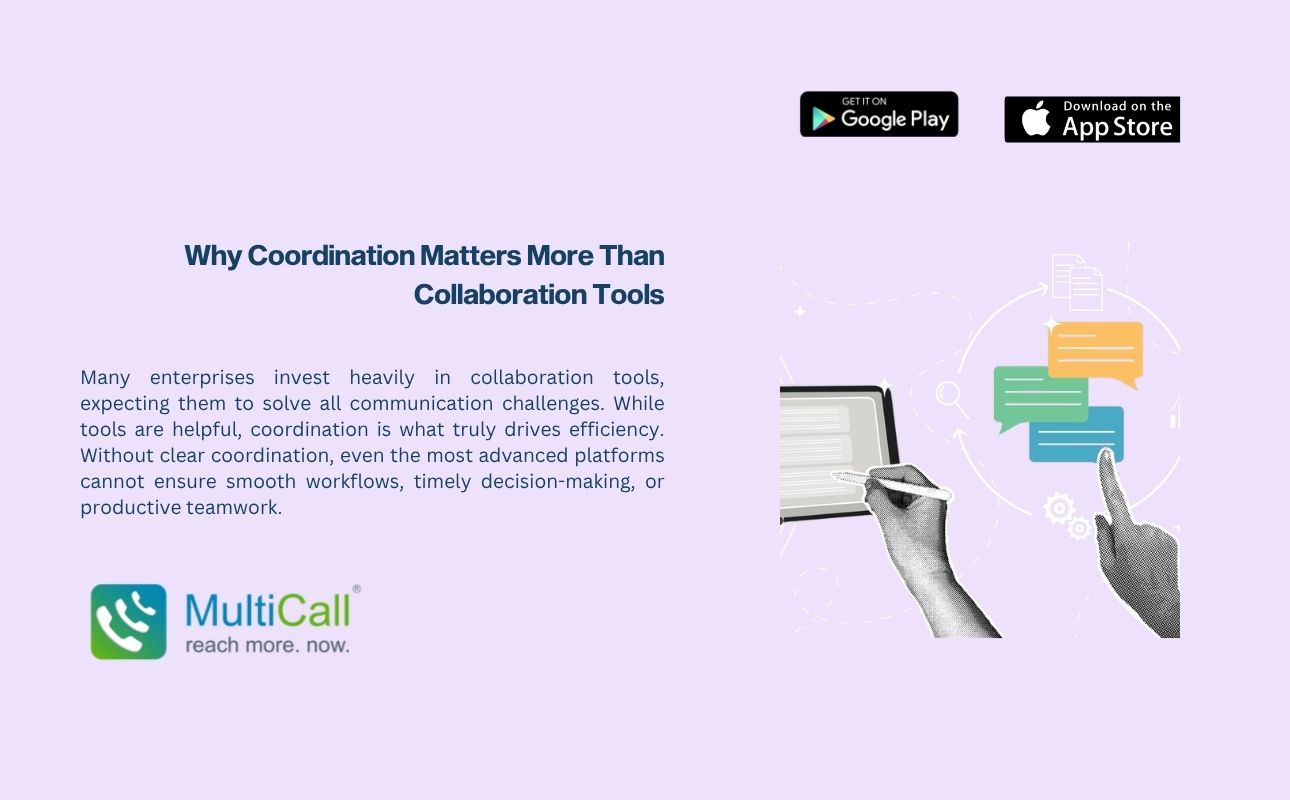
Many enterprises invest heavily in collaboration tools, expecting them to solve all communication challenges. While tools are helpful, coordination is what truly drives efficiency. Without clear coordination, even the most advanced platforms cannot ensure smooth workflows, timely decision-making, or productive teamwork.
Coordination Aligns Teams
Collaboration tools allow employees to share messages, files, and tasks. However, if teams are not aligned, these tools can create confusion rather than clarity. Coordination ensures that everyone understands priorities, responsibilities, and timelines. When teams are coordinated, tasks flow seamlessly from one person to another, reducing delays and miscommunication.
Streamlining Decision-Making
Effective coordination makes decision-making faster. Team members know who to approach for approvals, updates, or clarifications. Meetings become more productive because discussions are structured, and action items are clearly assigned. Without coordination, even simple decisions can take longer and require repeated follow-ups.
Integrating Tools with Processes
Collaboration platforms work best when integrated into established workflows. Coordination ensures that tools are used purposefully rather than chaotically. Teams can adopt standard practices for sharing information, holding meetings, and tracking progress. This integration maximizes the value of collaboration tools while minimizing confusion.
Enhancing Accountability
Coordination improves accountability by making roles and responsibilities explicit. Employees know what they are expected to deliver and when. Managers can track progress, identify bottlenecks, and provide timely support. A coordinated team reduces overlaps and ensures that every task contributes to overall goals.
Supporting Remote and Hybrid Teams
With remote and hybrid work becoming the norm, coordination is even more critical. Teams spread across locations need structured processes to ensure smooth collaboration. Clear schedules, defined responsibilities, and regular updates maintain productivity and prevent tasks from falling through the cracks.
Reducing Miscommunication and Errors
Even the best collaboration tools cannot prevent errors if coordination is lacking. Teams may duplicate work, miss deadlines, or overlook critical updates. Coordination establishes a clear flow of information, reducing mistakes and ensuring that everyone stays on the same page.
Focusing on Outcomes, Not Tools
The ultimate goal of enterprise communication is achieving results. Tools are only a means to an end. Prioritizing coordination ensures that workflows are effective, teams collaborate meaningfully, and business objectives are met efficiently. Coordination transforms scattered efforts into structured progress.
Conclusion
Collaboration tools are valuable, but coordination is what truly drives efficiency and productivity. Enterprises that emphasize coordination align teams, streamline decision-making, and reduce errors, ensuring that every tool and process contributes to business success. By focusing on structured communication and clear workflows, organizations can achieve better outcomes and maintain high performance across all teams.