What Makes Audio Conferencing More Reliable Than Video Meetings in Emergencies?
Emergencies leave little room for delays. Whether it’s a system outage, a natural disaster, a cybersecurity incident, or an operational crisis, businesses must communicate quickly and clearly with employees, leadership teams, and key stakeholders. In these situations, the communication method itself can influence how effectively an organization responds.
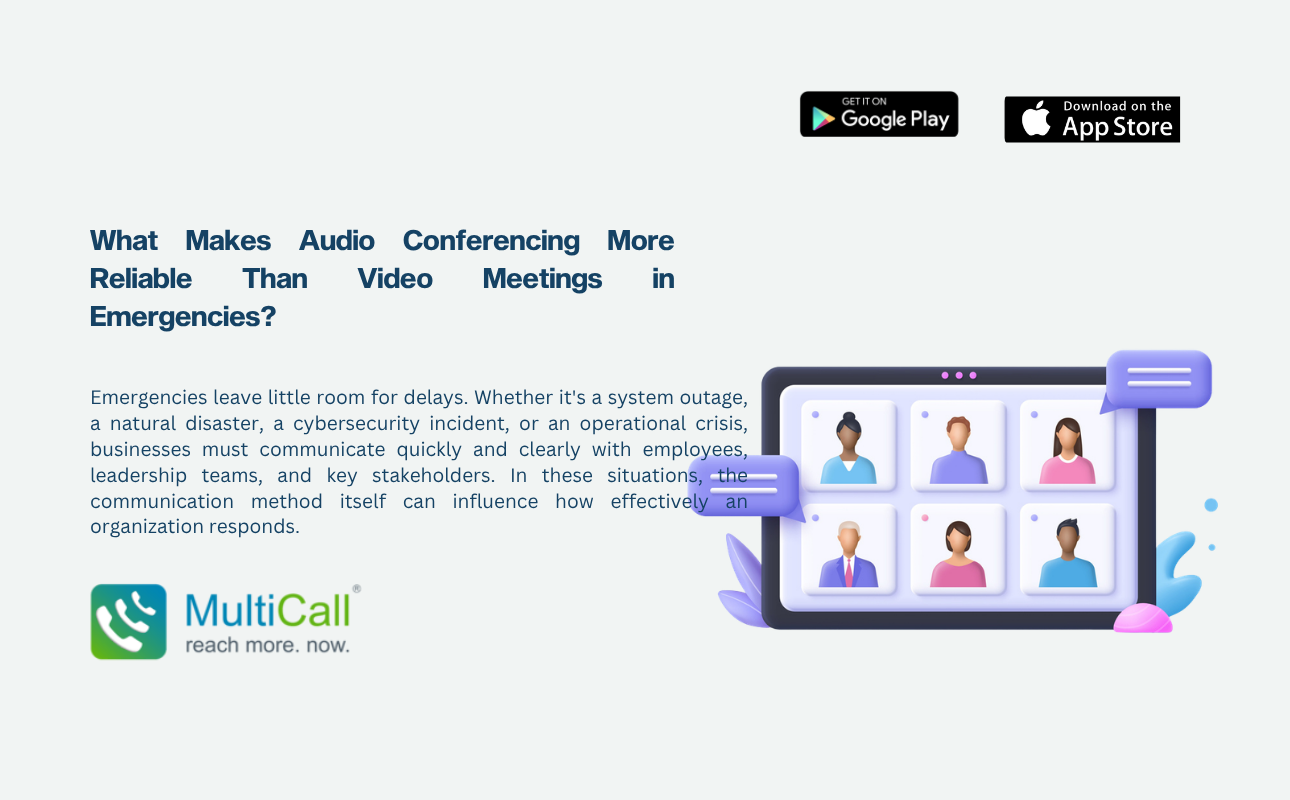
While video meetings have become a standard collaboration tool, they are not always the most dependable option during emergencies. Audio conferencing offers a faster, simpler, and more reliable way to connect people when immediate action is required. By removing technical barriers and reducing dependence on high-speed internet, businesses can ensure critical conversations happen without unnecessary interruptions.
Emergencies Demand Immediate Communication
During a crisis, every second counts. Waiting for participants to download software, update applications, or troubleshoot connectivity issues can slow down response efforts.
Audio conferencing allows participants to join meetings through a simple phone call. There’s no need to configure cameras, adjust video settings, or worry about internet speed. This straightforward process helps organizations communicate faster and focus on resolving the situation instead of solving technical problems.
The quicker teams connect, the quicker they can make informed decisions.
Stable Connectivity Improves Business Continuity
Internet congestion is common during emergencies, especially when many people attempt to communicate simultaneously. Video meetings consume significant bandwidth, making them more vulnerable to buffering, frozen screens, and unexpected disconnections.
By comparison, High Quality PSTN Calling relies on traditional telephone networks that are designed to provide stable voice communication. This makes audio conferencing a dependable choice for organizations that need uninterrupted discussions during challenging situations.
Reliable connectivity helps businesses maintain continuity even when internet services become unstable.
Faster Access for Every Participant
An emergency meeting often includes people working from different locations, including remote employees, field staff, executives, and external partners. Not everyone has immediate access to a computer or a stable internet connection.
With Easy Dialing Solutions, participants can answer a phone call and instantly join the conference from virtually any mobile phone or landline. There are no lengthy login procedures or software installations to delay participation.
This simplicity ensures important information reaches the right people as quickly as possible.
Keep Large Teams Informed Simultaneously
Emergencies require coordinated action across multiple departments. Human resources, operations, customer support, IT teams, and leadership often need to receive the same information at the same time.
Audio conferencing enables organizations to connect large groups efficiently without depending on individual internet quality. Team leaders can share updates, assign responsibilities, answer questions, and ensure everyone understands the next steps.
Clear communication reduces confusion and helps organizations respond more effectively.
Reduced Technical Challenges Improve Response Time
Video conferencing platforms often require users to manage cameras, microphones, screen sharing, and application permissions. During an emergency, these additional steps can create unnecessary delays.
Audio conferencing focuses entirely on the conversation. Participants can immediately discuss priorities, provide updates, and make decisions without being distracted by technical issues.
This streamlined experience allows businesses to respond faster when every minute matters.
Reliable Communication Across Different Environments
Employees don’t always work from traditional office settings. Some may be traveling, visiting client locations, working on construction sites, or operating from manufacturing facilities where internet connectivity is limited.
A dependable Group Calling Without Internet solution allows participants to stay connected through standard telephone networks rather than relying entirely on mobile data or Wi-Fi. This flexibility ensures communication remains available across a wide range of working environments.
Organizations benefit from greater accessibility regardless of where employees are located.
Secure Discussions During Critical Events
Many emergency situations involve confidential information. Businesses may need to discuss operational risks, financial impacts, customer data, or internal response strategies.
Reliable conferencing platforms provide secure communication environments that help protect sensitive discussions. Features such as controlled participant access and enterprise-grade call management enable organizations to conduct important conversations with confidence.
Protecting business information is just as important as maintaining communication during an emergency.
Support Emergency Planning with Better Coordination
Preparing for emergencies involves more than reacting when problems occur. Organizations regularly conduct business continuity planning, disaster recovery meetings, and crisis management exercises to strengthen their response capabilities.
Modern conferencing platforms with Voice API Integration can support automated communication workflows by connecting with existing business systems. This enables organizations to initiate notifications, trigger alerts, and improve coordination across departments during critical events.
Automated communication helps reduce manual effort while ensuring important updates reach the appropriate teams.
Audio Conferencing Complements Modern Collaboration
Video meetings remain valuable for presentations, training sessions, and collaborative workshops. However, emergencies require communication methods that prioritize speed, reliability, and accessibility over visual interaction.
Many organizations now use audio conferencing as an essential part of their business continuity strategy because it provides dependable communication when internet-based collaboration tools face limitations.
Having multiple communication options allows businesses to adapt quickly to changing circumstances without disrupting operations.
Conclusion
Emergencies require communication that is fast, dependable, and easy to access. While video conferencing has an important role in daily collaboration, audio conferencing continues to be the preferred choice when organizations need immediate and uninterrupted communication.
Features such as High Quality PSTN Calling, Easy Dialing Solutions, Group Calling Without Internet, and Voice API Integration help businesses stay connected even during challenging situations.
With solutions like MultiCall, organizations can conduct secure, reliable conference calls that support faster decision-making, improve business continuity, and keep teams connected when every conversation matters most.