The Problem With Too Many Tools in Enterprise Communication
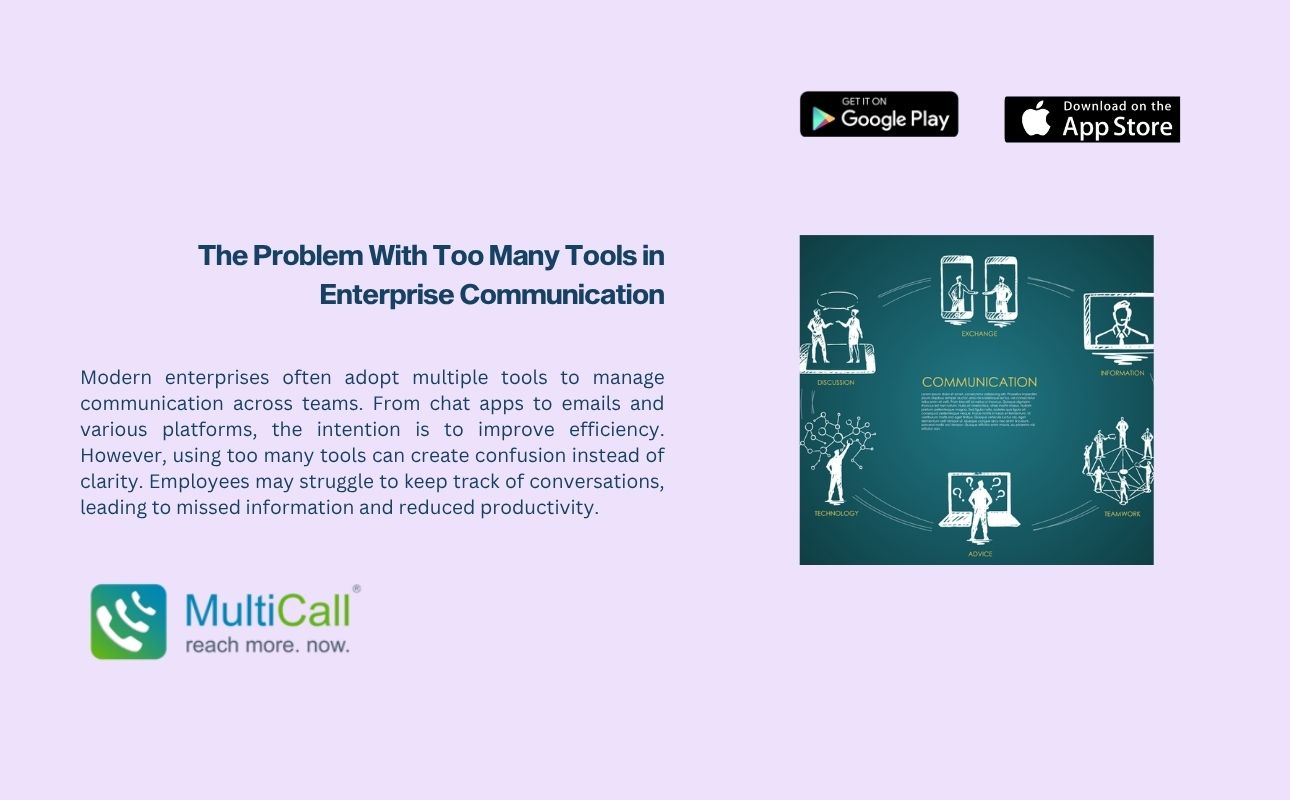
Modern enterprises often adopt multiple tools to manage communication across teams. From chat apps to emails and various platforms, the intention is to improve efficiency. However, using too many tools can create confusion instead of clarity. Employees may struggle to keep track of conversations, leading to missed information and reduced productivity.
Fragmented communication slows down work
When communication is spread across different platforms, it becomes difficult to maintain consistency. Important messages may be lost between tools, and teams may not know where to respond. This fragmentation leads to delays and inefficiencies. Instead of focusing on work, employees spend time switching between platforms and searching for information.
Lack of a unified communication approach
Enterprises need a centralized and structured way to communicate. Without it, teams operate in silos, and collaboration becomes challenging. A single, reliable solution helps ensure that communication is streamlined and accessible to everyone. Using Best Audio Conferencing Apps allows teams to connect in one place, reducing dependency on multiple tools.
Delays caused by tool overload
Having too many tools can slow down decision-making. Teams may wait for responses on one platform while discussions continue on another. This creates unnecessary delays and confusion. Real-time communication helps eliminate this issue. With Group Call Business Communication, teams can connect instantly and resolve matters without waiting for replies across different tools.
Miscommunication and information gaps
When conversations are split across multiple platforms, the chances of miscommunication increase. Important details may be overlooked or misunderstood. This can lead to repeated work, errors, and frustration among team members. Direct voice communication helps ensure that information is shared clearly and understood by everyone.
Reliability and consistency in communication
Not all communication tools offer the same level of reliability. Switching between platforms can lead to inconsistent experiences and technical issues. PSTN-based Calling Services provide a stable and dependable communication method, ensuring that discussions are not interrupted. This consistency is essential for maintaining smooth business operations.
Simplifying communication workflows
Managing multiple tools can make workflows complex and difficult to manage. A simplified approach to communication helps teams stay focused and organized. By reducing the number of platforms used, organizations can improve efficiency and make communication more effective.
Structured communication for better outcomes
A well-organized communication system supports better planning and execution. Teams can Schedule calls using app features to bring everyone together at the right time. This structured approach reduces confusion and ensures that discussions are focused and productive.
Improving team collaboration
Collaboration becomes easier when communication is simple and unified. Teams can share ideas, provide feedback, and stay aligned without switching between multiple tools. With Effective Team Communication Apps, organizations can create a more connected work environment that supports teamwork and productivity.
Conclusion
Using too many tools in enterprise communication can create confusion, delays, and inefficiencies. By simplifying communication and adopting the right solutions, businesses can improve clarity and collaboration. By using Best Audio Conferencing Apps, enabling Group Call Business Communication, relying on PSTN-based Calling Services, using features to Schedule calls using app, and adopting Effective Team Communication Apps, organizations can build a streamlined communication system that supports productivity and growth.