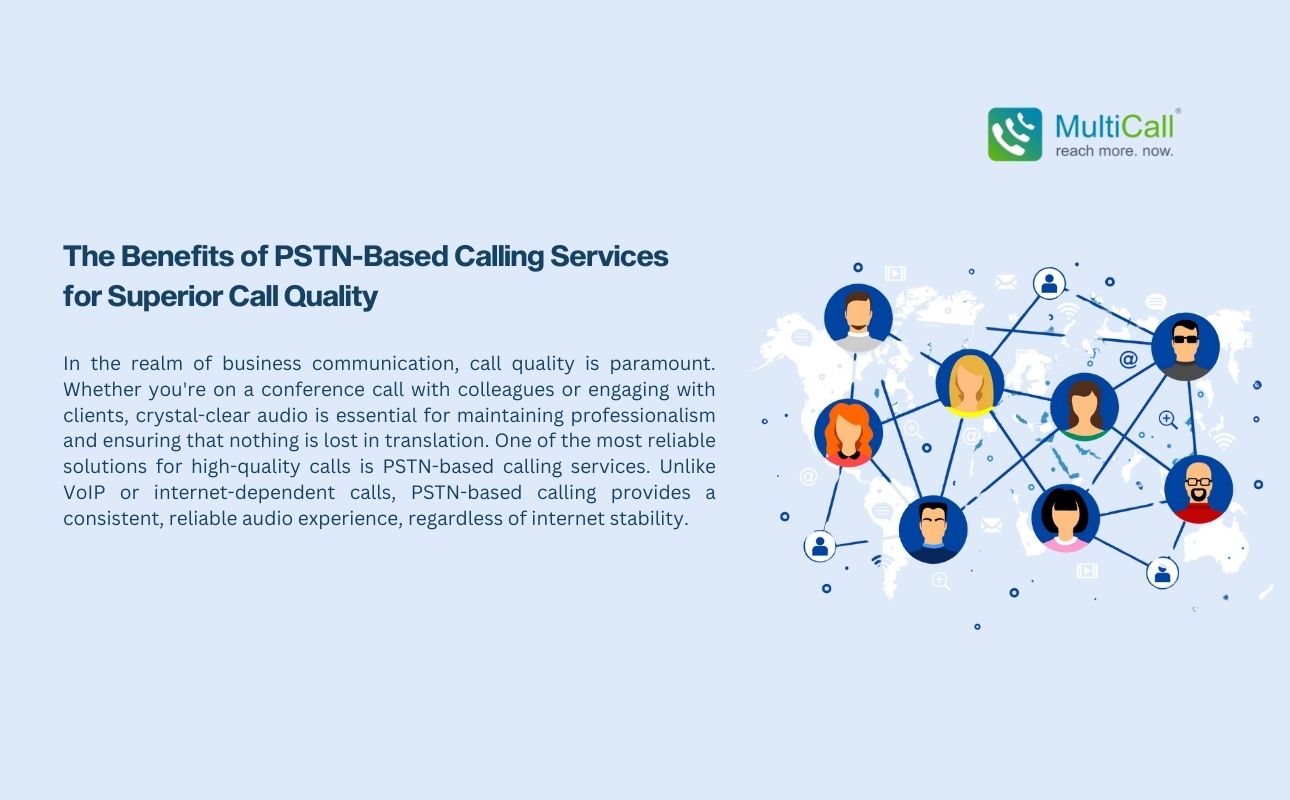
In the realm of business communication, call quality is paramount. Whether you’re on a conference call with colleagues or engaging with clients, crystal-clear audio is essential for maintaining professionalism and ensuring that nothing is lost in translation. One of the most reliable solutions for high-quality calls is PSTN-based calling services. Unlike VoIP or internet-dependent calls, PSTN-based calling provides a consistent, reliable audio experience, regardless of internet stability.
What is PSTN-Based Calling?
PSTN stands for Public Switched Telephone Network, the traditional phone system that has been around for decades. While newer technologies like VoIP rely on the internet for communication, PSTN-based calling uses dedicated phone lines to ensure consistent audio quality. This makes it one of the most dependable methods for business communication, especially in areas with unstable or slow internet connections.
Superior Sound Quality
The biggest advantage of PSTN-based calling is its high-quality PSTN calling experience. Since it doesn’t rely on internet bandwidth, users are less likely to experience interruptions, dropped calls, or poor sound quality due to fluctuating connections. In business, where every word counts, this consistent superior sound quality is critical. Whether you’re leading a team meeting or closing a deal, PSTN-based calling services ensure that all participants hear every word clearly, without any distortion or delays.
Reliability in All Conditions
Another major benefit of PSTN-based calling is its reliability in all conditions. Internet-dependent calls can be affected by outages, network congestion, or poor bandwidth, but PSTN-based services operate independently of internet connectivity. This makes PSTN-based calling services especially valuable for businesses in remote locations or for those whose teams frequently travel to areas with limited internet access. With PSTN, users can rely on group calling without internet, ensuring that important conversations happen without disruption.
Ideal for Group Calling and Conferences
For businesses that rely heavily on conference calls, PSTN-based calling offers an ideal solution. Apps like MultiCall, which incorporate PSTN-based group calling, allow users to bring multiple participants into a call with ease. The ability to host simultaneous group calling without concerns about internet lag makes PSTN-based calling particularly effective for virtual meetings.
Privacy and Security
Additionally, PSTN-based calling services provide enhanced privacy. Many solutions, such as MultiCall, include a number masking feature, which allows users to hide their personal phone numbers during calls. This ensures that personal information is protected, adding an extra layer of security to professional communications.
Conclusion
In conclusion, the benefits of PSTN-based calling services make it a superior choice for businesses that prioritize call quality and reliability. With high-quality PSTN calling, businesses can enjoy superior sound quality free from the interruptions and poor connectivity that can plague internet-based services. Whether for group calling without internet or everyday business communication, PSTN-based services provide the consistency and clarity that modern businesses need to thrive.