multicall

6 Practices In The Art Of Time Management

Another routine workday has passed. You signed in early. You clocked out late. And yet, you feel like you haven’t accomplished anything productively. For this to happen is easier than you may imagine.

In the current scenario, whether working from home or in office, you’re facing a barrage of endless meetings, with a volley of interruptions, and urgent last-minute tasks. In other words, you end up being busy all day, without any progress made on your top priorities.

This is exactly why one needs to master the art of scheduling productively. Let’s have a look at how  to do this. In the process you not only can make the necessary time for work that matters, you still can ensure there’s a work-life balance as well.

So what exactly is scheduling?

It’s the planning of activities to help accomplish goals and priorities in the time frame that you have at your disposal. Scheduling helps you to not just keep your deliverables SMART, but also allows additional time for anything unforeseen, and avoiding taking on more than you can handle. Much as we say time is money, we can’t buy it, yet more often than not, we waste it or use it ineffectively.

So how do we schedule our time?

Recognizing a problem is the first step to solving it. Setting a time to address it is the next. So set a regular time to do your scheduling – this can be part of managing your weekly review calls. Nothing beats the classic pen and paper in order to keep it simple and jot everything down.

But in a time such as the present where meetings and deliverables are constantly moved or cancelled at the last minute, what then? For deliverables, apps and software such as Google Calendar or MS Outlook would help, depending on how it is a fit to your business situation, job structure and budget.

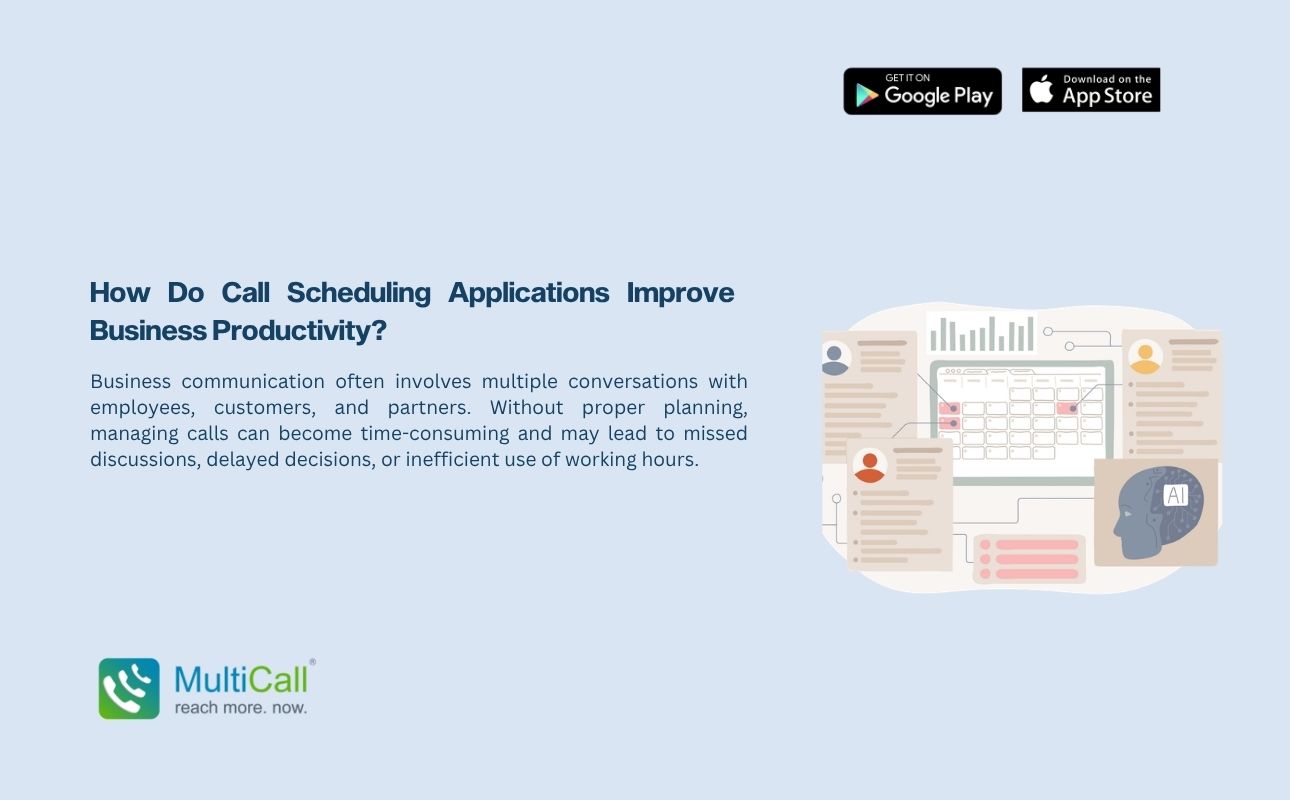
Calls, however are a bit more fluid. A fluid situation would mean that meetings are not always set in concrete. For this, a good tool would be needed, not just in the ability to call many, but to also effectively schedule or handle calls instantly depending on the situation. That’s where MultiCall comes in as a solution.

A MultiCall, brings people together, and gives everyone the right and ability to contribute value to the conversation. In doing so, one of its most noted features is Call Scheduling, the handling of which you can explore here.

Step 1: Identify Available Time

Start with answering this question:

How much time do I want to make available for my work?

Remember it should reflect the structure of your work and your life as well. Going for a promotion perhaps? It then might be wise to put in an extra mile each day to show your dedication. But if you need plenty of time for any out-of-work activities, you might decide to do your allocated hours only

Step 2: Schedule Essential Actions

Next, prioritize first the deliverables you absolutely do a good job. Yes, ideally all of them should be done well, but the priority first falls on your core responsibilities; what you are assessed in. For example, if you manage people, make sure that you have enough time available to deal with team members’ personal issues, coaching, and supervision needs. Also, allow time to communicate with your boss and key people around you.

Step 3: Schedule High-Priority Activities

What’s on your To-Do List? The high-priority and urgent activities are to go first. But of course, there are essential tasks that can neither be delegated nor avoided. These also come first too.  But besides the tasks themselves, try to arrange these for the times of day when you are most productive. Are you a morning person? Or do you find late evenings to somehow be more productive?

Step 4: Schedule Time for Contingencies

When something fails, you usually have contingencies set to limit or prevent potential issues. This is critical to scheduling too. Schedule some extra time to deal with any contingencies or emergencies that occur.  Not scheduling this time can result in emergencies still happening, resulting in working late.

Disruptions that happen frequently can consume your time faster than you  realize. Learning to manage this can reduce the amount of contingency time you need to set aside. Of course, some disruptions, specially in this day and age, will be hard to predict, but leaving the time for it in your schedule gives you the flexibility needed for rearranging tasks and respond to important issues as and how they surface.

Contact Form


apple-store-app
google-play-app

YOU MAY ALSO LIKE

video fatique

The Truth About Video Fatigue in Corporate Teams

In recent years, video meetings have become a standard part of corporate communication. While they offer visual interaction and engagement, they also bring a growing challenge known as video fatigue. Many employees experience exhaustion after long hours of video calls, which directly affects productivity and focus. Understanding this issue and finding better alternatives is essential for modern businesses.

Read More »
communication

 Why Businesses Should Rethink Their Communication Strategy

Communication is at the core of every business operation. From internal coordination to client interactions, the way a company communicates directly impacts its productivity and growth. However, many businesses continue to rely on outdated or fragmented communication methods that no longer meet modern demands. This is why rethinking communication strategy has become essential.

Read More »
communication breakdown

How Enterprises Can Avoid Communication Breakdowns

Communication is the foundation of every successful enterprise. When communication flows smoothly, teams stay aligned, decisions are made quickly, and operations run efficiently. However, when communication breaks down, it can lead to confusion, delays, and costly mistakes. For large enterprises, avoiding these breakdowns is essential to maintain productivity and performance.

Read More »
audio

Why Reliable Audio Infrastructure Is a Competitive Advantage

In today’s competitive business environment, communication is not just a support function, it is a strategic advantage. Companies that communicate faster, clearer, and more reliably often outperform others. While many organizations focus on tools and platforms, the real strength lies in having a reliable audio infrastructure that supports seamless communication at all times

Read More »
group calls

When Every Second Counts: The Power of Instant Group Calls

In today’s fast moving business environment, speed plays a critical role in success. Whether it is handling urgent issues, making quick decisions, or coordinating teams, every second matters. Delays in communication can lead to missed opportunities, operational disruptions, and reduced productivity. This is where instant group calls become a powerful solution for businesses.

Read More »
communication

What Real-Time Communication Looks Like in Large Enterprises

Large enterprises operate in complex environments where multiple teams, departments, and locations must work together seamlessly. In such settings, real time communication is not just an advantage, it is a necessity. It ensures that information flows quickly, decisions are made efficiently, and operations continue without disruption.

Read More »