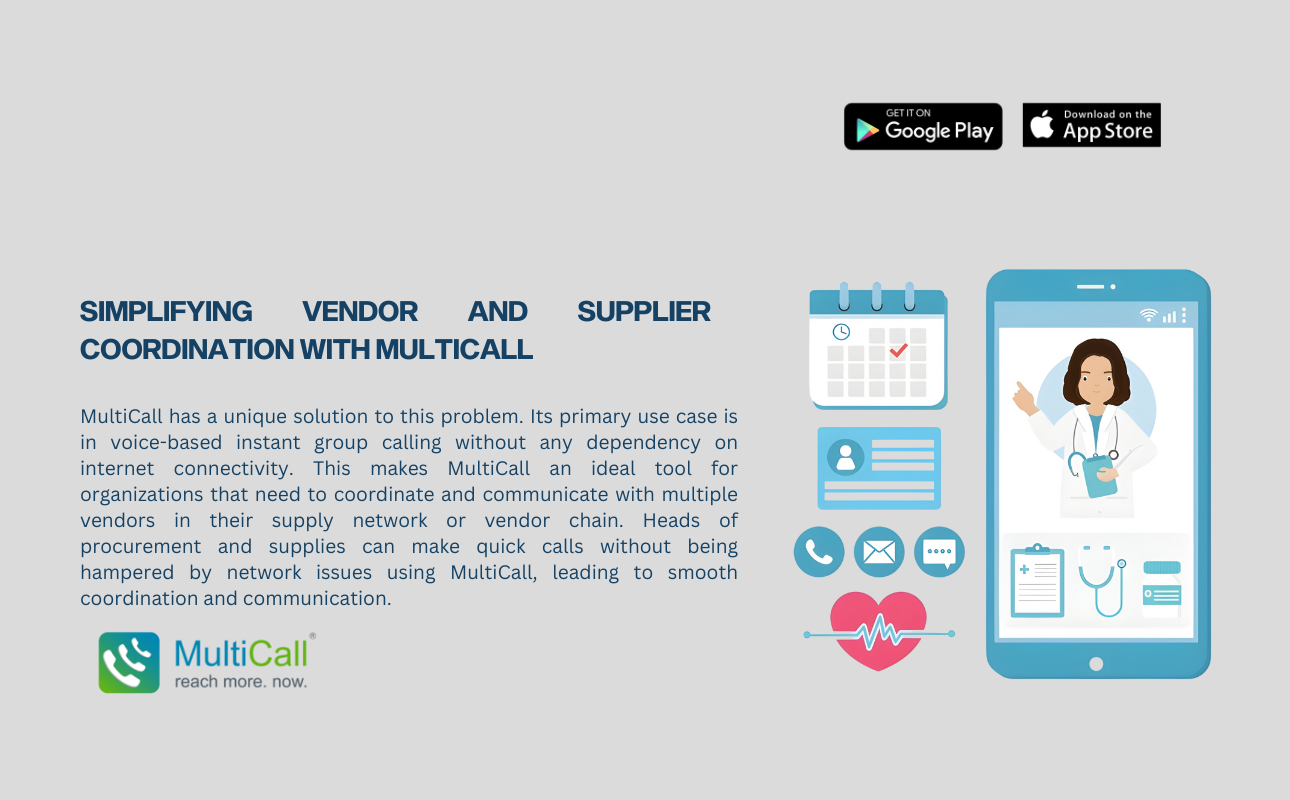
MultiCall has a unique solution to this problem. Its primary use case is in voice-based instant group calling without any dependency on internet connectivity. This makes MultiCall an ideal tool for organizations that need to coordinate and communicate with multiple vendors in their supply network or vendor chain. Heads of procurement and supplies can make quick calls without being hampered by network issues using MultiCall, leading to smooth coordination and communication.
MultiCall for Vendor Communication
Chatting or emails are not fast enough for dynamic business operations, and VoIP or video calling will not always work in remote areas or locations with low network connectivity. Businesses need an alternative communication channel to ensure fast and real-time voice conversations with their supply vendors – whether they are factories, warehouses, transporters, or distributors.
MultiCall for this scenario offers an instant, always-on, and multi-participant voice call platform that can connect any two or more teams anywhere, even without an internet connection.
Instant Voice Group Calling for Coordination
MultiCall’s group calling solution is a new approach to inter-team communication in vendor and supply management. Group calling with MultiCall is not a conference room or video link. Instead, all the members to be involved in the discussion or resolution process can be added to a MultiCall number and called to join in the conversation.
Users can join the voice call from any phone instantly, without even installing an app. All the vendors or participants need to do is pick up the MultiCall Group number that they are supposed to be part of.
Minimizing Downtime in Supply Operations
Production and supply operations face periodic downtime due to delays in the communication process. This can occur between the internal operations teams and the vendors at important handover stages or transport movements.
MultiCall can eliminate this downtime by creating always-on or persistent communication between operations and the vendor side of supply. Teams in remote locations, low-connectivity zones, or distant supply areas can connect to each other instantly without any call setup delays.
For instance, manufacturing units in low-connectivity zones, port operations for imports or exports, and rural operations teams that need to coordinate with distant suppliers can reduce downtime with MultiCall. This is because the calling process will not be delayed, and connections can be picked up on any network.
Operations teams can use this real-time communication channel to ensure minimum downtime, fast recovery, and high visibility across the supply and manufacturing process.
Efficient Vendor Management through Scheduling
MultiCall offers a smart way of managing all these periodic vendor interactions and touchpoints through its scheduling and reminder features. Operations managers can set up automatic reminders for weekly supplier performance review calls, monthly inventory checks, or daily dispatch reviews through the MultiCall scheduler.
Participants can also be sent automatic call reminders to take part in the relevant discussion before the scheduled call. This leads to better structure and less coordination time.
MultiCall as a Vendor Communication Tool
With its simple-to-use and always-on instant calling features, MultiCall is an essential part of vendor and supply communication. The speed and convenience of group calling can increase vendor coordination capabilities for businesses.
The best part is that MultiCall can be deployed to reach all vendor stakeholders in the supply chain – be it supply, warehousing, logistics, production, or other end points in the business operations. To get started, contact us to find out how MultiCall can be deployed to improve vendor communication and ensure business operations continue smoothly across your business and supply network.