One of the first things that can break that flow is communication, especially as operations start to scale. Coordinating between teams, locations, and clients, and doing it in a way that’s fast, secure, and affordable, can quickly become a headache.
Communication Challenges for Startups
Every startup has that early stage when it’s just a founder or two, side by side, deeply in sync with their operations. As a startup scales and operations get distributed between team members, departments, and locations, that same level of coordination starts to break down. Challenges include:
- High communication costs when making frequent calls and using multiple platforms.
- Lack of consolidated tools to receive notifications and updates on a single platform and device.
- High reliance on internet data when making calls to and from low-connectivity zones.
- Inflexible and not scalable to support increased headcount and customer base.
Most collaboration and communication tools are designed for large enterprises with established structures and resources to invest in them. A startup needs a way to bridge this gap and easily scale communication with its team and customers. MultiCall does that by offering startups a simple, lightweight, yet feature-rich tool for making group calls that can scale as easily and quickly as the team and business.
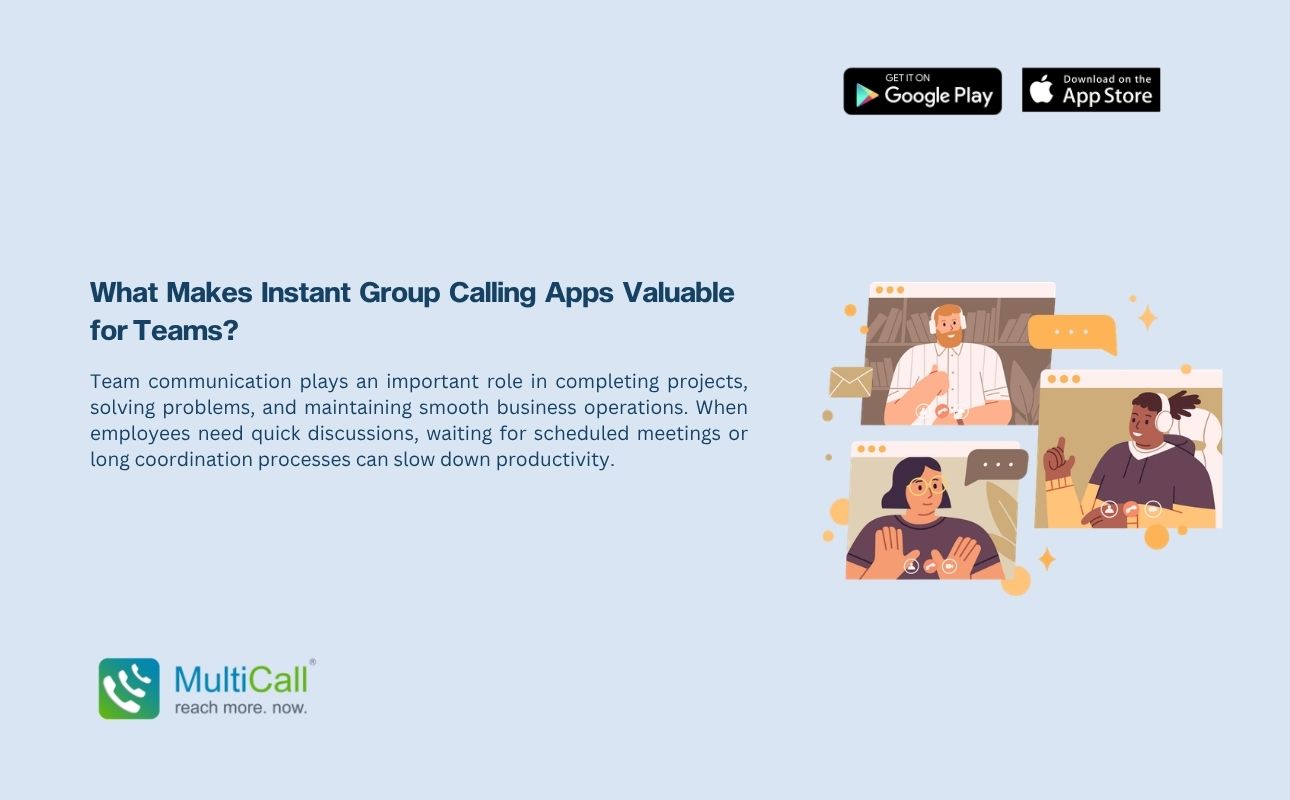
MultiCall adds value to voice communication by making it super easy to connect multiple people at a time, from anywhere, and on any network with just a single tap. This type of on-demand group calling has many advantages over voice calls on standard phone systems.
Scale Communication Effortlessly and Affordably with MultiCall
Communication costs and requirements tend to increase with growth. As a startup scales, so do its data requirements when making frequent calls across its growing team and customer base.
Paying for and managing a centralized, sophisticated, and costly communications system isn’t an option for most startups. MultiCall addresses these issues by providing a pay-as-you-grow model with three flexible plans to suit startups of any size and stage. Key cost-saving benefits of MultiCall include:
- Zero hardware investment. No need to buy or install devices.
- Works on existing mobile devices.
- No PINs or links. Connect calls without taking time to type or send them.
- No high data dependency. Works even on voice-only networks.
Ability to share group calls and connect multiple users on a single call, lowering the per-minute cost of communication.
MultiCall provides essential advantages that allow startups to scale communication with teams and customers without increasing communication costs. MultiCall’s focus on streamlining communication processes allows the team to spend less time synchronizing and more time executing.
Professional Client and Partner Communication
- MultiCall allows startups to project professionalism by:
- Providing high-quality voice calls.
- Masking numbers while retaining brand identity with extension-based calling.
- Instant multi-party conferencing for team calls and customer or partner updates.
Conclusion
With MultiCall, founders and salespeople can make smooth, high-quality voice calls that allow for uninterrupted discussion with investors and clients, whether pitching, negotiating, or reporting on progress. Scaling is making choices that allow the startup team to focus on what they do best.
Call or contact us today to learn more about how MultiCall can help your startup take off.