
multicall

PSTN-Based Calling: Reliable Communication for Businesses

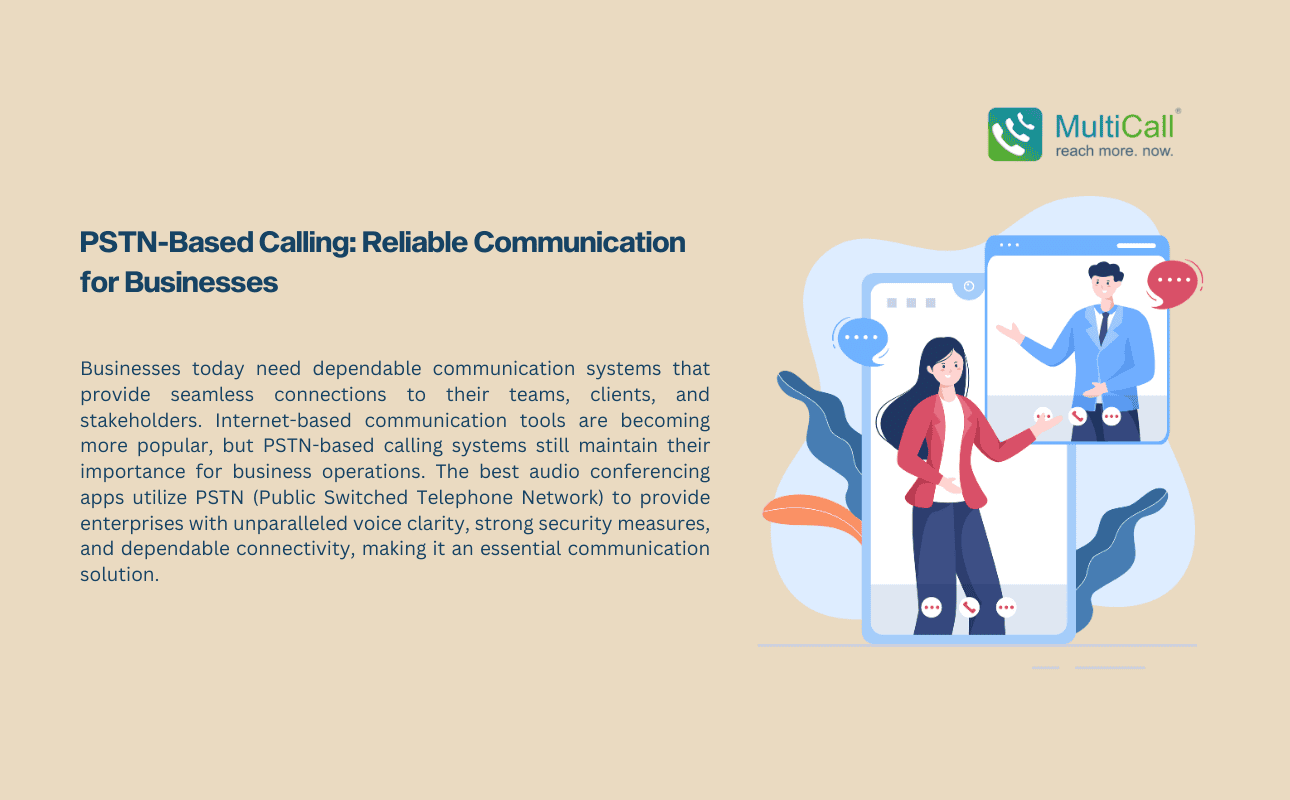
Businesses today need dependable communication systems that provide seamless connections to their teams, clients, and stakeholders. Internet-based communication tools are becoming more popular, but PSTN-based calling systems still maintain their importance for business operations. The best audio conferencing apps utilize PSTN (Public Switched Telephone Network) to provide enterprises with unparalleled voice clarity, strong security measures, and dependable connectivity, making it an essential communication solution.

Why PSTN-Based Calling is Essential for Businesses

  1. Superior Call Quality and Reliability
    The main benefit of high-quality PSTN-based callingservices lies in their capability to provide flawless voice transmission without any interruptions. PSTN uses dedicated telephone lines that provide uninterrupted calls with no latency, unlike VoIP or internet-based solutions that depend on network stability.

  2. Connectivity Without Internet Dependence
    Although modern communication apps need stable internet connections, businesses in remote locations need group calling without internetsolutions to maintain essential operations. PSTN-based systems allow business users to make calls without requiring internet access, guaranteeing uninterrupted communications at all times.

  3. Secure and Private Conversations
    Business communications demand absolute security when confidential topics are discussed. Number masking in callsensures sensitive business conversations are protected through encryption features, defending against cyber threats and unauthorized access.

  4. Easy Dialing and Accessibility
    Businesses can establish connections with their employees and clients fast through easy dialing solutionsthat require no complicated configurations. Group calling solutions deliver straightforward communication for both landline and mobile users through a simple dial-in process.

  5. Cost-Efficient Calling Solutions
    Businesses must find ways to balance spending on communication while maintaining high-quality service. Organizations can sustain financial oversight while ensuring constant communication capabilities through cost-effective calling options that feature prepaid and unlimited plans. PSTN-based services offer fixed billing structures, making them more affordable than some VoIP services that face high international calling charges.

Enhancing Business Efficiency with PSTN-Based Calling

PSTN-based calling systems work alongside contemporary call scheduling applications to improve productivity through their dependable and secure network. Businesses use call scheduling apps to arrange timely meetings and send reminders, helping maintain effective team coordination. Persistent login calling apps give users the benefit of uninterrupted connectivity by eliminating the need for multiple sign-in actions.

PSTN-based services supply one-touch solutions that enable companies needing instant group calling apps to connect multiple participants in a single call for better decision-making and collaboration.

Conclusion

The evolution of digital communication is ongoing, yet PSTN-based calling services maintain their position as essential components of team communication applications. The combination of reliable performance and secure connections with excellent call quality makes PSTN-based calling services the top choice for businesses needing uninterrupted communication options. PSTN-based calling provides secure and productive connectivity for businesses through both group call communication and basic voice connections.

Contact Form


apple-store-app
google-play-app

YOU MAY ALSO LIKE

communication

 Why Businesses Should Rethink Their Communication Strategy

Communication is at the core of every business operation. From internal coordination to client interactions, the way a company communicates directly impacts its productivity and growth. However, many businesses continue to rely on outdated or fragmented communication methods that no longer meet modern demands. This is why rethinking communication strategy has become essential.

Read More »
communication breakdown

How Enterprises Can Avoid Communication Breakdowns

Communication is the foundation of every successful enterprise. When communication flows smoothly, teams stay aligned, decisions are made quickly, and operations run efficiently. However, when communication breaks down, it can lead to confusion, delays, and costly mistakes. For large enterprises, avoiding these breakdowns is essential to maintain productivity and performance.

Read More »
audio

Why Reliable Audio Infrastructure Is a Competitive Advantage

In today’s competitive business environment, communication is not just a support function, it is a strategic advantage. Companies that communicate faster, clearer, and more reliably often outperform others. While many organizations focus on tools and platforms, the real strength lies in having a reliable audio infrastructure that supports seamless communication at all times

Read More »
group calls

When Every Second Counts: The Power of Instant Group Calls

In today’s fast moving business environment, speed plays a critical role in success. Whether it is handling urgent issues, making quick decisions, or coordinating teams, every second matters. Delays in communication can lead to missed opportunities, operational disruptions, and reduced productivity. This is where instant group calls become a powerful solution for businesses.

Read More »
communication

What Real-Time Communication Looks Like in Large Enterprises

Large enterprises operate in complex environments where multiple teams, departments, and locations must work together seamlessly. In such settings, real time communication is not just an advantage, it is a necessity. It ensures that information flows quickly, decisions are made efficiently, and operations continue without disruption.

Read More »
collaboration

The Future of Enterprise Collaboration Is Simpler Than You Think

Enterprise collaboration has evolved significantly over the years. From long email threads to complex project management tools, businesses have continuously tried to improve how teams work together. However, as systems become more advanced, they often become more complicated. The future of collaboration is not about adding more layers, but about simplifying communication to make it faster, clearer, and more effective.

Read More »