


multicall

Prevent Miscommunication on Call in 5 Steps

Miscommunication is as much a two-way street as communication is. It effectively means a failure to make information, thoughts or ideas clear to someone, or to understand what someone is saying. On a personal front, the impact of miscommunication simply means an argument that can perhaps be resolved. But on a professional one, we’re talking dissatisfied customers, irreversible damage to reputation, and errors that can be costly. The good news is, it can be avoided if you follow a few steps.

Thinking before speaking

Having a thought on what you’re about to say lets you organize your thoughts and ensure that you say something meaningful. This is important, especially when you’re about to have an important conversation.  Organize your words so that you are saying exactly what you mean.

Your attitude and tone can communicate a lot about you, so keep your focus and try not to get off topic. Having trouble saying what you want to say? No problem! Write down bullet points to ensure you’ve covered everything you’re planning to say. Remember, preparation is an important step in order to master your conference call!

Also, take a deliberate pause prior to speaking. Rather than jumping in immediately, purposefully taking a moment to compose your thoughts before speaking will make it more likely your communication is clear, and your audience ready to listen.

Get their attention

Having a person’s attention would mean ensuring that they are listening and understanding the words you say. In a face-to-face meeting, this would mean making eye contact and checking in to see that they are listening. In a call however, this can be a different ball game.

This is worse when considering possibilities such as the other person being distracted or in the middle of doing something else while on the phone. The right communication tools such as MultiCall however, can help with this.

Using your visual display of Call Monitoring, check who’s on the call and direct your questions to someone new every time in order to make sure that everyone is involved, and not multitasking.

If they seem distracted by something, ask for their attention, or confirm that they are okay and that they understood whatever was mentioned. Note however, that this does not mean calling them out or yelling at them. Belittling someone publicly can also risk poor team communication since they could fear to speak up another time.


Check your assumptions

As the adage goes, better safe than sorry. It’s easy to assume that people understand what you said or asked them to do.

So, clarify anything that the person might be uncertain about. If you’re issuing instructions to execute some deliverable, clarify anything the person might need to do to prepare ahead for it.

If someone is in fact confused, try to rephrase, or explain it better. We’re humans, not machines. And in a busy work schedule it’s quite possible to forget or have a mix-up about something said during the meeting. So, it helps to record your calls to stay on track (MultiCall lets you do so), and eliminate doubt about what was or was not said during the call.


Follow-up after the call

Follow-up after you have communicated with your team to reaffirm everything mentioned during the course of the call. An example of this would be to send a mail with the takeaways of the meeting to iterate instructions clearly.

You can also check in one-on-one with your teammates to make sure that they are okay. If you perceive that there’s a possibility you may have miscommunicated something, use this point as an opportunity to communicate clearly and clarify anything that may come that may be confusing.


Contact Form


apple-store-app
google-play-app

YOU MAY ALSO LIKE

 Why Audio Meetings Are Making a Comeback in 2026

Over the past few years, video meetings became the standard for business communication. While video offered visibility and engagement, it also introduced screen fatigue, distractions, and reduced productivity. Many professionals began spending hours in front of cameras, which slowly impacted focus and efficiency.

Read More »

How One Missed Call Can Cost Your Business Crores

In business, opportunities rarely announce themselves twice. A single incoming call could represent a new client inquiry, a partnership proposal, a high value contract, or an urgent operational update. When that call goes unanswered, the cost is not just a missed conversation. It could mean losing revenue worth crores.

Read More »

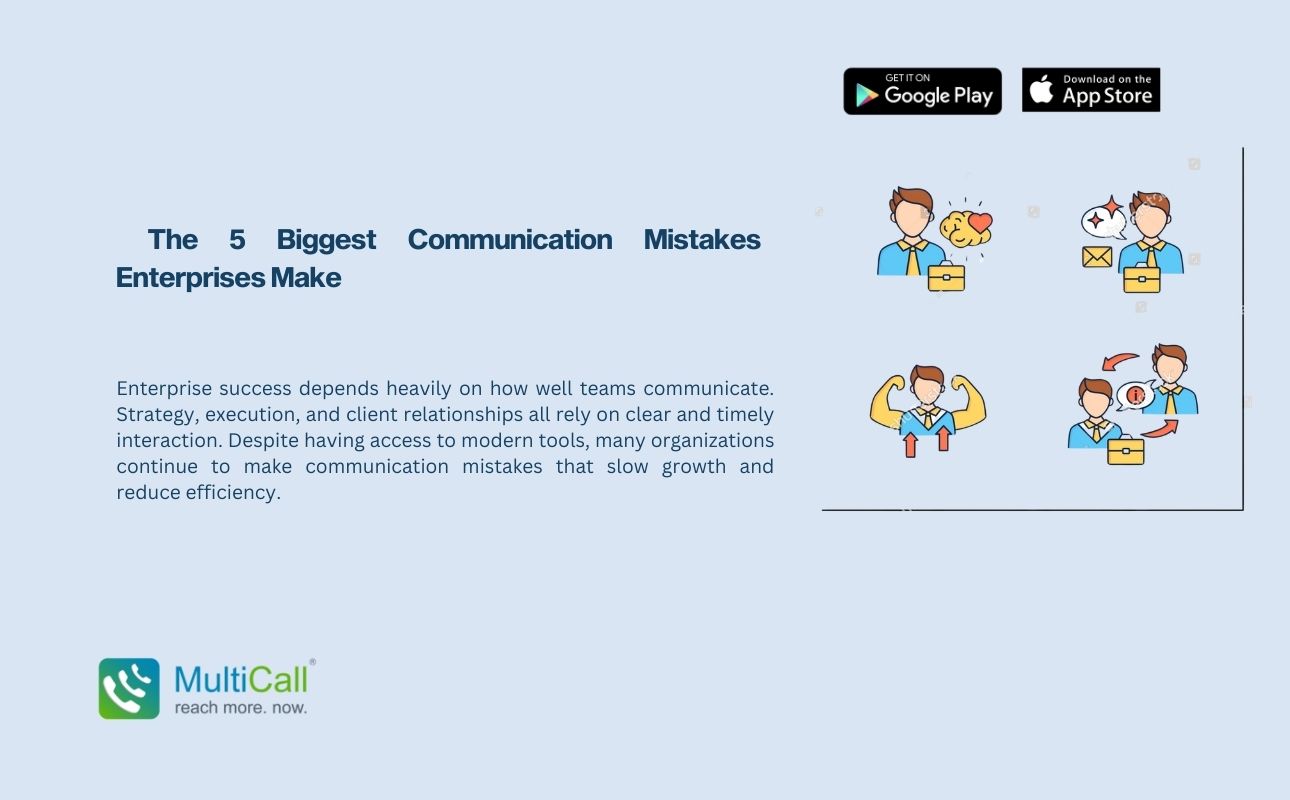
  The 5 Biggest Communication Mistakes Enterprises Make

Enterprise success depends heavily on how well teams communicate. Strategy, execution, and client relationships all rely on clear and timely interaction. Despite having access to modern tools, many organizations continue to make communication mistakes that slow growth and reduce efficiency.

Read More »

Why MultiCall’s PSTN-Based Calling Services Are the Backbone of Reliable Business Communication

Reliable communication is critical for businesses that operate across teams, customers, and partners. While internet-based tools are popular, they are not always dependable, especially in areas with unstable connectivity. This is why PSTN-based calling continues to play a major role in business communication. MultiCall’s PSTN-based audio calling services provide a stable and trusted foundation that businesses can depend on every day.

Read More »