The Silent Killer of Business Productivity: Poor Coordination
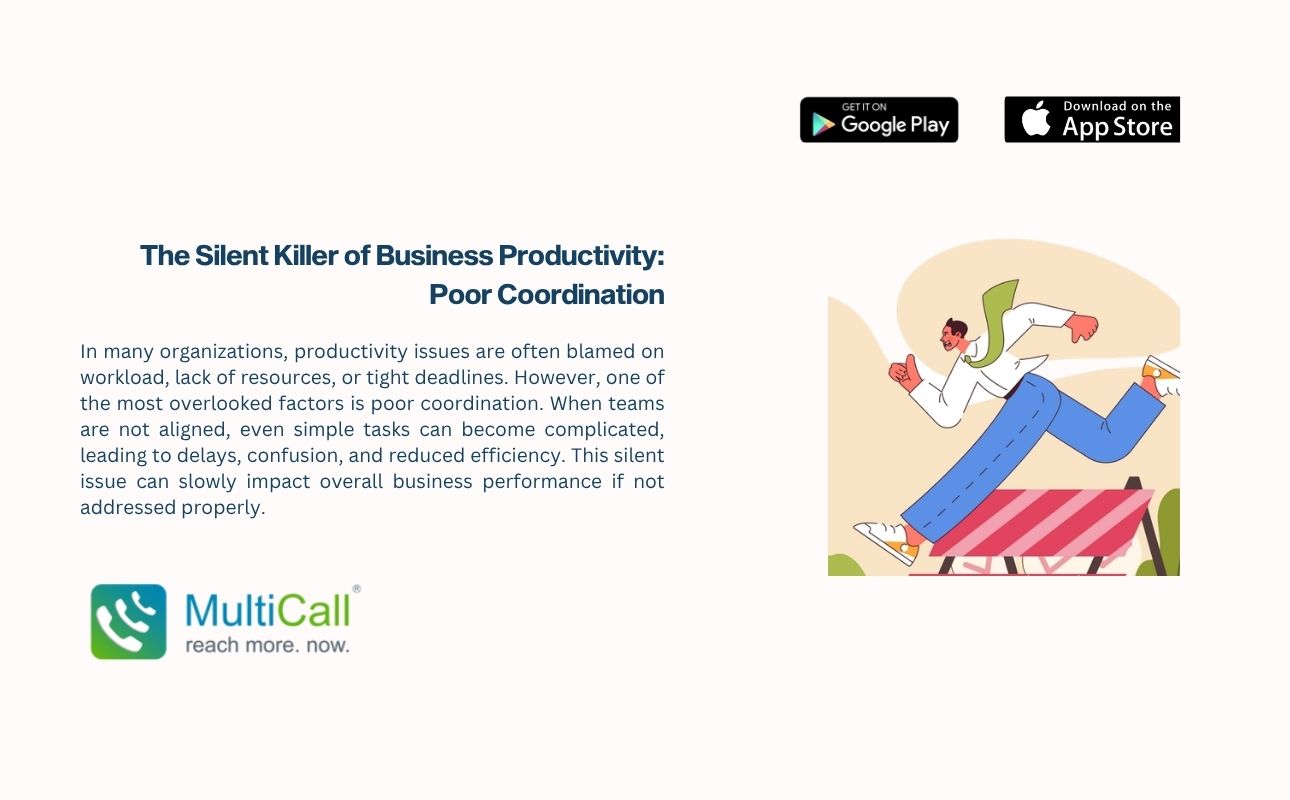
In many organizations, productivity issues are often blamed on workload, lack of resources, or tight deadlines. However, one of the most overlooked factors is poor coordination. When teams are not aligned, even simple tasks can become complicated, leading to delays, confusion, and reduced efficiency. This silent issue can slowly impact overall business performance if not addressed properly.
Understanding the Impact of Poor Coordination
Coordination is the backbone of any successful business operation. It ensures that teams work together toward a common goal. When coordination fails, communication gaps begin to appear, and tasks are not completed as expected.
Employees may work on the same task without knowing each other’s progress, or important updates may not reach the right people on time. This lack of clarity leads to duplication of work, missed deadlines, and frustration within teams.
Businesses that rely on Group Call Business Communication can significantly reduce such issues by ensuring that everyone stays informed and connected.
Communication Gaps That Slow Down Work
One of the primary reasons for poor coordination is ineffective communication. When teams depend on scattered emails or delayed responses, it becomes difficult to maintain workflow.
Using Effective Team Communication Apps helps bridge this gap by providing a centralized way to connect and share updates. Teams can discuss tasks in real time, clarify doubts instantly, and avoid unnecessary delays.
Clear communication ensures that everyone understands their roles and responsibilities, which improves overall efficiency.
Delays in Decision Making
Poor coordination often leads to delays in decision making. When the right people are not involved in discussions at the right time, decisions get postponed, affecting business operations.
With Instant Group Calling Apps, teams can quickly connect and make decisions without waiting for long email threads or scheduled meetings. This speed helps businesses respond to challenges more effectively.
Quick decision making is essential for maintaining productivity and staying competitive in today’s fast moving environment.
Difficulty in Managing Remote and Distributed Teams
As businesses adopt remote and hybrid work models, coordination becomes even more challenging. Teams working from different locations may face communication barriers that affect collaboration.
A reliable Group Calling App allows employees to connect instantly, regardless of their location. This ensures that remote teams remain aligned and work together efficiently.
When teams are connected through simple and accessible tools, coordination improves naturally.
Inefficient Meeting Scheduling
Another common issue in organizations is the difficulty in scheduling meetings. Coordinating availability across multiple team members can be time consuming and often leads to delays.
The ability to Schedule calls using app simplifies this process. Teams can plan meetings in advance, set reminders, and ensure that all participants are available at the right time.
Efficient scheduling reduces confusion and helps maintain a structured workflow.
Lack of Real Time Collaboration
Without real time collaboration, teams may struggle to keep up with changing priorities. Delayed communication can result in missed opportunities and incomplete tasks.
Using the Best Audio Conferencing Apps enables teams to collaborate instantly. Whether it is a quick update or a detailed discussion, real time communication helps keep everyone on the same page.
This level of collaboration improves productivity and ensures that tasks are completed on time.
Dependence on Unreliable Communication Channels
Some organizations still rely on outdated or unreliable communication methods, which can lead to frequent disruptions. Poor audio quality or connectivity issues can affect the effectiveness of meetings.
With PSTN-based Calling Services, businesses can ensure stable and clear communication without depending entirely on internet connectivity. This reliability is crucial for maintaining consistent communication across teams.
Reliable communication tools help reduce misunderstandings and improve coordination.
Building a Culture of Coordination
Improving coordination is not just about tools. It also involves creating a culture where communication is encouraged and valued. Teams should feel comfortable sharing updates, asking questions, and collaborating with others.
By combining the right tools with a strong communication culture, businesses can overcome coordination challenges and improve productivity.
Organizations that invest in Group Call Business Communication and modern communication solutions create an environment where teamwork thrives.
Conclusion
Poor coordination may not always be visible, but its impact on productivity can be significant. From communication gaps to delayed decisions, it affects every aspect of business operations.
By adopting tools like Effective Team Communication Apps, Instant Group Calling Apps, and reliable PSTN-based Calling Services, businesses can improve coordination and streamline their workflow.
Addressing this silent issue can lead to better collaboration, faster decision making, and improved overall performance. In a competitive business environment, strong coordination is not just an advantage, it is a necessity.