Why Leaders Prefer Voice Over Messaging During High-Stakes Decisions
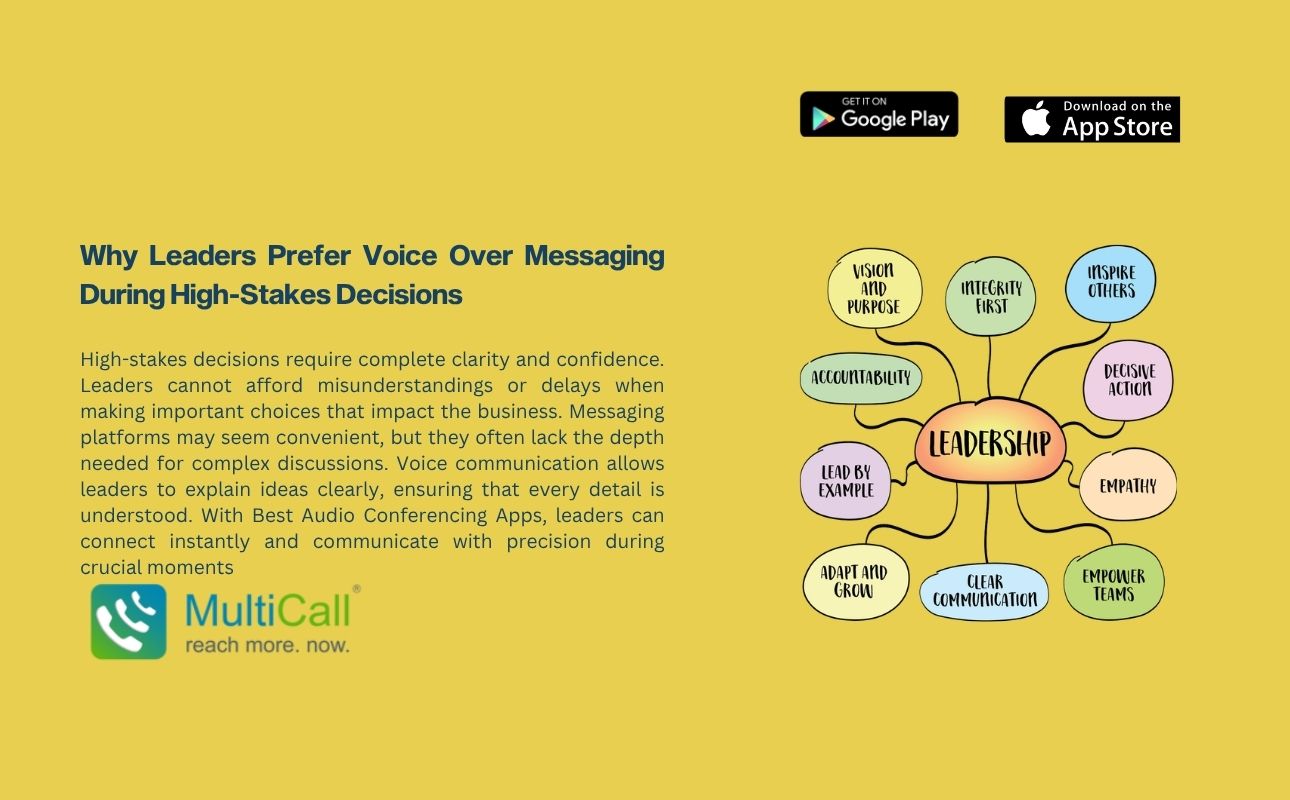
High-stakes decisions require complete clarity and confidence. Leaders cannot afford misunderstandings or delays when making important choices that impact the business. Messaging platforms may seem convenient, but they often lack the depth needed for complex discussions. Voice communication allows leaders to explain ideas clearly, ensuring that every detail is understood. With Best Audio Conferencing Apps, leaders can connect instantly and communicate with precision during crucial moments.
Real-time interaction drives better decisions
In critical situations, timing plays a key role. Messaging can slow down conversations due to delayed responses or incomplete information. Leaders need immediate feedback to assess situations and make informed decisions. Voice communication enables real-time interaction, allowing participants to respond instantly. Through Group Call Business Communication, leaders can bring multiple stakeholders together and discuss key points without delay.
Reducing misinterpretation and confusion
Messages can often be misunderstood because they lack tone and context. In high-pressure situations, even a small misunderstanding can lead to incorrect decisions. Voice conversations eliminate this risk by allowing participants to hear tone, urgency, and intent clearly. This ensures that everyone is aligned and reduces the chances of confusion during important discussions.
Building confidence and trust in decisions
Leaders rely on trust when making decisions. Hearing someone’s voice creates a stronger connection compared to reading a message. It allows leaders to gauge confidence, sincerity, and understanding from their team members. This human element plays a crucial role in decision-making, especially when the stakes are high.
Reliable communication during critical discussions
In high-stakes situations, communication systems must be reliable. Any disruption can delay decisions and create uncertainty. PSTN-based Calling Services offer stable and consistent call quality, ensuring that discussions continue without interruptions. This reliability gives leaders the confidence to focus on the conversation rather than worrying about technical issues.
Faster alignment among stakeholders
Important decisions often involve multiple stakeholders. Coordinating through messages can take time and lead to fragmented communication. Voice communication allows leaders to bring everyone together in a single conversation. This helps align perspectives quickly and ensures that all viewpoints are considered before making a decision.
Structured conversations for better outcomes
High-stakes decisions require organized discussions. Leaders can Schedule calls using app features to ensure that all key participants are present and prepared. Scheduled voice discussions help keep conversations focused, making it easier to evaluate options and reach conclusions efficiently.
Strengthening team collaboration under pressure
During critical situations, teamwork becomes even more important. Voice communication creates a collaborative environment where team members can share ideas, raise concerns, and support each other. With Effective Team Communication Apps, leaders can ensure that their teams stay connected and work together effectively, even under pressure.
Conclusion
Leaders prefer voice communication over messaging during high-stakes decisions because it offers clarity, speed, and reliability. It reduces misunderstandings, builds trust, and supports real-time collaboration. By using Best Audio Conferencing Apps, enabling Group Call Business Communication, relying on PSTN-based Calling Services, using features to Schedule calls using app, and adopting Effective Team Communication Apps, organizations can make faster, more confident decisions when it matters the most.