



multicall

Improving Lateral Communication

Communication centres on the exchange and sharing of information between people. With so many focusing on optimizing the communication within teams and/or from a leader-follower standpoint, there’s a type of communication that tends to be missed in the process; lateral communication.

This refers to the communication that happens within departments or organization units; usually at the same hierarchical level as each other. Since this communication too is dedicated to the purpose of coordinating activities, efforts or fulfilling a common purpose or goal. This is lateral communication.

Make a plan to set feedback and dialogue.

Time is of the essence in a project, so you may need to optimize the time spent planning and communicating between different departments. One way to have this done would be to schedule regular check-ins or meetings where problems, plans and progress can be discussed.

In a work context that runs hybrid (WFH and on-site), a good communication tool will be needed, so as to reach out to many as reaching any one of them. MultiCall is that tool, with how it can bring people together, and give everyone the right and ability to contribute value to the conversation. Here’s everything you need to know about the tool!

The Call Monitoring System allows you to maintain check-ins with the entire team, and they can report on progress, plans, and challenges together with you.

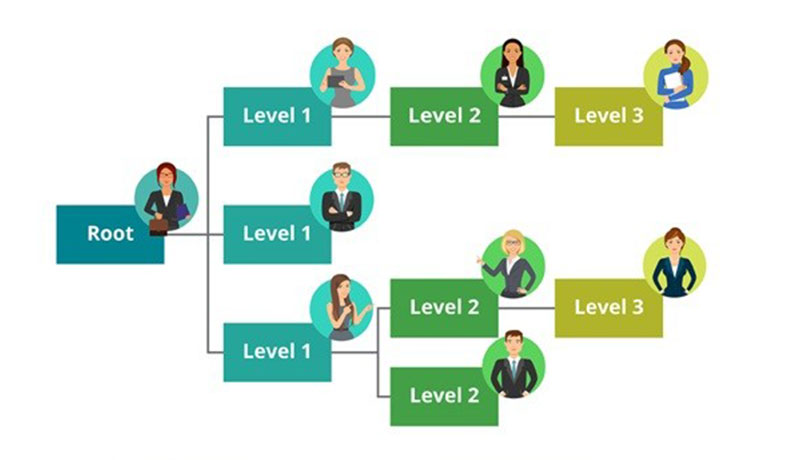
Utilize a flow chart detailing communication between different departments

Doing so can clearly indicate to anyone in management about the frequency and basis for lateral communication. This in turn can result in informal communication between members of each department.

With the help of MultiCall’s Scheduling feature you can set recurring calls, as well monitor as the duration. Depending on your company, it may also be useful to have a member of the management team present during interdepartmental meetings to ensure the accuracy of information communicated.

Put up a message board

Remember: Fail to prepare; prepare to fail! The point of this board is to detail the most important communication items for your projects. It also would help in cases such as monitoring changes in policies, practices, and procedures over a stipulated time period. The message board can also help as a physical cue for communicating messages about daily concerns within the workplace.

Check the workplace culture.

Workplace culture issues can hinder effective lateral communication. Examples of these include competitive behaviours among peers, each trying to stand out for their own performance, rather than taking a holistic approach to the company and team’s well-being and overall performance.

Instead of incentivizing competition in the workplace, setting a reward-based system for group performance vs. an individual’s performance would allow for better lateral communication.

Assembling a team means bringing people together with diverse skills, experience levels, and backgrounds. With established lateral communication, the company is primed not just for decision-making but for execution towards an outcome as well. With far greater productivity, you’d be able to reach more, now.

Contact Form


apple-store-app
google-play-app

YOU MAY ALSO LIKE

audio

Why Reliable Audio Infrastructure Is a Competitive Advantage

In today’s competitive business environment, communication is not just a support function, it is a strategic advantage. Companies that communicate faster, clearer, and more reliably often outperform others. While many organizations focus on tools and platforms, the real strength lies in having a reliable audio infrastructure that supports seamless communication at all times

Read More »
group calls

When Every Second Counts: The Power of Instant Group Calls

In today’s fast moving business environment, speed plays a critical role in success. Whether it is handling urgent issues, making quick decisions, or coordinating teams, every second matters. Delays in communication can lead to missed opportunities, operational disruptions, and reduced productivity. This is where instant group calls become a powerful solution for businesses.

Read More »
communication

What Real-Time Communication Looks Like in Large Enterprises

Large enterprises operate in complex environments where multiple teams, departments, and locations must work together seamlessly. In such settings, real time communication is not just an advantage, it is a necessity. It ensures that information flows quickly, decisions are made efficiently, and operations continue without disruption.

Read More »
collaboration

The Future of Enterprise Collaboration Is Simpler Than You Think

Enterprise collaboration has evolved significantly over the years. From long email threads to complex project management tools, businesses have continuously tried to improve how teams work together. However, as systems become more advanced, they often become more complicated. The future of collaboration is not about adding more layers, but about simplifying communication to make it faster, clearer, and more effective.

Read More »
audio

Why Crisis Communication Needs Voice, Not Text

In times of crisis, communication becomes the most critical factor in managing situations effectively. Whether it is an operational issue, a service disruption, or an internal emergency, the way information is shared can determine how quickly and efficiently the problem is resolved. While text based communication has its place, voice communication proves to be far more reliable and impactful during high pressure situations.

Read More »
productivity

The Silent Killer of Business Productivity: Poor Coordination

In many organizations, productivity issues are often blamed on workload, lack of resources, or tight deadlines. However, one of the most overlooked factors is poor coordination. When teams are not aligned, even simple tasks can become complicated, leading to delays, confusion, and reduced efficiency. This silent issue can slowly impact overall business performance if not addressed properly.

Read More »