How Audio Meetings Keep Teams Focused and Efficient
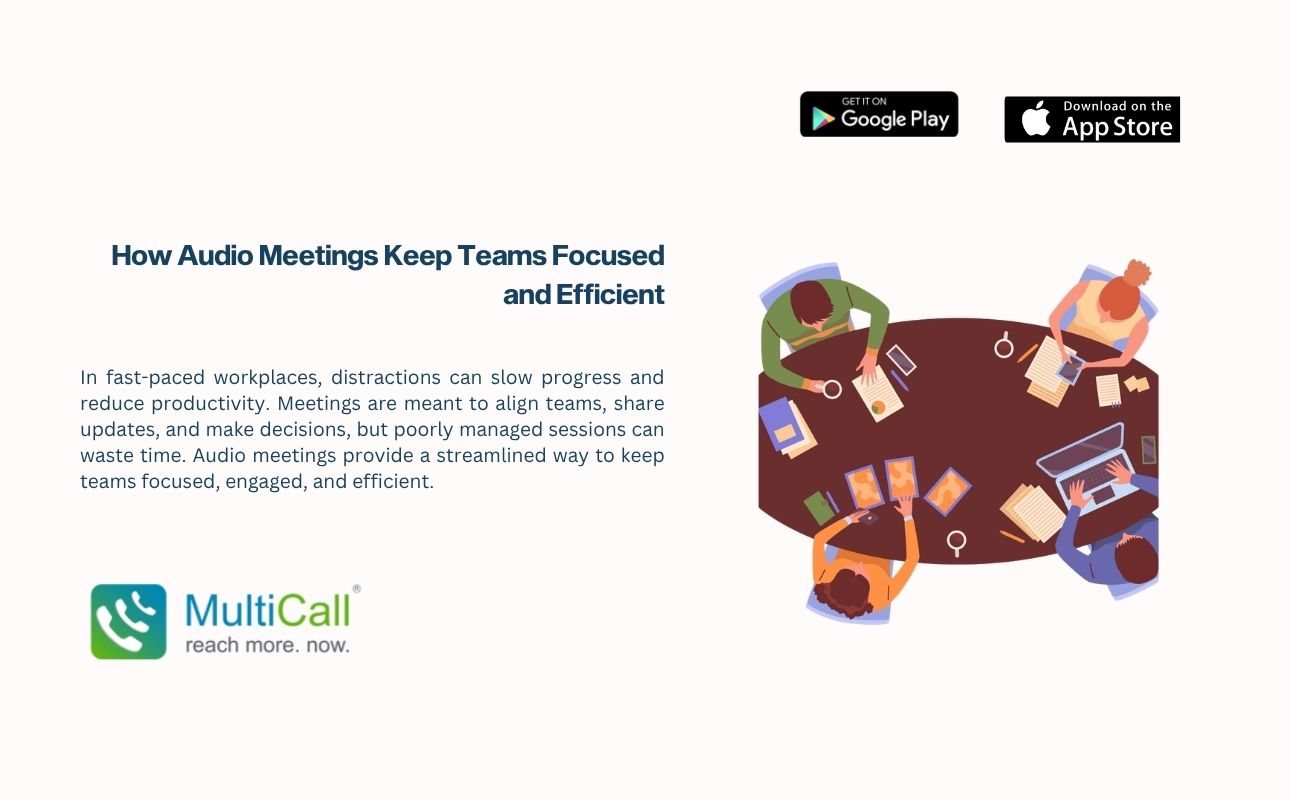
In fast-paced workplaces, distractions can slow progress and reduce productivity. Meetings are meant to align teams, share updates, and make decisions, but poorly managed sessions can waste time. Audio meetings provide a streamlined way to keep teams focused, engaged, and efficient.
Reducing Distractions During Meetings
Visual distractions, long presentations, and multitasking often occur in video or hybrid meetings. Audio meetings eliminate unnecessary visuals, allowing participants to focus solely on the discussion. By concentrating on the conversation, team members absorb information more effectively and contribute meaningfully to the meeting.
Encouraging Active Participation
Audio meetings create an environment where everyone can speak and be heard. Participants are more likely to engage because the focus is on clear communication rather than on managing cameras or slides. This encourages a balanced discussion, ensuring that ideas are shared, questions are answered, and decisions are made efficiently.
Streamlined Communication Across Teams
Teams often work across different departments or locations. Audio meetings allow members to connect instantly, discuss priorities, and align on tasks. Without relying on multiple emails or chat threads, teams can reach consensus quickly and execute plans without confusion.
Maintaining Meeting Punctuality
Audio meetings are easier to start and end on time. Participants join via phones or desktops without setup delays, and discussions stay focused on key points. Meetings are shorter, more purposeful, and efficient, leaving team members with more time to complete their core responsibilities.
Supporting Remote and Distributed Teams
Distributed teams benefit greatly from audio meetings. Employees can join from anywhere, whether at home, on-site, or traveling. This ensures that no one misses important discussions, deadlines are met, and collaboration remains consistent across the organization.
Enhancing Productivity and Accountability
Focused meetings reduce repeated discussions and unnecessary follow-ups. Action items are clearly assigned, and everyone knows their responsibilities. Audio meetings provide a simple yet effective platform to ensure accountability and follow-through, making workflows smoother and more efficient.
Reducing Technology Barriers
Unlike video or complex collaboration platforms, audio meetings require minimal setup. No cameras, screen sharing, or high-bandwidth connections are needed, which eliminates technical distractions and delays. Participants can concentrate on the conversation, contributing to quicker decisions and productive outcomes.
Conclusion
Audio meetings keep teams focused by reducing distractions, encouraging active participation, and simplifying communication. They improve punctuality, accountability, and overall productivity, allowing employees to collaborate efficiently. By adopting streamlined audio meetings, enterprises can maintain team alignment, enhance workflow efficiency, and ensure meetings drive results rather than consume time.