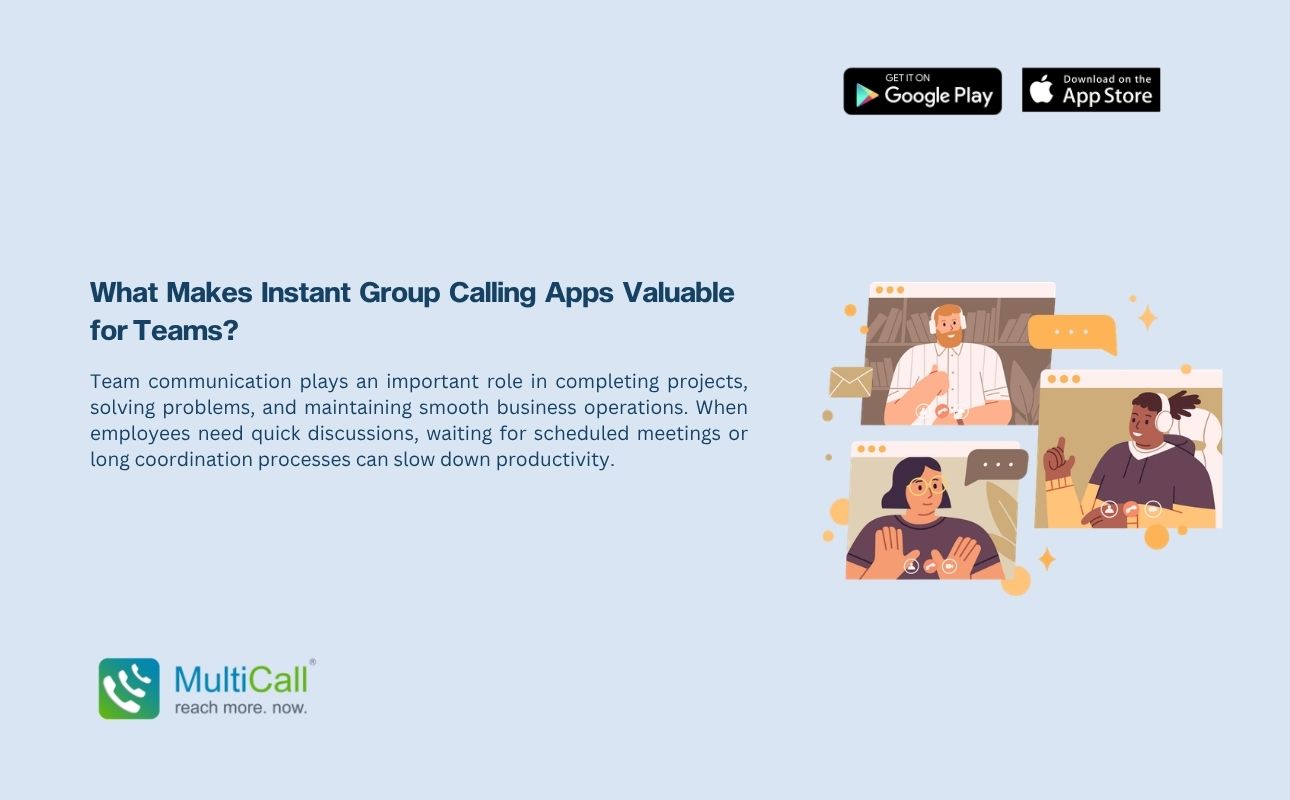
The MultiCall solution is centered around team calling. Group calls over voice make it possible for teams to coordinate schedules, share information, and discuss important topics. MultiCall enables users to connect in the fastest, most reliable, and most secure way possible.
Enterprises and large-scale business units use MultiCall for team calls, conference discussions, and cross-departmental communications. Instant multi-party calls let teams collaborate in ways that were once difficult or impossible.
High Availability and Low Bandwidth Dependency
Video and chat tools are popular nowadays, but if you look for the fastest, easiest, and most reliable communication method, voice communication stands out of the box.
Call and Converse has always been an essential part of business communication. Today, as enterprises are more distributed and operations are more mobile, they need flexible, low-bandwidth solutions to reach in real-time with minimum friction.
MultiCall is designed for next-gen voice business communication, for collaborative teams that need reliable and immediate connectivity and want to integrate that experience with their team workflows.
MultiCall is available for users everywhere, no matter where they are or how robust the network infrastructure is.
Calls function over standard mobile networks with as little as 2G connectivity.
Next-generation enterprise voice is low-bandwidth dependent, frictionless, and instantly available.
Scalable and Flexible
Modern enterprises are diverse. Team sizes, geographical footprints, operational scope, and use cases differ significantly between business units. The next generation of enterprise voice needs to be able to adapt.
MultiCall’s solutions are available for individuals and groups, small teams, and large-scale enterprise units, on-premises offices, regional sales teams, field agents, and remote workers. Calls connect across departments, locations, and levels of the organizational hierarchy.
Collaborative Calls
As businesses become more globally distributed, immediate, scalable team calling becomes an essential part of operations. MultiCall offers the flexibility to call a group of people instantly from the web, without PINs, app downloads, or account login.
By leveraging MultiCall’s call features, existing contact numbers in the Enterprise, businesses can instantly call across mobile networks around the world to remain responsive and adaptive to their needs.
Business Use Cases and Applications
Fast-paced business use cases and applications have unique communication needs that are often underserved. MultiCall gives you the tools you need to:
- Respond more quickly to opportunities and challenges.
- Address issues immediately with fast decision-making.
- Business use cases that benefit from the immediacy of next-gen voice:
- Enterprise Coordination: Align inter-departmental initiatives.
- Project Teams: Align multi-location teams on new projects.
- Sales Teams on the Go: Coordinate with team members or remote managers in the field.
- NGOs and Aid: Support groups or relief teams need to be sure they can contact each other.
- IT and R&D: Technical teams stay connected across downtime or critical incidents
Conclusion
MultiCall’s Enterprise voice tools are reimagining how businesses communicate, share information, and make decisions. The combination of calling, collaboration, and digital connectivity creates the business phone of the future.
For more information on MultiCall’s enterprise solutions, contact us now and see how next-gen business voice communication can improve your teams’ productivity, efficiency, and decision-making effectiveness.