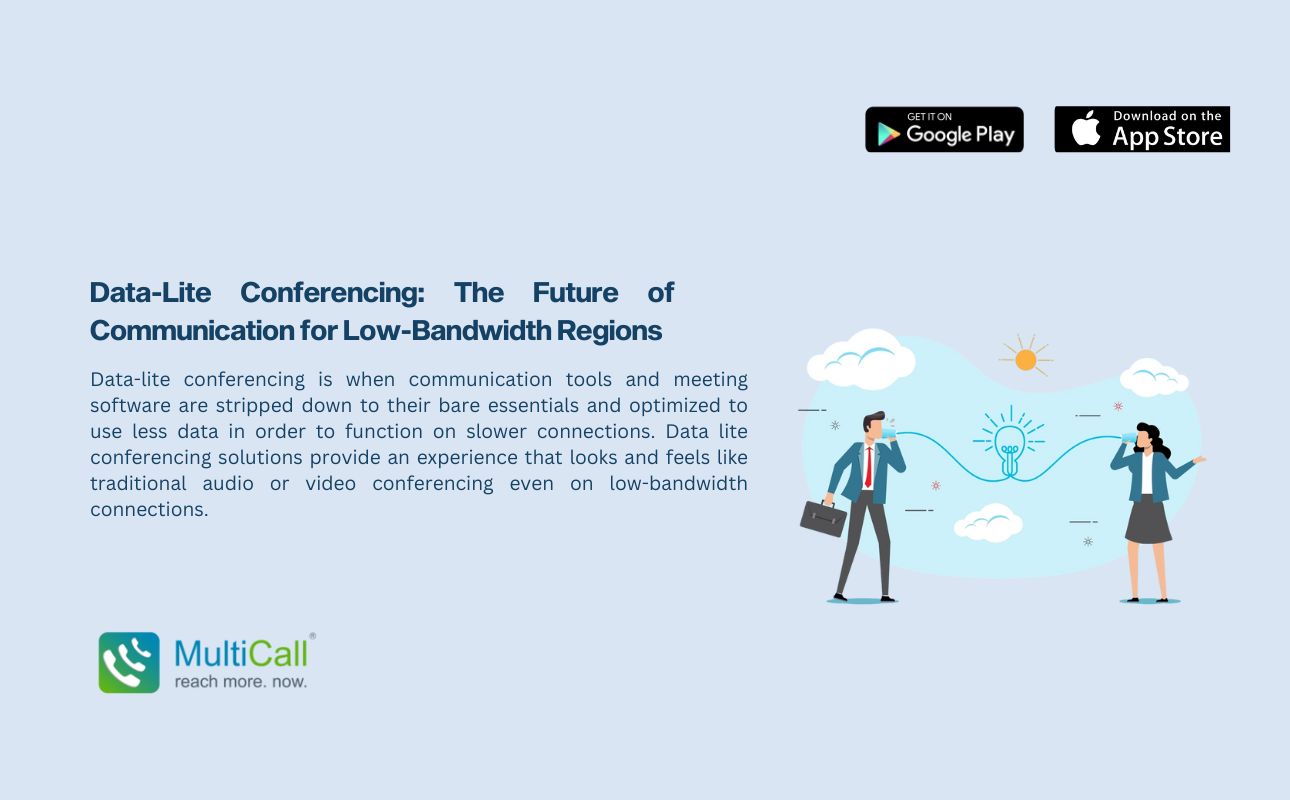
Data-lite conferencing is when communication tools and meeting software are stripped down to their bare essentials and optimized to use less data in order to function on slower connections. Data lite conferencing solutions provide an experience that looks and feels like traditional audio or video conferencing even on low-bandwidth connections.
The Digital Divide for Remote Workers and Communities
For the last 10 years, people have had the luxury of having powerful and fast internet connections. We’ve been used to pristine 1080p video on FaceTime and Slack with little or no lag or dropout. Video stops, audio buffers, and attendees start dropping like flies.
These remote workers or community members still need to communicate. They may have a work call, lecture, team meeting, or other group communications needs. And they still need to do so in ways that can work over limited, high-latency, or data-capped internet connections.
The Purpose of Data-Lite Conferencing
Bandwidth can easily fall to below 1 Mbps, and many connections are highly intermittent, like those on boats, and trains, in rural or remote areas, or in countries without good infrastructure.
For the hundreds of millions of people working or studying in low-bandwidth areas, there’s an obvious need for optimized data-limited tools that can make low-data audio and video collaboration and communication a practical reality.
The Benefits of Data-Lite Conferencing
-
Accessibility
No matter where someone is in the world, they may be able to join your conference with a data-lite solution, even with 2G/3G network speeds and/or spotty or capped internet access. Everyone is able to participate, including field employees, educators, health workers, NGO representatives, and more.
-
Cost Savings
Data in developing or rural regions is often very expensive and limited. Traditional conferencing solutions would gobble up data allowances and cost users a great deal of money. Data-lite conferencing dramatically reduces the amount of data used for voice or video calls and keeps usage to a minimum. Call costs are lowered and participation is increased.
-
More Reliable
In many areas, data speeds can be spotty or completely unavailable. Emergency situations, natural disasters, and community outages are all times when high-bandwidth internet connections are the first to go. Optimize calls for 2G speeds and support dial-in and text-based options to ensure calls get through.
-
Mobile First
Millions of people only have mobile phones. No computer, laptop, or tablet. Many data-lite conferencing solutions are mobile-first. Features can include highly compressed and lightweight apps, offline capabilities, or native support for multiple languages to improve accessibility.
Who’s Doing Data-Lite Conferencing Right?
Some platforms are thoughtfully designed with “graceful degradation” in mind. Graceful degradation is when the core features like voice and text chat are ensured to keep functioning as other, higher-bandwidth features fail (like video). Providers like Zoom, Google Hangouts, and many others have high-data and data-lite modes.
Data-Lite Conferencing is the Future
In the end, the most successful platforms will not be the ones that have all the extra bells and whistles, but rather those that are available to everyone no matter where in the world they are. The future of work is both distributed and hybrid and accessibility and inclusion are more important than ever.
Data-lite conferencing is all about digital equity. Not everyone is on equal footing when it comes to bandwidth, and data-lite conferencing is key to helping even the playing field.
Conclusion
Technology innovation has been won by the largest, most flashy, and most data-hungry communication platforms and applications. That leaves out the other 5 billion global users who may not have the high-speed connection to use these tools. One concept for addressing this issue is data-lite conferencing. Enabling real-time communications and collaboration in low-bandwidth situations is critical.
Join Us, From Anywhere.
Start making your meetings accessible to all team members today by trying our data-lite conferencing solutions and book a consultation with us.