Why Crisis Communication Needs Voice, Not Text
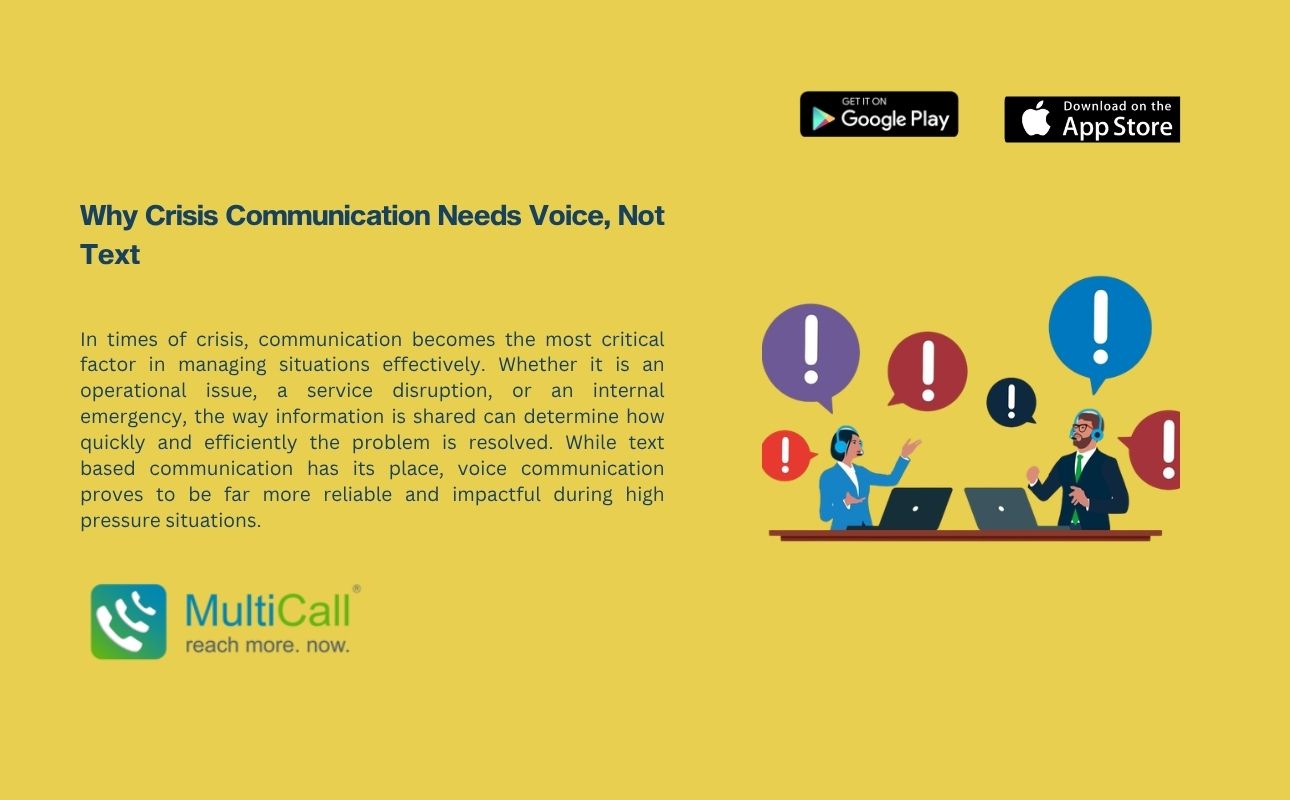
In times of crisis, communication becomes the most critical factor in managing situations effectively. Whether it is an operational issue, a service disruption, or an internal emergency, the way information is shared can determine how quickly and efficiently the problem is resolved. While text based communication has its place, voice communication proves to be far more reliable and impactful during high pressure situations.
The Limitations of Text in Urgent Situations
Text messages and emails are often delayed, misinterpreted, or overlooked during critical moments. In a crisis, every second matters, and waiting for someone to read and respond to a message can slow down the entire process.
Text also lacks tone and clarity, which can lead to confusion. Instructions may be misunderstood, and important details might be missed. This creates unnecessary delays and increases the risk of errors.
Relying only on text during a crisis can make coordination difficult and reduce the effectiveness of response efforts.
Voice Communication Enables Immediate Response
Voice communication allows teams to connect instantly and respond without delay. Instead of waiting for replies, participants can speak, listen, and act in real time.
With Instant Group Calling Apps, teams can quickly gather key members and start discussions immediately. This ensures that decisions are made faster and actions are taken without hesitation.
Immediate communication helps organizations handle crises more efficiently and minimize potential damage.
Clear Communication Reduces Misunderstanding
During a crisis, clarity is essential. Miscommunication can lead to incorrect actions, which may worsen the situation. Voice communication provides a direct and clear way to convey information.
Unlike text, voice allows participants to explain situations in detail, ask questions, and confirm understanding instantly. This reduces confusion and ensures that everyone is aligned.
Using Effective Team Communication Apps with voice capabilities helps teams maintain accuracy in communication, even under pressure.
Faster Decision Making in Critical Moments
Crisis situations often require quick decisions. Delays in communication can lead to missed opportunities or increased risks. Voice calls enable teams to discuss issues and make decisions on the spot.
Through Group Call Business Communication, multiple stakeholders can join a call and share their inputs simultaneously. This collaborative approach ensures that decisions are well informed and timely.
Faster decision making is key to resolving crises effectively and maintaining business continuity.
Real Time Coordination Across Teams
In many organizations, crisis management involves multiple departments. Coordinating between these teams using text can be slow and inefficient.
A reliable Group Calling App allows all relevant members to join a single call, making coordination seamless. Teams can share updates, assign tasks, and monitor progress in real time.
This level of coordination ensures that everyone works together toward resolving the issue without delays.
Reliability During High Pressure Situations
In a crisis, communication systems must be dependable. Internet based messaging platforms may fail or become slow during peak usage. This can disrupt communication at critical moments.
With PSTN-based Calling Services, businesses can ensure stable and uninterrupted communication. These services provide a reliable connection, making them ideal for handling emergencies.
Reliable communication tools help organizations stay connected when it matters the most.
Structured and Organized Communication
Crisis communication requires a structured approach. Random messages across different platforms can create confusion and make it difficult to track information.
Voice calls provide a centralized way to communicate, where all participants are part of the same discussion. This helps in maintaining order and ensuring that information flows clearly.
Using the Best Audio Conferencing Apps allows organizations to manage crisis communication in a more organized and efficient manner.
Planning and Preparedness Through Scheduling
While crises are often unexpected, having a plan in place can make a significant difference. Organizations can prepare by setting up communication protocols in advance.
The ability to Schedule calls using app helps teams conduct regular drills and preparedness sessions. This ensures that employees know how to respond and communicate effectively during actual emergencies.
Prepared teams are better equipped to handle crises with confidence and clarity.
Conclusion
In critical situations, the method of communication can directly impact the outcome. While text based communication is useful for routine tasks, it falls short during emergencies where speed and clarity are essential.
Voice communication provides immediate response, clear understanding, and reliable coordination. By leveraging tools like Instant Group Calling Apps, Group Call Business Communication, and PSTN-based Calling Services, organizations can strengthen their crisis management approach.
Choosing voice over text during a crisis is not just a preference, it is a necessity for ensuring effective and timely action.