
multicall

Why Flexible Communication Plans Are Essential for Businesses

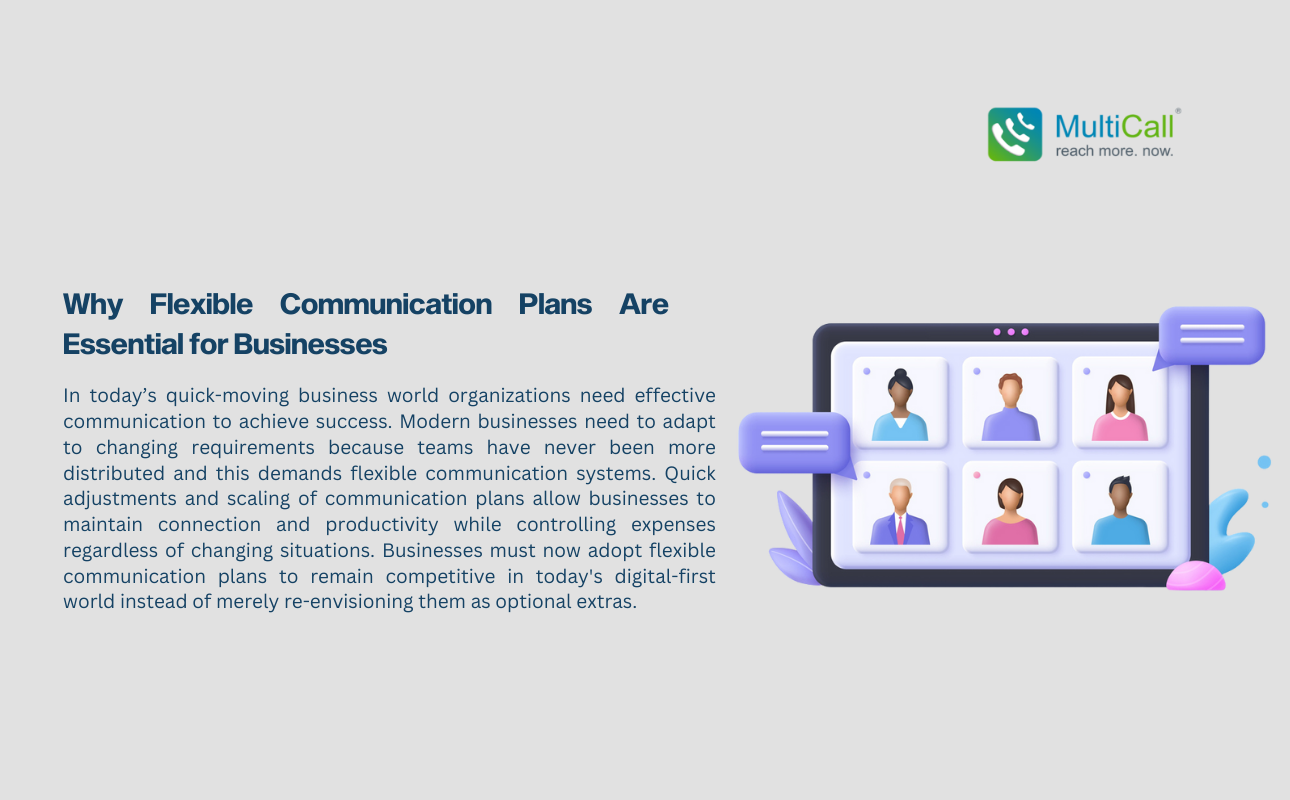
In today’s quick-moving business world organizations need effective communication to achieve success. Modern businesses need to adapt to changing requirements because teams have never been more distributed and this demands flexible communication systems. Quick adjustments and scaling of communication plans allow businesses to maintain connection and productivity while controlling expenses regardless of changing situations. Businesses must now adopt flexible communication plans to remain competitive in today’s digital-first world instead of merely re-envisioning them as optional extras.

Adaptability for Varied Communication Needs

Flexible communication plans excel by allowing users to transition between multiple communication modes such as phone calls, group discussions and video conferences. Businesses can select the optimal communication method for each scenario through services that combine PSTN-based calling with video conferencing solutions. Teams can switch to video conferencing with Conclave for visual collaboration when a meeting needs more than audio without platform or system changes.

Customizable Solutions for Teams of All Sizes

All businesses regardless of their size require communication tools which scale to match their growth. Through flexible plans organizations have access to group call business communication and instant group calling apps which leads to better management of team communication. Customization options in your plans mean that whether your team size is small or global you will always have access to the necessary resources for effective connections.

Cost-Efficiency and Control

Businesses choose flexible communication plans mainly for their cost-saving benefits. Through prepaid plans or unlimited licenses companies maintain financial control without reducing their service quality. Through call scheduling applications teams can organize future meetings which helps avoid both time wastage and unexpected call expenses. Businesses can match their communication requirements to their financial resources with flexible plans which guarantee consistent service value.

Enhanced Security and Privacy

When selecting a communication plan businesses must prioritize security as a critical consideration. Flexible plans usually provide security options such as number masking during calls and secure group calling apps to safeguard sensitive data. Businesses that depend more on remote teams and external partners must prioritize secure communications.

Effortless Integration and Ease of Use

Businesses require tools that function seamlessly within their existing workflows to maintain productivity. Persistent login calling apps included in flexible communication plans help employees access communication platforms without needing to log in repeatedly. The result is an improved overall user experience because teams can concentrate on collaboration without technical challenges.

Conclusion

The evolution of communication solutions must parallel the growth trajectory of businesses. Modern teams require adaptable and scalable communication solutions that also offer cost savings which flexible communication plans provide. Businesses that use high-quality PSTN calling along with next-generation video conferencing and group calling solutions maintain seamless and efficient communication. Organizations aiming to maintain a competitive edge should invest in flexible communication plans because our world is becoming more interconnected.

Contact Form


apple-store-app
google-play-app

YOU MAY ALSO LIKE

multicall

 Is Your Business Over-Relying on Chat Apps

Many businesses today rely heavily on chat apps for daily communication. While messaging platforms are quick and convenient, they are not always the most effective way to handle important discussions. Over time, this dependency can create gaps in clarity, delay decision making, and reduce the quality of communication. Businesses need to evaluate whether chat apps are truly supporting their goals or slowing them down.

Read More »
multicall

Why Fast Coordination Matters More Than Perfect Slides

In many business situations, teams spend a lot of time preparing perfect presentations and detailed slides. While visuals can support communication, they are not always the most important factor. What truly matters is how quickly teams can connect, discuss, and make decisions. With Best Audio Conferencing Apps, teams can focus on real conversations instead of spending time perfecting slides that may not add real value.

Read More »
multicall

 Why Audio Calls Are Better Than Video for Focused Business Communication

In today’s fast moving business environment, communication needs to be clear, quick, and easy to manage. Video calls have become common, but they often add extra layers that are not always necessary. Audio calls offer a simpler and more practical way to connect. By using Best Audio Conferencing Apps, businesses can keep conversations smooth and focused without worrying about visual elements.

Read More »
multicall

Why Voice Communication Builds More Trust Than Emails

In business, trust is built through clear and genuine communication. While emails are widely used, they often lack emotional tone and personal connection. Voice communication brings a human element into conversations, allowing people to express tone, intent, and clarity.

Read More »
multicall

 The Real Reason Enterprises Are Moving Back to Voice

For several years, enterprises embraced video meetings, chat platforms, and collaborative dashboards as the future of communication. While these tools improved connectivity, they also introduced new challenges. Constant notifications, long message threads, and extended video sessions began to reduce focus and efficiency.

Read More »