multicall

4 Causes of Video-Conferencing Fatigue

It certainly would feel at this point like the whole world is tired. Vaccines being made available seems to be a light at the end of the tunnel, but prolonged work-from-home and its reliance on tools such as video conferencing has one other bad news can leave employees feeling drained!

The frequency of virtual meetings on a daily basis is off the charts, given that social distancing protocols have kept team members apart. Such a degree of meetings is unnatural, and can be physically draining, leading to what’s known as video conference fatigue.

But here’s the good news; studies have narrowed it down to specific causes, and there are steps that you can take in order to address it!

Excessive close-up eye contact

Both the amount of eye contact we engage in on video chats, as well as the size of faces on screens is dramatically beyond what we can normally handle. In normal meetings, people would look at the person speaking, taking the meeting minutes or similar.

 But on video conference calls, everyone is looking at everyone simultaneously for the full duration. Those listening to the meetings are treated nonverbally, so even without speaking, one still is having to look at faces staring at you.

 Additionally, your computer’s monitor size can also be an additional source of stress; with faces on videoconferencing calls appearing too large for comfort.  Naturally, this creates stress. With this sort of proximity, our brains would interpret it as an intense situation that could possibly lead to conflict. Now imagine this sort of intensity being felt for hours on end!

Seeing yourself during video chats constantly can be exhausting

Imagine someone constantly following you with a mirror, and that you did all activities with people while looking at this mirror as you did them. Name it: Speaking. Decision making. Giving and taking feedback.

Would you not be stressed out doing all this with a mirror in front of you? Why wouldn’t a camera be any different? Seeing your own reflection via the video webcam results in being more self-conscious, and therein more critical of yourself. Done for a prolonged basis, and it can be emotionally taxing and stressful.

Reduction of mobility.

In-person and audio phone conversations allow humans to manage calls on the go. But with videoconferences, a person will have to generally stay in the same spot.

As a consequence, movement is severely limited. Studies have shown greater cognitive functioning when people are moving. MultiCall lets you call your entire team while on the move.

You only require your smartphone, and can even set the “Call-Me-On” numbers to an office landline if needed! So, take an “audio break”, and move around as you deal with the day’s usual business!

Higher Cognitive Load

In regular face-to-face interaction, nonverbal communication is natural, with all parties involved making or interpreting gestures and cues subconsciously. But sending such cues is much harder in video chats. Such cues could also mean different things in the context of a video meeting, as against a face-to-face one. Imagine looking to your side.

Face-to-face, that could mean looking to consult with someone else also in the meeting. But on video, that could come off as disinterested or distracted. Additionally, the situation of playing the balancing act of household and work activities under the same roof can further exacerbate this.

We have learned a lot from COVID-19, but still have uncharted roads ahead toward effectively and efficiently managing remote working, especially with regard to conferencing. Managers can try and motivate employees on call.

Nevertheless, more problems or issues may present themselves. The ability to start anew and address the issues at present is what would help people and companies alike to achieve and reach more, now.

Contact Form


apple-store-app
google-play-app

YOU MAY ALSO LIKE

 From Chaos to Clarity: How Instant Group Calling Saves the Day

Every enterprise experiences moments of chaos. A client escalation, a system outage, a delayed shipment, or a sudden policy change can quickly disrupt normal operations. In such situations, confusion spreads faster than solutions. Messages start flying across chat platforms. Emails pile up. Teams struggle to align.
Read More »

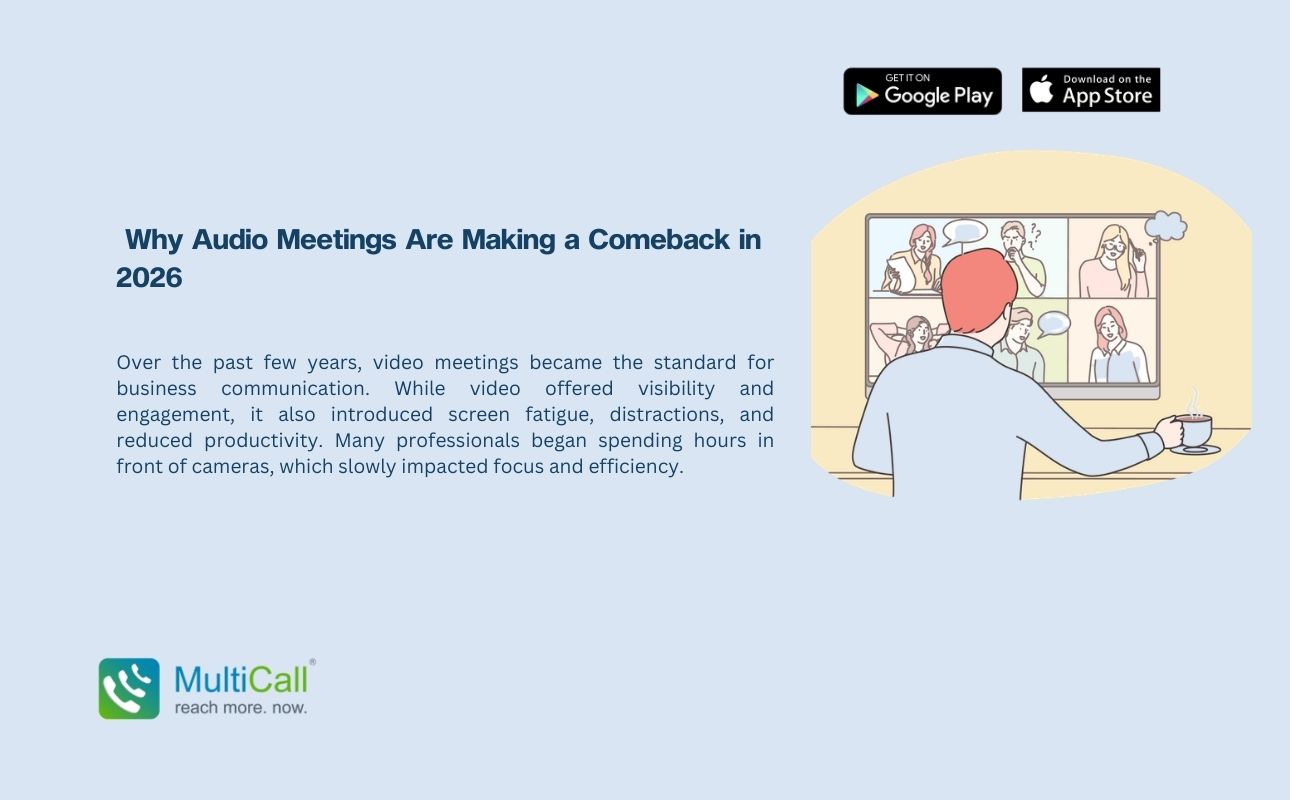
 Why Audio Meetings Are Making a Comeback in 2026

Over the past few years, video meetings became the standard for business communication. While video offered visibility and engagement, it also introduced screen fatigue, distractions, and reduced productivity. Many professionals began spending hours in front of cameras, which slowly impacted focus and efficiency.

Read More »

How One Missed Call Can Cost Your Business Crores

In business, opportunities rarely announce themselves twice. A single incoming call could represent a new client inquiry, a partnership proposal, a high value contract, or an urgent operational update. When that call goes unanswered, the cost is not just a missed conversation. It could mean losing revenue worth crores.

Read More »

  The 5 Biggest Communication Mistakes Enterprises Make

Enterprise success depends heavily on how well teams communicate. Strategy, execution, and client relationships all rely on clear and timely interaction. Despite having access to modern tools, many organizations continue to make communication mistakes that slow growth and reduce efficiency.

Read More »