Why Voice Communication Builds More Trust Than Emails
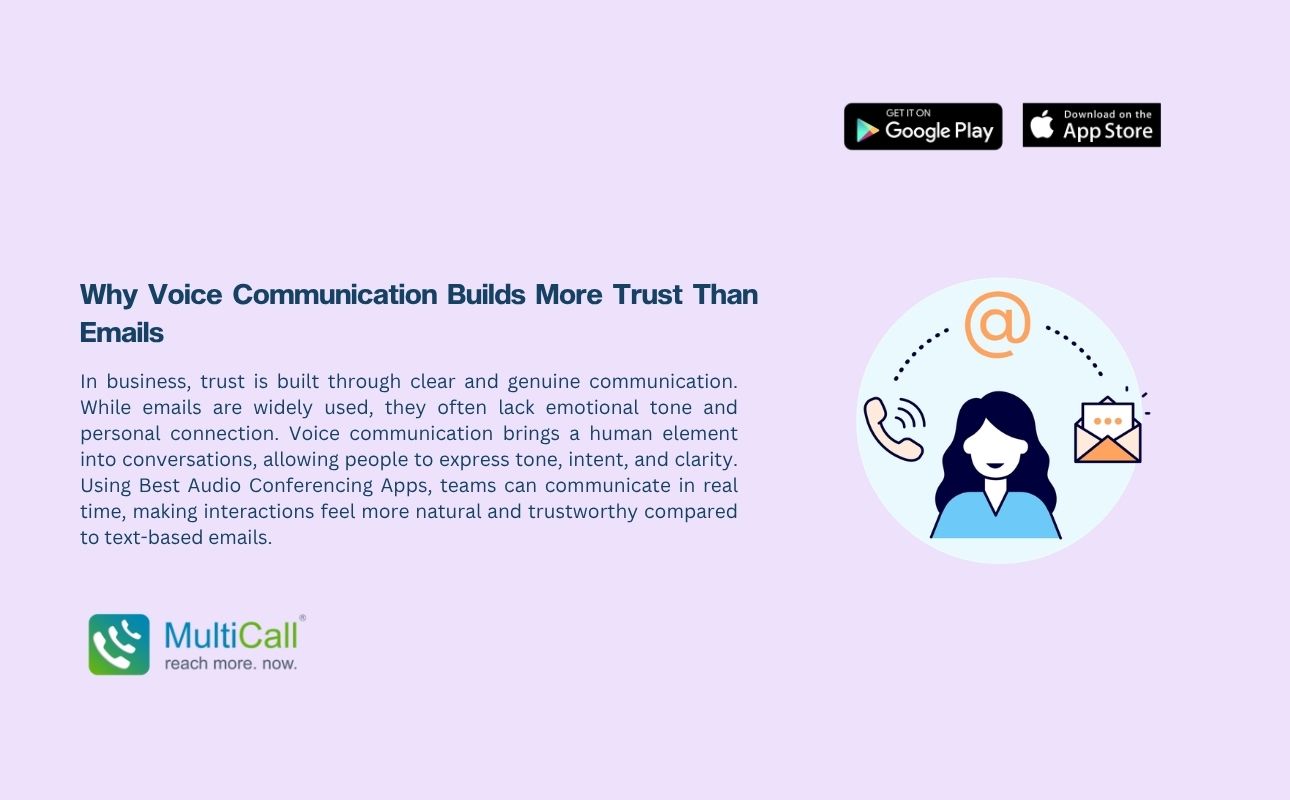
In business, trust is built through clear and genuine communication. While emails are widely used, they often lack emotional tone and personal connection. Voice communication brings a human element into conversations, allowing people to express tone, intent, and clarity. Using Best Audio Conferencing Apps, teams can communicate in real time, making interactions feel more natural and trustworthy compared to text-based emails.
Clarity and Immediate Understanding
Emails can sometimes be misinterpreted due to lack of context or tone. A simple message can be read in different ways, leading to confusion or misunderstandings. Voice communication eliminates this issue by allowing participants to explain their thoughts clearly. With Group Call Business Communication, multiple team members can join a discussion and understand each other instantly, reducing the chances of miscommunication.
Faster Responses and Real-Time Interaction
One of the biggest advantages of voice communication is speed. Emails often involve delays, as responses depend on when the recipient checks their inbox. In contrast, voice communication allows immediate interaction. Teams can ask questions, clarify doubts, and make decisions in real time. This quick response system builds confidence among team members and strengthens trust in communication.
Building Stronger Relationships
Trust grows when people feel heard and understood. Voice communication creates an environment where participants can actively engage in conversations. Hearing someone’s voice adds a personal touch that emails cannot provide. This is especially important in team collaborations and client interactions, where relationships play a key role in long-term success.
Reliability with PSTN-Based Communication
For businesses that require consistent and stable communication, PSTN-based Calling Services offer a reliable solution. Unlike internet-dependent messaging or email systems, PSTN ensures clear and uninterrupted voice calls. This reliability enhances trust, as participants can depend on the communication system without worrying about disruptions or delays.
Enhancing Team Collaboration
Effective collaboration requires open and continuous communication. Voice calls make it easier for teams to brainstorm ideas, discuss challenges, and share updates. With Effective Team Communication Apps, organizations can create a more connected work environment where everyone stays aligned. This level of interaction helps teams build trust and work more efficiently together.
Convenience of Scheduled Conversations
Another advantage of voice communication is the ability to plan discussions in advance. Instead of long email threads, teams can Schedule calls using app features and address multiple points in a single conversation. This saves time and ensures that all participants are present and engaged, leading to more meaningful and productive discussions.
Reducing Misinterpretation and Conflicts
Emails can sometimes lead to unintended conflicts due to misinterpretation of tone or wording. Voice communication helps avoid such situations by allowing participants to express themselves clearly. Immediate feedback and clarification reduce misunderstandings, creating a more positive and trusting communication environment.
Conclusion
Voice communication plays a vital role in building trust within teams and organizations. It provides clarity, real-time interaction, and a personal connection that emails often lack. By using Best Audio Conferencing Apps, enabling Group Call Business Communication, leveraging PSTN-based Calling Services, utilizing features to Schedule calls using app, and adopting Effective Team Communication Apps, businesses can strengthen relationships, improve collaboration, and build lasting trust through effective communication.