Unleashing the Power of Voice API Integration for Custom Business Communication Solutions
The Evolution of Communication Platforms for Modern Businesses
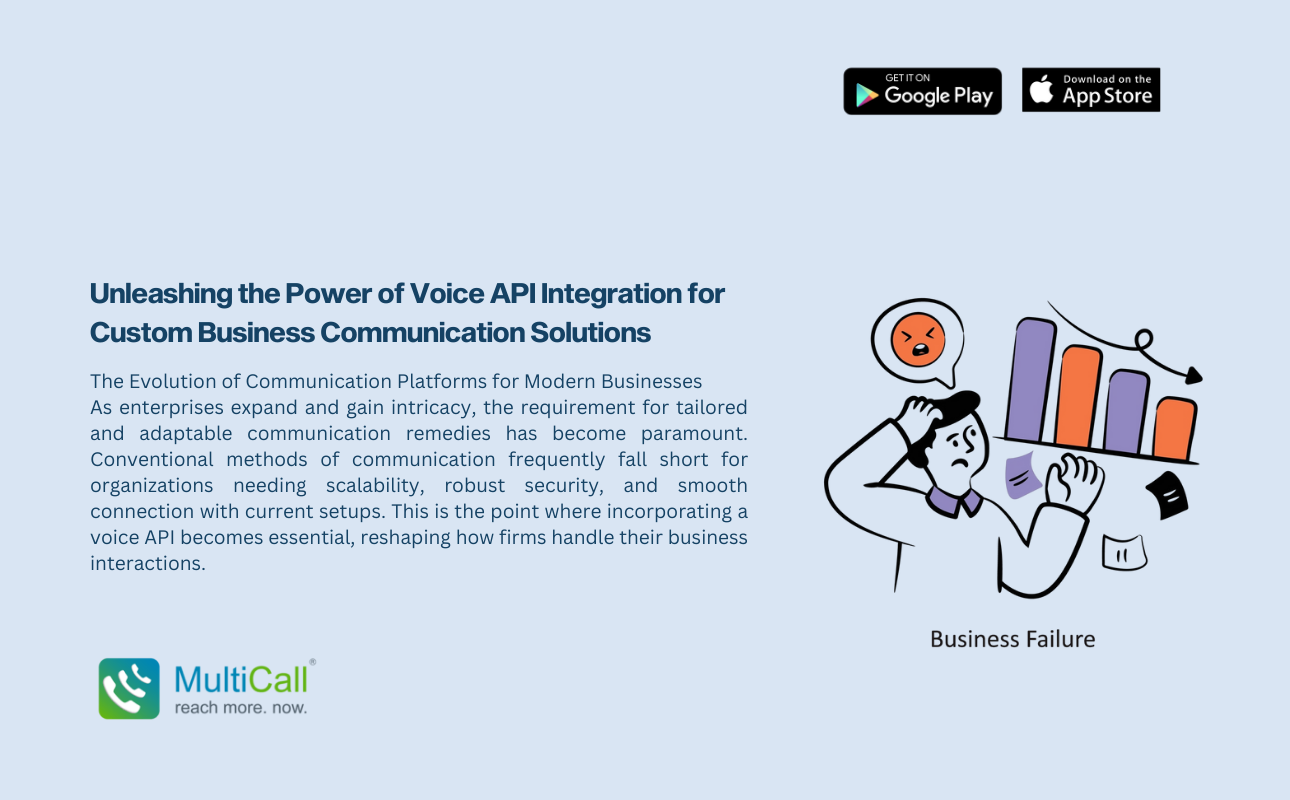
As enterprises expand and gain intricacy, the requirement for tailored and adaptable communication remedies has become paramount. Conventional methods of communication frequently fall short for organizations needing scalability, robust security, and smooth connection with current setups. This is the point where incorporating a voice API becomes essential, reshaping how firms handle their business interactions.
Through voice API implementation, organizations gain the ability to personalize and enhance their communication infrastructures, guaranteeing they address the singular requirements of their activities. From linking PSTN calling features for dependable audio quality, weaving in conference calling applications within customer relationship platforms, or delivering modern video conferencing for geographically dispersed personnel, voice APIs supply a potent answer that conforms to the company’s distinct necessities.
What is Voice API Integration?
Incorporating a Voice API lets enterprises augment their current communication setups by putting voice calling capabilities right into their processes. Whether connecting PSTN calling options for superior audio, developing group dialogue features for internal communication on their systems, or giving voice power to support applications, API voice integration lets organizations govern and tailor their communication framework.
By using API connection, companies can manage calls using code, streamline customer engagement, monitor discussions, and examine metrics—all inside their present platforms. This adaptability enables organizations to engineer custom solutions designed for their specific needs.
How Voice API Integration Improves Business Communication
Customization for Unique Business Needs
Each enterprise possesses unique characteristics and distinct communication needs. Through voice API integration, companies are able to build a customized setup that meshes perfectly with their current software. Firms requiring the ability to set up calls via the application, streamline client assistance, or incorporate sophisticated call redirection can embed these capabilities within their CRM platforms, sales applications, or internal messaging utilities.
Streamlined Team Collaboration
For expanding enterprises needing team call capabilities, incorporating a voice API lets them handle big meetings and internal teamwork right inside their existing platforms. Groups are able to set up and start calls, exchange data, and review past meetings, all from one spot. This simplified workflow cuts down on hurdles, boosts productivity, and sharpens cooperation between different units.
Secure and Scalable Communication
As enterprises expand, their communication demands shift. Integrating a Voice API allows secure group calling applications to manage a growing call load while preserving both security and quality. Features like call number masking enable businesses to safeguard customer privacy during exchanges, all while supporting the necessary scalability for expansion.
Enhanced Customer Engagement
Integrating Voice API extends beyond just in-house messaging. It’s also crucial for enhancing how businesses connect with patrons. By weaving voice calling capabilities into customer-facing applications, companies can foster superior client experiences. From automated support dial-outs and tailored sales discussions to merging live chat with voice exchanges, simple calling tools enabled by Voice API integration allow businesses to connect with customers with greater impact.
Improved Workflow with Voice API Integration
As businesses increasingly embrace digital transformation, blending communication instruments within their operational processes is vital. Pairing Voice API capabilities can smoothly link traditional phone network (PSTN) calling functions, private team chat apps, and video meeting solutions directly into current enterprise software, like customer relationship management (CRM), sales tracking applications, or client assistance systems.
To illustrate, weaving voice API connectivity into a support desk framework enables firms to automate client assistance via calls, set up subsequent check-ins, or monitor customer interactions, entirely from that single application. This connection boosts process smoothness, sharpens information logging, and guarantees team alignment.
Streamlining Collaboration Across Teams with Custom Solutions
For numerous enterprises, staying connected requires more than just spoken conversations. Workgroups depend on a range of interaction methods, spanning from face-to-face online sessions to swift text exchanges, to work together productively. Tying in a Voice API lets companies develop tailored interaction arrangements that consolidate every one of these pathways onto a solitary system.
This linkage guarantees staff can effortlessly shift between distinct methods of interaction without sacrificing the core subject or data. Be it a conference call regarding company matters, a video session using Conclave, or just arranging a subsequent talk, voice APIs facilitate maintaining an uninterrupted communication stream across departments.
Voice API Integration in Next-Generation Video Conferencing
As remote work grows, advanced video conferencing is proving essential for companies. By weaving voice APIs into video systems, businesses can boost the standard of online gatherings through the inclusion of smooth PSTN calling features for superior sound. This enables work groups to benefit from top-tier PSTN contact during online sessions without breaks, whether they are working together or talking to customers.
Furthermore, adding voice APIs simplifies meeting administration functions, such as setting up calls within the application, which helps teams handle virtual conversations more easily. With these capabilities available, organizations can deliver a more complete and linked virtual meeting environment.
Conclusion
As enterprises keep changing, the requirement for adaptable, expandable, and safe communication methods grows more vital. Voice API incorporation grants firms the power to tailor their communication frameworks, boost teamwork within, and elevate how they connect with clients. Be it traditional phone network calling features, large group business talks, or protected group communication software, voice API linking guarantees organizations can satisfy their specific requirements while making operations run smoother.
Through adopting voice API linking, organizations can simplify talking, lower expenditures, and better teamwork both inside and with their clientele. Given that businesses now depend heavily on digital methods of conversation, utilizing an advanced video conferencing and calling platform via voice API integration will be essential for maintaining an edge and satisfying the expectations of today’s work environment.