multicall

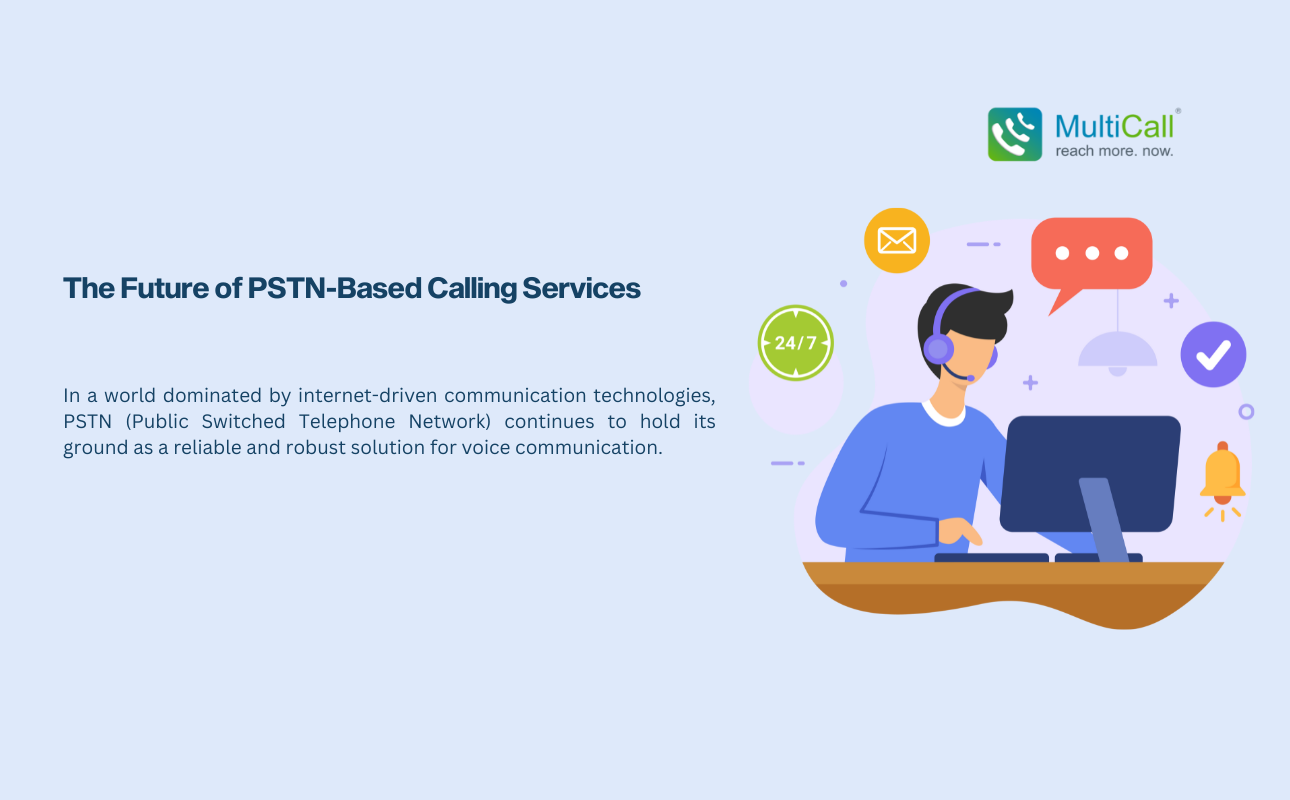
The Future of PSTN-Based Calling Services

In a world dominated by internet-driven communication technologies, PSTN (Public Switched Telephone Network) continues to hold its ground as a reliable and robust solution for voice communication. While VoIP and other internet-based services are popular, PSTN-based calling services offer unique advantages that ensure their relevance in the evolving communication landscape. With platforms like MultiCall, the future of PSTN is being redefined by integrating traditional strengths with modern innovations.

Why PSTN-Based Calling Services Remain Relevant

  1. Unmatched Reliability
    PSTN operates independently of internet connectivity, ensuring consistent performance even in areas with low or no internet access. For businesses and individuals in rural or remote locations, this reliability is indispensable.
  2. Superior Sound Quality
    Unlike internet-based solutions prone to lags and interference, high-quality PSTN calling delivers clear, uninterrupted audio. This makes it ideal for professional communication where clarity is critical.
  3. Global Accessibility
    PSTN connects to virtually any phone number worldwide, enabling group calling without internet and ensuring seamless communication across geographies.

Innovations Shaping the Future of PSTN

  1. Integration with Modern Technology
    Platforms like MultiCall are merging PSTN-based calling services with advanced features such as instant group calling, call scheduling, and call monitoring. These innovations bring the best of traditional and modern communication methods together.
  2. Enhanced Privacy and Security
    As concerns about data breaches grow, PSTN’s inherent security advantages, combined with features like number masking, make it a preferred choice for secure communication.
  3. Cost Efficiency for Businesses
    With advancements in infrastructure, PSTN is becoming more affordable. Apps like MultiCall leverage cost-efficient calling solutions to provide businesses with high-quality, reliable communication without inflating budgets.
  4. Hybrid Communication Models
    The future of PSTN lies in hybrid models that combine PSTN’s reliability with internet-based functionalities. For instance, MultiCall’s call-me-on feature allows users to integrate their PSTN services with mobile devices for seamless connectivity.

The Road Ahead

As businesses continue to demand seamless business communication, the future of PSTN will focus on adaptability and integration. Innovations like scheduled calls, call monitoring, and cross-platform connectivity ensure that PSTN-based services remain relevant and indispensable.

Conclusion

The future of PSTN-based calling services is a blend of reliability, innovation, and accessibility. Platforms like MultiCall are paving the way by integrating modern features with the strengths of PSTN, ensuring that it remains a cornerstone of professional and personal communication.

Contact Form


apple-store-app
google-play-app

YOU MAY ALSO LIKE

Why MultiCall’s PSTN-Based Calling Services Are the Backbone of Reliable Business Communication

Reliable communication is critical for businesses that operate across teams, customers, and partners. While internet-based tools are popular, they are not always dependable, especially in areas with unstable connectivity. This is why PSTN-based calling continues to play a major role in business communication. MultiCall’s PSTN-based audio calling services provide a stable and trusted foundation that businesses can depend on every day.

Read More »

Revolutionizing Virtual Events: How MultiCall Supports Large-Scale Webinars and Conferences

Virtual events have become an important part of how organizations connect with audiences today. From webinars and leadership talks to industry conferences and internal town halls, businesses rely on virtual platforms to reach large groups. While video events have their place, audio-based communication continues to be one of the most reliable and scalable solutions. MultiCall supports large-scale virtual events through powerful, audio-only group calling tools that keep communication clear and accessible.

Read More »

How MultiCall Facilitates Efficient Remote Team Communication Across Time Zones

The Evolution of Communication Platforms for Modern Businesses
As enterprises expand and gain intricacy, the requirement for tailored and adaptable communication remedies has become paramount. Conventional methods of communication frequently fall short for organizations needing scalability, robust security, and smooth connection with current setups. This is the point where incorporating a voice API becomes essential, reshaping how firms handle their business interactions.

Read More »

Breaking Down Communication Barriers: MultiCall’s Role in Cross-Department Collaboration

In large organizations, departments often work in silos. Teams may have different priorities, workflows, and schedules, which can create communication gaps. These gaps slow down decisions and affect overall productivity. Clear and fast communication is essential to bring teams together. This is where audio-based group calling becomes a powerful tool. MultiCall helps organizations improve collaboration by enabling smooth and reliable communication across departments.

Read More »

Unleashing the Power of Voice API Integration for Custom Business Communication Solutions

The Evolution of Communication Platforms for Modern Businesses
As enterprises expand and gain intricacy, the requirement for tailored and adaptable communication remedies has become paramount. Conventional methods of communication frequently fall short for organizations needing scalability, robust security, and smooth connection with current setups. This is the point where incorporating a voice API becomes essential, reshaping how firms handle their business interactions.

Read More »