
multicall

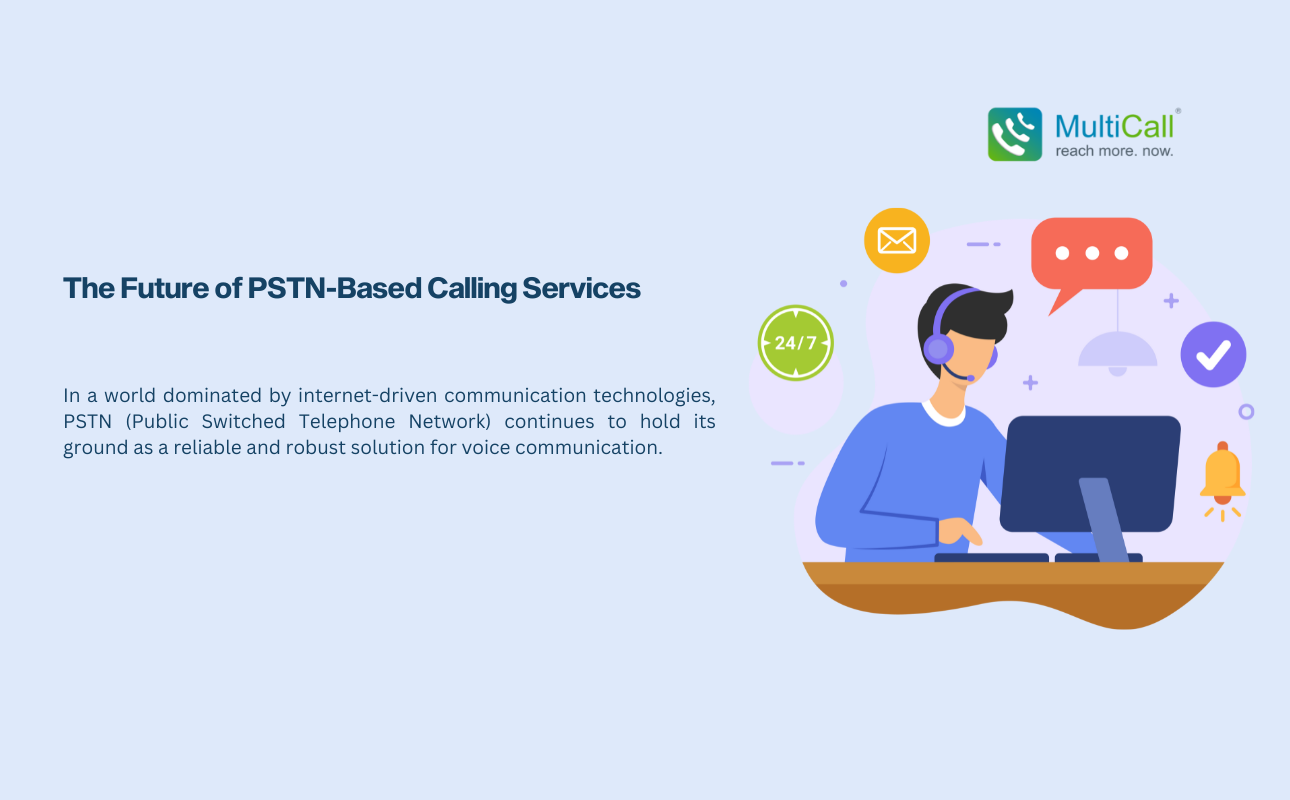
The Future of PSTN-Based Calling Services

In a world dominated by internet-driven communication technologies, PSTN (Public Switched Telephone Network) continues to hold its ground as a reliable and robust solution for voice communication. While VoIP and other internet-based services are popular, PSTN-based calling services offer unique advantages that ensure their relevance in the evolving communication landscape. With platforms like MultiCall, the future of PSTN is being redefined by integrating traditional strengths with modern innovations.

Why PSTN-Based Calling Services Remain Relevant

  1. Unmatched Reliability
    PSTN operates independently of internet connectivity, ensuring consistent performance even in areas with low or no internet access. For businesses and individuals in rural or remote locations, this reliability is indispensable.
  2. Superior Sound Quality
    Unlike internet-based solutions prone to lags and interference, high-quality PSTN calling delivers clear, uninterrupted audio. This makes it ideal for professional communication where clarity is critical.
  3. Global Accessibility
    PSTN connects to virtually any phone number worldwide, enabling group calling without internet and ensuring seamless communication across geographies.

Innovations Shaping the Future of PSTN

  1. Integration with Modern Technology
    Platforms like MultiCall are merging PSTN-based calling services with advanced features such as instant group calling, call scheduling, and call monitoring. These innovations bring the best of traditional and modern communication methods together.
  2. Enhanced Privacy and Security
    As concerns about data breaches grow, PSTN’s inherent security advantages, combined with features like number masking, make it a preferred choice for secure communication.
  3. Cost Efficiency for Businesses
    With advancements in infrastructure, PSTN is becoming more affordable. Apps like MultiCall leverage cost-efficient calling solutions to provide businesses with high-quality, reliable communication without inflating budgets.
  4. Hybrid Communication Models
    The future of PSTN lies in hybrid models that combine PSTN’s reliability with internet-based functionalities. For instance, MultiCall’s call-me-on feature allows users to integrate their PSTN services with mobile devices for seamless connectivity.

The Road Ahead

As businesses continue to demand seamless business communication, the future of PSTN will focus on adaptability and integration. Innovations like scheduled calls, call monitoring, and cross-platform connectivity ensure that PSTN-based services remain relevant and indispensable.

Conclusion

The future of PSTN-based calling services is a blend of reliability, innovation, and accessibility. Platforms like MultiCall are paving the way by integrating modern features with the strengths of PSTN, ensuring that it remains a cornerstone of professional and personal communication.

Contact Form


apple-store-app
google-play-app

YOU MAY ALSO LIKE

communication breakdown

How Enterprises Can Avoid Communication Breakdowns

Communication is the foundation of every successful enterprise. When communication flows smoothly, teams stay aligned, decisions are made quickly, and operations run efficiently. However, when communication breaks down, it can lead to confusion, delays, and costly mistakes. For large enterprises, avoiding these breakdowns is essential to maintain productivity and performance.

Read More »
audio

Why Reliable Audio Infrastructure Is a Competitive Advantage

In today’s competitive business environment, communication is not just a support function, it is a strategic advantage. Companies that communicate faster, clearer, and more reliably often outperform others. While many organizations focus on tools and platforms, the real strength lies in having a reliable audio infrastructure that supports seamless communication at all times

Read More »
group calls

When Every Second Counts: The Power of Instant Group Calls

In today’s fast moving business environment, speed plays a critical role in success. Whether it is handling urgent issues, making quick decisions, or coordinating teams, every second matters. Delays in communication can lead to missed opportunities, operational disruptions, and reduced productivity. This is where instant group calls become a powerful solution for businesses.

Read More »
communication

What Real-Time Communication Looks Like in Large Enterprises

Large enterprises operate in complex environments where multiple teams, departments, and locations must work together seamlessly. In such settings, real time communication is not just an advantage, it is a necessity. It ensures that information flows quickly, decisions are made efficiently, and operations continue without disruption.

Read More »
collaboration

The Future of Enterprise Collaboration Is Simpler Than You Think

Enterprise collaboration has evolved significantly over the years. From long email threads to complex project management tools, businesses have continuously tried to improve how teams work together. However, as systems become more advanced, they often become more complicated. The future of collaboration is not about adding more layers, but about simplifying communication to make it faster, clearer, and more effective.

Read More »
audio

Why Crisis Communication Needs Voice, Not Text

In times of crisis, communication becomes the most critical factor in managing situations effectively. Whether it is an operational issue, a service disruption, or an internal emergency, the way information is shared can determine how quickly and efficiently the problem is resolved. While text based communication has its place, voice communication proves to be far more reliable and impactful during high pressure situations.

Read More »