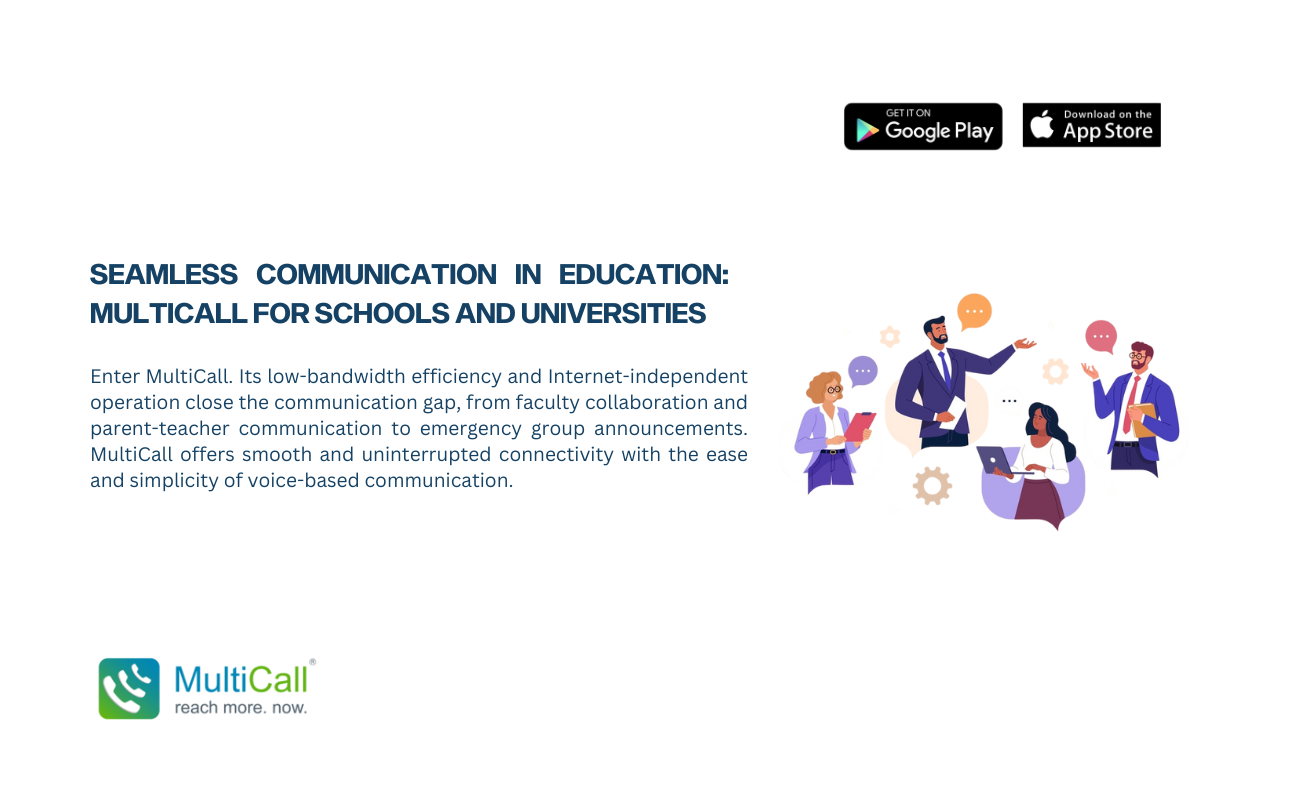
Enter MultiCall. Its low-bandwidth efficiency and Internet-independent operation close the communication gap, from faculty collaboration and parent-teacher communication to emergency group announcements. MultiCall offers smooth and uninterrupted connectivity with the ease and simplicity of voice-based communication.
Why Communication in Education Matters
in many cases, institutions depend on messaging or video-calling platforms designed primarily for social interaction. These apps often require high-speed data connections, sign-ins, and regular updates to operate—and don’t usually scale well for a classroom of students or a district of schools.
MultiCall puts control back into the hands of schools and education providers by making multi-way calling easy and intuitive. With a simple link, teachers, support staff, or administration can join a MultiCall group and dial out to anyone on a regular phone line—phone number or not.
Educators can:
* Hold a quick all-campus faculty meeting.
* Schedule a call with parents without the need to download apps or log in.
* Host an informal or impromptu small group study session or Q&A using voice calls.
* Share a quick group update or announcement with colleagues or students.
The best part is that MultiCall functions on any device with access to a phone number. MultiCall does not require data (or rely on data) to work, so communication is even easier in areas where phone service is not available or where high-speed Internet is not available.
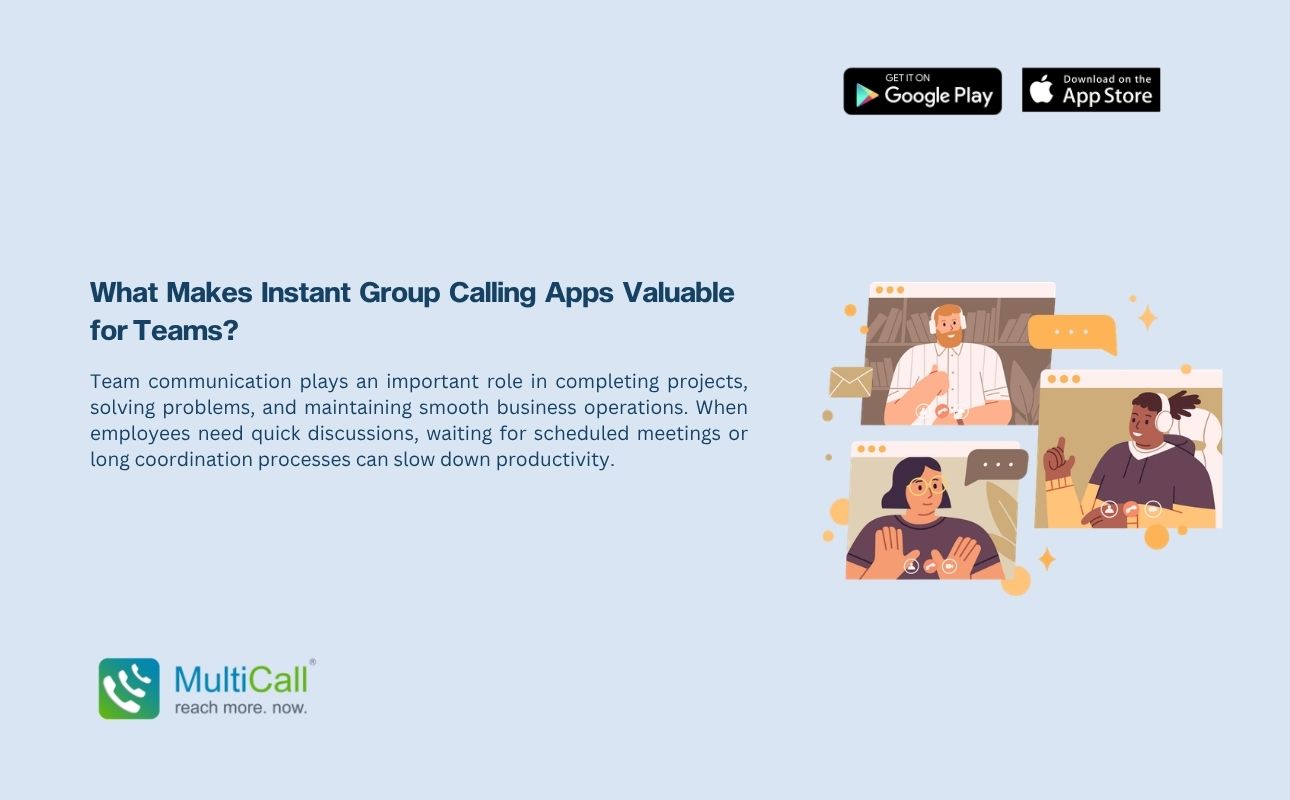
Real-time cross-team collaboration ensures that information is shared faster and across silos for institutions that know how to leverage it.
Enabling Remote and Hybrid Learning Models
The adoption of hybrid education systems and part-time distance learning has only increased after the pandemic. MultiCall provides educators with a direct group calling feature that can be used to connect with students or parents during situations of limited connectivity. When classrooms go online or extend to hybrid modes, teachers can leverage MultiCall to:
* Share instructions or learning materials in real time.
* Address students’ questions and academic or administrative concerns.
* Provide location or time updates to students or parents.
* Coordinate within the school team among teachers and support staff.
For remote educators or educators working outside of their home country or institution, MultiCall also makes it a simple process to stay in the loop with students or school teams without needing to depend on video-calling systems or data plans.
Conclusion
Institutions and educational service providers have control over who accesses what on their MultiCall platform, and can set up administrative monitoring and access controls to prevent misuse. This enables schools, universities, and districts to take full advantage of MultiCall as a secure, private communication platform that students, parents, and schools can trust.
You can use MultiCall in conjunction with these tools to give you a frictionless communications platform to add to your education toolbox, helping you to better connect schools and other institutions. Get in touch today to find out more about MultiCall for education providers and how it could benefit you.