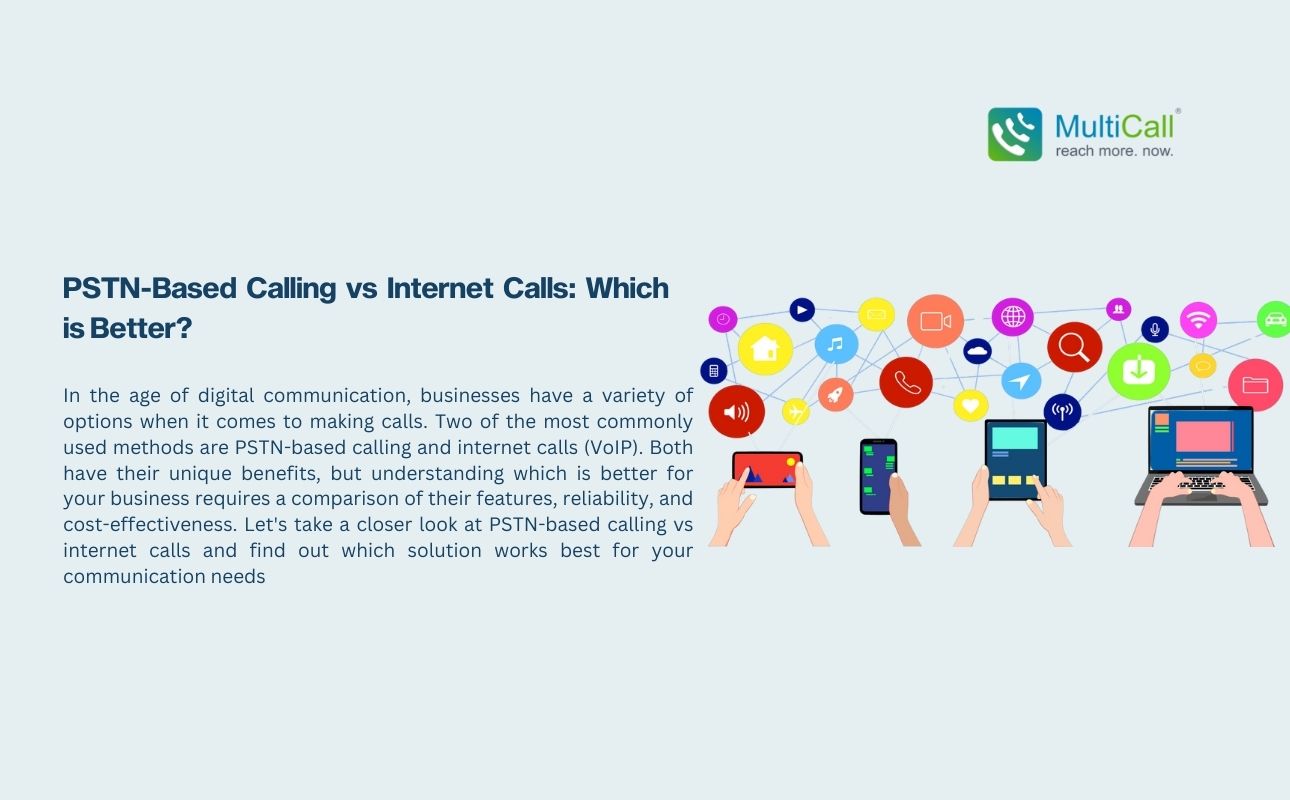
In the age of digital communication, businesses have a variety of options when it comes to making calls. Two of the most commonly used methods are PSTN-based calling and internet calls (VoIP). Both have their unique benefits, but understanding which is better for your business requires a comparison of their features, reliability, and cost-effectiveness. Let’s take a closer look at PSTN-based calling vs internet calls and find out which solution works best for your communication needs.
What is PSTN-Based Calling?
PSTN-based calling refers to the Public Switched Telephone Network, which is the traditional system used for voice communication through wired networks. It has been around for decades and is known for its reliability and high-quality PSTN calling. PSTN-based calling services use dedicated lines, ensuring clear, uninterrupted communication, regardless of internet speed or network issues. This system is ideal for businesses that need group calling without internet or want to ensure stable and reliable audio during their calls.
What are Internet Calls?
Internet calls, or Voice over Internet Protocol (VoIP), rely on internet connectivity to transmit voice data. VoIP services have become popular due to their flexibility and low cost, especially for businesses that need to make international calls. However, the quality of these calls depends heavily on the speed and stability of the internet connection. When the network is congested or weak, the call quality can deteriorate, leading to dropped calls, delays, and poor sound quality. This makes VoIP less reliable in regions with inconsistent internet access.
Reliability and Sound Quality
When it comes to reliability and superior sound quality, PSTN-based calling has a significant edge over internet calls. Since PSTN-based calling services operate independently of the internet, they offer consistent performance. This makes PSTN-based calling ideal for businesses that require uninterrupted communication during important meetings or group calls. On the other hand, VoIP calls may suffer from latency, jitter, or even disconnect completely if the internet connection is unstable.
Cost-Efficiency
One area where VoIP excels is cost. Internet calls are generally cheaper, especially for long-distance or international calls, as they bypass traditional phone networks. For businesses with limited budgets, internet-based communication may seem like a cost-effective option. However, PSTN-based calling services are increasingly offering cost-efficient calling solutions through prepaid plans and competitive rates. While PSTN might be more expensive, the investment in reliable communication often pays off in the long run, especially for businesses that prioritize quality and dependability.
Security and Privacy
Security is a major concern for businesses, and PSTN-based calling is inherently more secure. Since it operates on a closed network, it’s much harder to intercept or eavesdrop on calls made over PSTN-based services. Many internet call providers offer encryption, but VoIP calls are still more vulnerable to security threats due to their reliance on the internet. Additionally, PSTN-based calling services like MultiCall offer features such as number masking, adding an extra layer of privacy to your communications.
Conclusion
When comparing PSTN-based calling vs internet calls, it’s clear that each method has its own strengths. PSTN-based calling wins in terms of superior sound quality, reliability, and security, making it the preferred choice for businesses that need consistent and high-quality communication. On the other hand, internet calls are more cost-effective for businesses with minimal communication needs and reliable internet access. Ultimately, the choice depends on your business requirements. If you prioritize quality, privacy, and reliability, PSTN-based calling services are the way to go.