REDUCING DOWNTIME: MULTICALL AS A BACKUP COMMUNICATION CHANNEL FOR IT TEAMS
The problem is, when critical technology goes down, the communication channels IT teams depend on, such as VoIP, chat, or cloud-based services, often go with it.
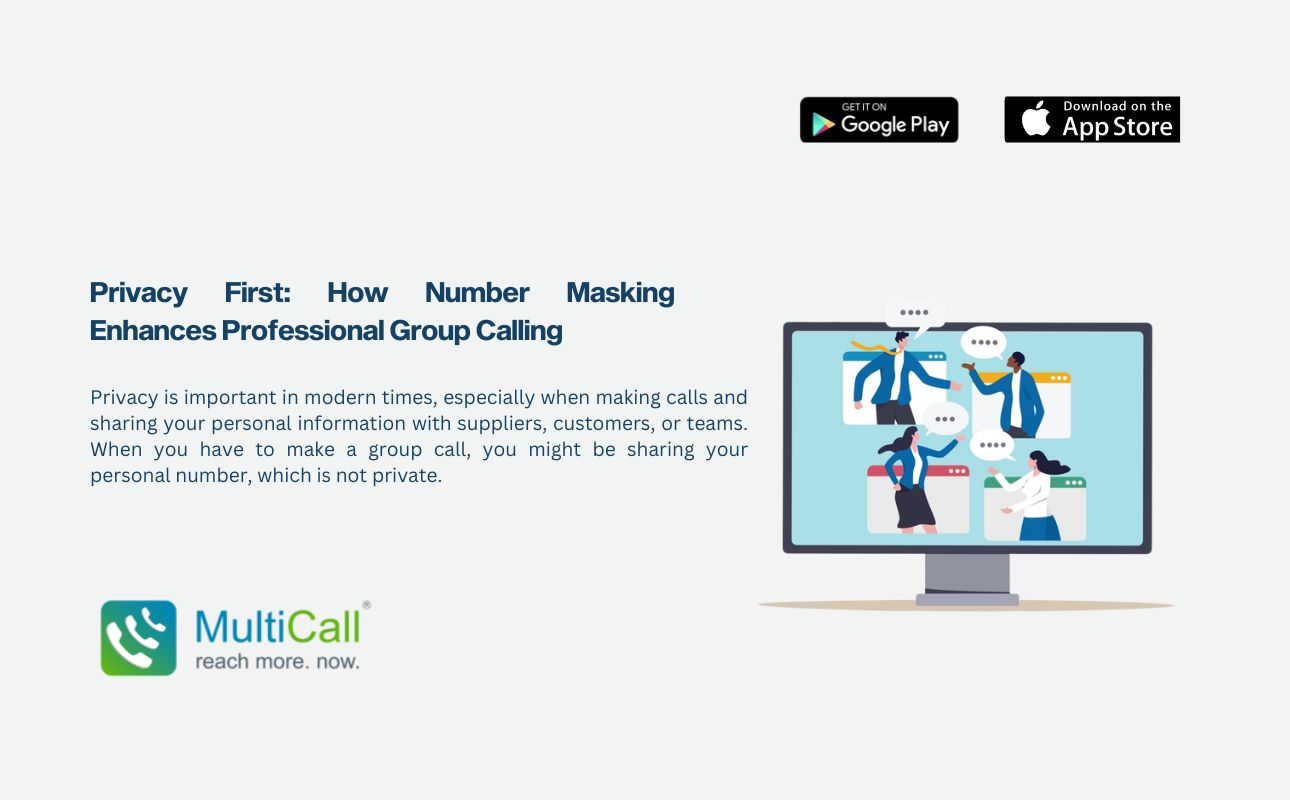
Privacy is important in modern times, especially when making calls and sharing your personal information with suppliers, customers, or teams. When you have to make a group call, you might be sharing your personal number, which is not private. However, with MultiCall, you can hide your personal number in a business call, and use number masking in calls. So now you can communicate better and worry less.
With MultiCall app, group call participants do not have to share their personal phone numbers and can join the app for business communication calls. This feature is especially useful if you are a freelancer, consultant or customer support agent, who is usually required to hide personal numbers and is searching for a “business number for group calls“. All your calls can be securely routed through PSTN-based calling services, providing crystal clear voice along with privacy and discretion.
Number masking does not affect the quality of calls or make your experience inconvenient in any way. MultiCall provides not just privacy, but high-quality PSTN calling with clear, crisp voice quality with no internet connections. You can schedule calls using the app, invite members, and host meetings professionally without giving out your personal number.
Privacy is not the only thing MultiCall offers. It enhances privacy through combining number masking with secure group calling apps, and persistent login calling apps, to create a highly convenient and user-friendly communication experience, while ensuring all your calls remain private. Whether it is private client calls or meetings with remote teams, rest assured that your conversations are safe with us.
Number masking is a necessity for the modern professional. MultiCall delivers privacy alongside performance, equipping businesses with a safe, reliable and professional way to conduct group calls without sacrificing trust or quality.

The problem is, when critical technology goes down, the communication channels IT teams depend on, such as VoIP, chat, or cloud-based services, often go with it.

MultiCall’s primary value proposition for NGOs lies in enabling HQ-foster connections with field-based teams through high-quality voice calls. Social projects are challenging in themselves; by facilitating multi-person calls in low-connectivity environments, MultiCall brings teams closer.

Large enterprises are all about collaboration. Enter MultiCall’s voice communication system that effortlessly connects multiple departments via unlimited group calling and smart scheduling.
Video conferencing often makes interdepartmental meetings inaccessible for many teams. When departments can’t meet without lags or face login issues and other video call mishaps, communication bottlenecks happen.

The MultiCall solution is centered around team calling. Group calls over voice make it possible for teams to coordinate schedules, share information, and discuss important topics. MultiCall enables users to connect in the fastest, most reliable, and most secure way possible.

It could be a village doctor trying to connect with a specialist in the city or a mobile medical team updating the hospital about their work. With MultiCall’s PSTN backbone, such calls go through with reliability, without needing high-speed data or Wi-Fi.

Efficiency equals profitability in business; central to that is communication. Countless organizations have miscalculated the cost of an unreliable phone or messaging application. Hours of delays, dropped calls, miscommunication, lost meetings, and disjointed coordination can translate into serious financial loss for an enterprise.
Communication has become less of an amenity and more of an investment. Enterprise voice communication software like MultiCall, with a complete solution for large teams, comes with a very clear and direct return on investment (ROI) through increased productivity, decreased downtimes, and operationally safeguarded communication.