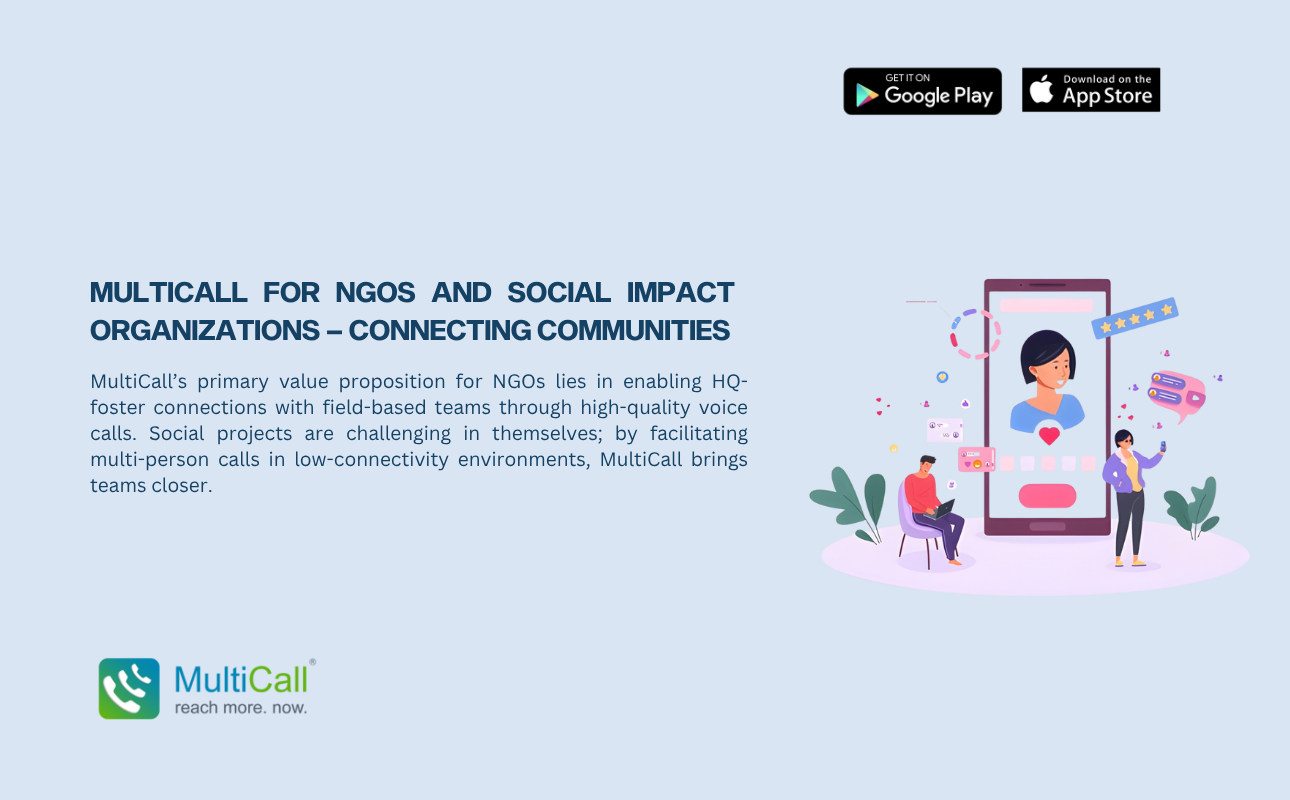
MultiCall’s primary value proposition for NGOs lies in enabling HQ-foster connections with field-based teams through high-quality voice calls. Social projects are challenging in themselves; by facilitating multi-person calls in low-connectivity environments, MultiCall brings teams closer.
Whether it is for disaster relief response, organizing grassroots volunteers, or conducting health awareness drives, field officers need to connect with decision-makers at the headquarters to share daily reports, strategize operations, or debrief on outcomes. MultiCall’s group voice calls are a simple yet powerful way to create a virtual war room for NGOs and stay on top of operations.
The fundraising officers can connect with partners and donors simultaneously to brief them on project milestones or performance. This also allows NGOs to update international stakeholders at periodic intervals without complex conferencing solutions.
MultiCall features such as scheduled calls, participant reminders, admin controls, and more enhance the effectiveness of such stakeholder engagement efforts.
Volunteer Management and Coordination
Volunteer management is one of the most critical aspects of many social impact programs—whether it is health volunteers, clean water initiatives, youth development programs, or animal welfare efforts. Volunteers can be located in urban as well as rural areas. MultiCall provides volunteer coordinators with a powerful solution to facilitate multi-person calls for briefing sessions and check-in updates with ease.
Program managers can connect with volunteer group leaders through MultiCall to provide regular updates on projects, receive progress updates from the field, and ensure that everyone is aligned with the organization’s goals. Volunteer engagement needs to be continuous, and scheduled and recurring call features of MultiCall make it easy for NGOs to set up such rhythms without too much admin work.
With MultiCall, communication no longer needs to be restricted to stakeholders with smartphones or data connectivity. MultiCall groups can be accessed from even basic mobile phones to ensure inclusivity and greater participation across all volunteers.
Facilitating Communication in Budget-Constrained Organizations
Finally, the bottom line is also important for NGOs as much as it is for any commercial organization. MultiCall’s affordable calling plans and currency-based billing options are a sustainable and scalable communication option for NGOs.
NGOs no longer need to invest in expensive conferencing apps or mobile data plans. MultiCall offers cost-effective, group voice calling solutions that NGOs can scale across teams of any size.
Furthermore, call logs, control features, access permissions, and other management controls allow program officers to monitor call activities and ensure that communications spending is responsible and transparent.
Case Study: Connecting for Impact
Imagine an NGO that manages vaccination awareness programs across several villages. Internet apps are not likely to reach health workers in remote clinics. However, if the NGO uses MultiCall, it can run daily coordination calls, track field activities, and update health educators—all without mobile data connectivity.
Make the Call for Social Impact
NGOs and social organizations are answerable for driving impact in the world, but for many, the journey can be constrained by issues around technology, access, and scale. MultiCall helps social organizations stay mission-focused with reliable, easy-to-use, multi-person voice calls. Contact us today!