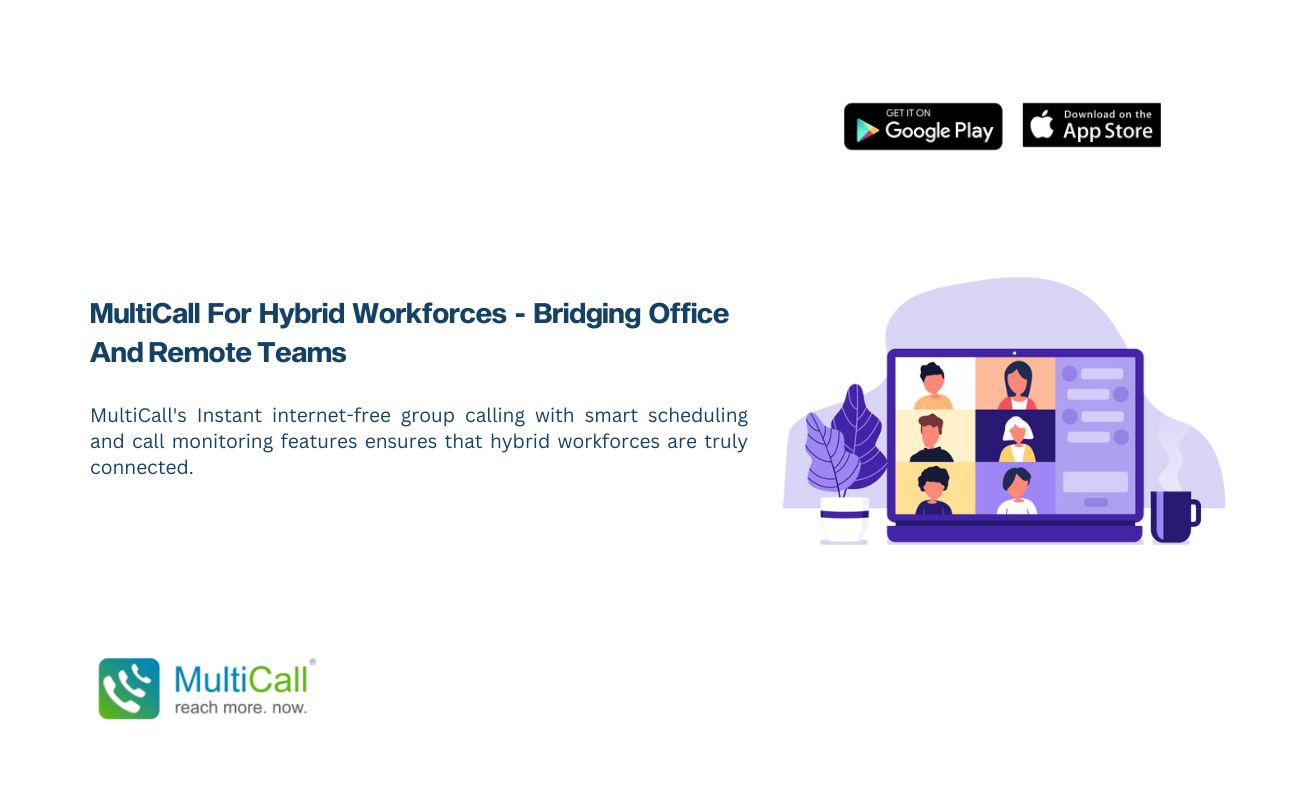
MultiCall’s Instant internet-free group calling with smart scheduling and call monitoring features ensures that hybrid workforces are truly connected
Hybrid is the new normal. Video meetings are draining, chat tools fragment discussions, and poor connections mean dropped calls. MultiCall helps close the gap between office and remote teams.
The Challenges of Hybrid Workforce Communication
The hybrid work model is the new normal, but in the real world, businesses face challenges:
Employees are spread out across multiple locations. The various groups and teams within a single business require a robust way to stay in touch.
Numerous common collaboration platforms become useless to employees when they go offline. This occurs frequently in remote or rural areas where cellular coverage is more consistent than Wi-Fi.
Long video meetings cause people to tune out. Video is overkill for internal check-ins, stand-ups, or quick voice calls.
- Fragmented Communication Channels
Teams bounce between email, chat, and call tools, losing valuable time and context switching.
- Security and Privacy Issues
Sharing personal numbers with colleagues or using unsecured calling apps leaves businesses vulnerable to data or IP theft.
A hybrid model needs a single unified communication platform that works well and is resilient.
How MultiCall Supports Hybrid Teams
MultiCall provides a mobile-first voice solution to bridge these issues with business communications:
- Internet-Free Group Calls
MultiCall is not a VoIP platform. It runs over the same high-quality carrier-grade voice networks employees already use for personal calls. This means any worker can join a MultiCall without an internet connection or with limited 4G bandwidth.
Switching between apps, entering PIN codes, or sharing meeting links is too much work for hybrid teams. MultiCall lets employees connect to a call with a single tap from the dialer. This immediate access is much faster than most office phone systems.
Office and remote workers may be on different schedules and time zones. MultiCall group scheduling is a simple way to ensure important recurring team syncs, project updates, or client calls happen on time, with automatic reminders.
- Privacy with Number Masking
Teams often have external vendors, partners, freelancers, or clients on the same calls. MultiCall’s number masking keeps everyone on the call professional and private without exposing personal contact details.
Use Cases for Hybrid Teams
Remote developers, office employees, and in-the-field staff can all join in on daily syncs without worrying about dropped internet connections.
Businesses that have field sales, remote, or office-based client service teams can coordinate with MultiCall’s number masking for a professional way to have multiple participants on the same call.
- Cross-Functional Alignment
Marketing, sales, and operational teams that are located in different offices or remote areas can sync quickly and align without using several different chat, email, or call platforms.
When urgent situations occur, MultiCall gives managers and team leaders the power to instantly connect key teams to solve a problem on the spot.
Conclusion
Many companies still use internet-intensive platforms today. The reality is that reliability, speed, and ease of use are the most important. MultiCall’s instant calling, smart scheduling, number masking, and audit-ready call monitoring and participation reporting features let businesses keep hybrid workforces connected without friction.
The result is seamless comms that bridge the distance between office and remote teams. Call us to understand secure group calling built for the future of work.