Why Instant Audio Collaboration Beats Endless Email Threads
The problem with long email chains
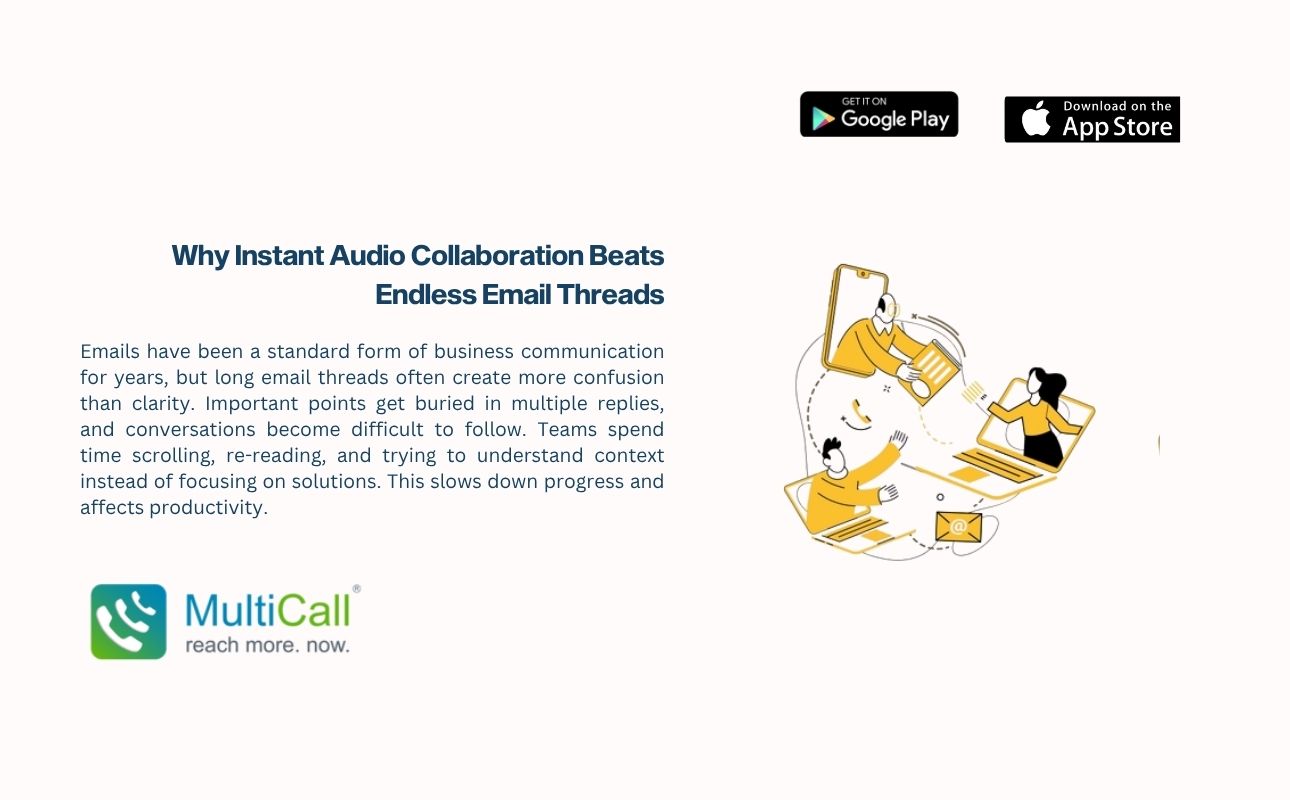
Emails have been a standard form of business communication for years, but long email threads often create more confusion than clarity. Important points get buried in multiple replies, and conversations become difficult to follow. Teams spend time scrolling, re-reading, and trying to understand context instead of focusing on solutions. This slows down progress and affects productivity.
Real time communication makes a difference
Instant audio collaboration changes the way teams interact. Instead of waiting for replies, team members can connect and discuss issues immediately. Using Best Audio Conferencing Apps, businesses can bring people together in real time, making conversations more direct and efficient. This reduces delays and helps teams move forward faster.
Clear and direct conversations
Emails often lack tone and clarity, which can lead to misunderstandings. A message can be interpreted in different ways, causing confusion and unnecessary back and forth. With Group Call Business Communication, participants can speak directly, explain ideas clearly, and resolve doubts instantly. This direct interaction ensures that everyone understands the discussion without confusion.
Reducing delays and improving speed
One of the biggest drawbacks of email communication is the time it takes to get responses. A single discussion can stretch across hours or even days. Audio collaboration removes this delay by allowing immediate interaction. Teams can ask questions, get answers, and make decisions in one conversation, improving overall efficiency.
Reliable communication for business needs
For audio collaboration to be effective, reliability is essential. PSTN-based Calling Services provide consistent call quality, ensuring that discussions are not interrupted. This stability allows teams to focus on the conversation without worrying about technical issues, making communication more dependable.
Structured discussions through scheduling
Unplanned communication can sometimes lead to unorganized discussions. Teams can Schedule calls using app features to bring everyone together at the right time. This structured approach helps keep conversations focused and ensures that all key points are covered in a single session, reducing the need for follow up emails.
Encouraging team collaboration
Audio collaboration creates a more interactive environment compared to email. Team members can share ideas, give feedback, and participate actively in discussions. With Effective Team Communication Apps, organizations can build stronger collaboration and ensure that everyone stays aligned. This leads to better teamwork and improved outcomes.
Simplifying communication workflows
Managing long email threads can become overwhelming, especially when multiple people are involved. Audio collaboration simplifies communication by bringing everything into one conversation. Instead of tracking multiple messages, teams can resolve issues quickly and move on to the next task, making workflows more efficient.
Conclusion
Instant audio collaboration offers a faster and more effective alternative to endless email threads. It improves clarity, reduces delays, and enhances teamwork. By using Best Audio Conferencing Apps, enabling Group Call Business Communication, relying on PSTN-based Calling Services, using features to Schedule calls using app, and adopting Effective Team Communication Apps, businesses can create a communication system that is simple, efficient, and results driven.