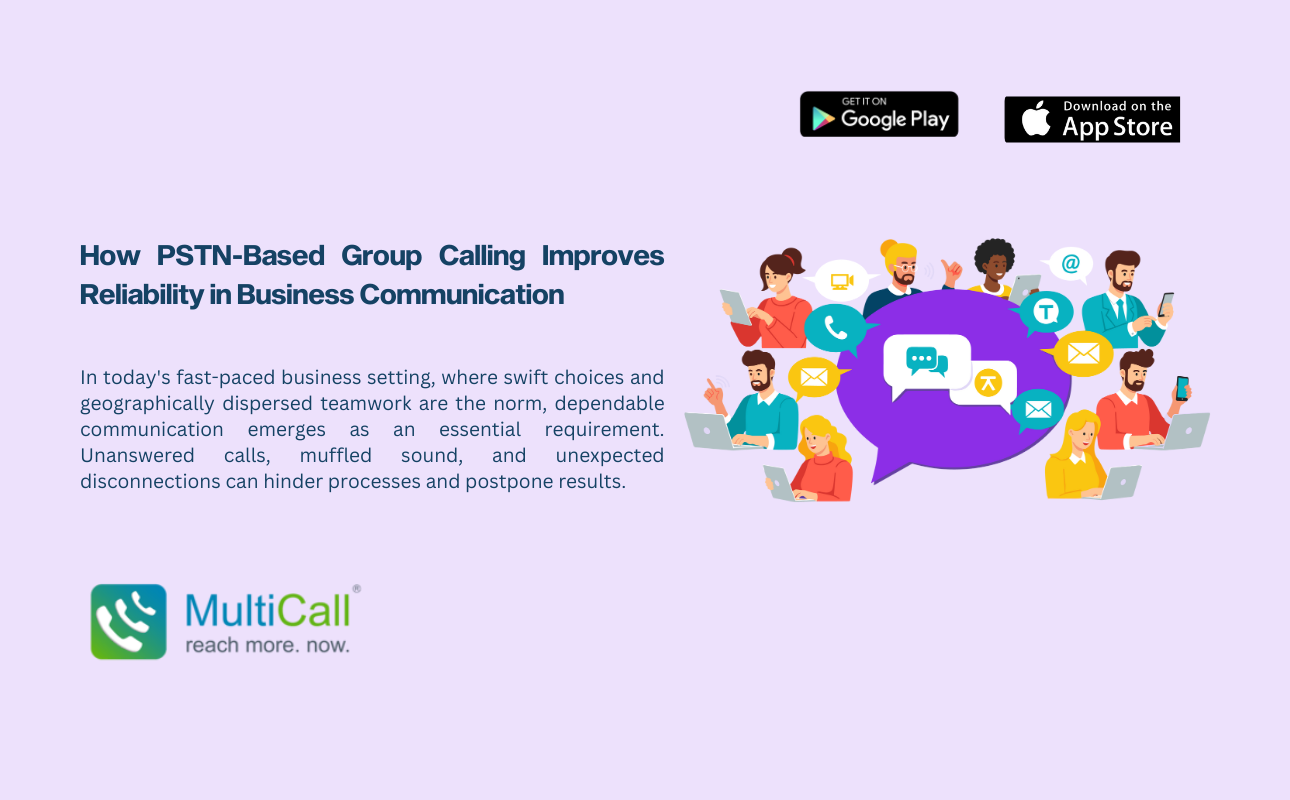
In today’s fast-paced business setting, where swift choices and geographically dispersed teamwork are the norm, dependable communication emerges as an essential requirement. Unanswered calls, muffled sound, and unexpected disconnections can hinder processes and postpone results. Consequently, numerous firms are adopting PSTN-based calling solutions as a robust underpinning for group call business interactions. In contrast to internet-reliant platforms, PSTN calling guarantees steady connection and clear audio, even when facing difficult network circumstances.
Why Reliability Matters in Business Communication
Smooth business dialogue directly influences output, client contentment, and internal arrangement. When groups depend on inconsistent links, discussions lose pace and crucial points are frequently misconstrued. Capable team collaboration tools must sustain continuous exchanges, particularly for executive debates, client liaison, and operational strategy. PSTN-based group calls mitigate many hazards linked to variable internet throughput, positioning it as a favored selection for enterprises prioritizing steadfastness.
Understanding PSTN-Based Group Calling
PSTN-based calling services utilize established phone infrastructures instead of relying on internet capacity. This implies that calls are unaffected by data bottlenecks, poor signal strength, or network delays. For companies overseeing extensive personnel or remote teams, superior quality PSTN calling delivers a stable and foreseeable communication encounter. This trustworthiness is particularly crucial when hosting group discussions where maintaining all participant links throughout the discussion is paramount.
Reducing Call Drops and Audio Issues
A frequent annoyance with contemporary communication platforms is unforeseen call interruptions. Service using the traditional phone network greatly lessens this problem because it depends on proven telecommunication frameworks instead of fluctuating web links. Consequently, businesses encounter less break in their group conversations. For firms utilizing direct group calling software, this dependability keeps sessions concentrated and effective throughout.
Crisp sound also holds significant importance in professional exchanges. Top-tier traditional network calling provides steady audio fidelity, letting attendees discern every utterance without warping. This proves especially beneficial during in-depth exchanges, bargaining, and planning meetings where exactness is key.
Supporting Group Calling Without Internet
A large benefit of systems using the traditional phone network is the feature to allow gatherings without an internet link. This functionality is vital for staff working in distant settings, mobile personnel, or areas with sporadic service. Companies no longer need concern themselves with whether everyone has stable data access. Traditional network group calls guarantee all can participate and add their input, irrespective of their web status.
This adaptability positions traditional network calling services as a vital element of effective group interaction tools, particularly for enterprises with workforces spread across various locations.
Enhancing Call Management Through Scheduling
Dependable interaction isn’t only about connection standard; it also involves thoughtful arrangement. Tools for setting up calls permit businesses to arrange discussions ahead of time, leading to improved attendance and scheduling. When groups organize calls using an application built on the established network, they gain from both organized preparation and consistent delivery.
Pre-arranged group calls assist firms in sustaining structure in their conversations, cutting down on sudden coordination snags, and ensuring vital talks proceed without technological setbacks.
Improving Operational Efficiency and Cost Control
From an organizational viewpoint, economical calling methods are as vital as actual performance. Group calls utilizing the PSTN framework assist entities in managing expenditures by lessening reliance on substantial data consumption and intricate setups. Numerous enterprises observe that dependable audio-centric interaction cuts down total operating expenses while maintaining steady results.
By pairing effective group calling features with straightforward dialing methods and always-on login calling applications, businesses streamline day-to-day communication without compromising dependability.
Security and Stability for Enterprise Communication
Security remains a paramount concern within contemporary business settings. Protected group calling applications constructed on PSTN networks supply a firm and managed communication pathway. Given that PSTN calls are less susceptible to risks associated with the internet, they furnish an extra measure of assurance for confidential business exchanges.
When incorporated with voice API integration capabilities, PSTN-based calling can furthermore bolster expandable enterprise communication architectures without sacrificing either security or functionality.
Why Businesses Are Choosing PSTN-Based Group Calling
As groups expand, their communication demands become more intricate. Top-tier audio conferencing tools currently emphasize trustworthiness, auditory sharpness, and the capacity to scale. PSTN-based group dialogue fits these needs precisely by delivering steadfast linkage, excellent sound fidelity, and adaptability for diverse scenarios.
Enterprises adopting PSTN calling services acquire a communicative edge that encourages teamwork, decisive action, and sustained expansion.
Conclusion
Dependable interaction forms the core of every thriving entity. PSTN group calling enhances organizational dialogue by minimizing interruptions, providing premium audio fidelity, and facilitating multi-party calls independent of an internet connection. When paired with call planning utilities, secure group conversation apps, and affordable calling options, PSTN-based platforms forge a robust base for smooth business discourse. For organizations striving for uniformity, clarity, and oversight, PSTN group calling transcends mere selection—it becomes a crucial strategic element.