The Future of Enterprise Collaboration Is Simpler Than You Think
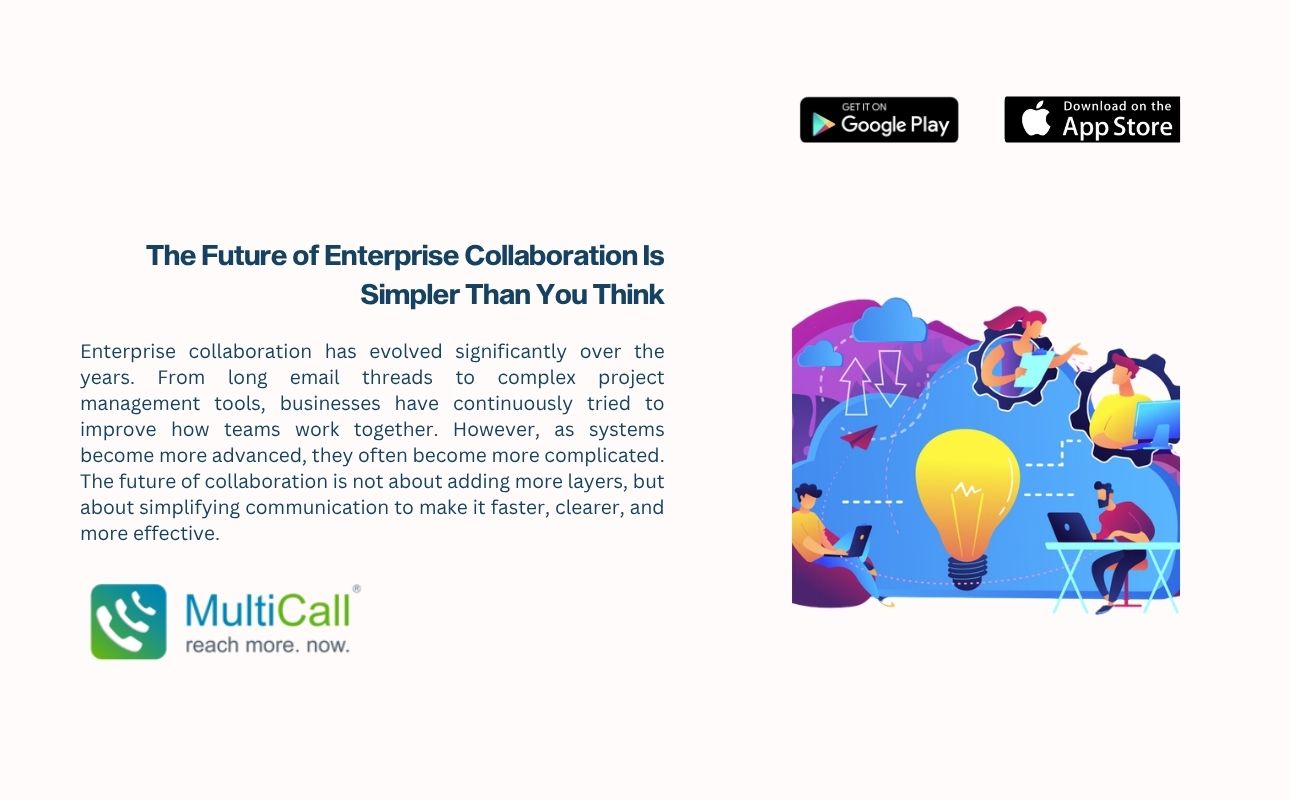
Enterprise collaboration has evolved significantly over the years. From long email threads to complex project management tools, businesses have continuously tried to improve how teams work together. However, as systems become more advanced, they often become more complicated. The future of collaboration is not about adding more layers, but about simplifying communication to make it faster, clearer, and more effective.
Moving Away from Complex Communication Systems
Many organizations struggle with too many tools and platforms. Employees often switch between multiple apps for messaging, meetings, and updates, which creates confusion and slows down productivity.
The future lies in simplifying communication through solutions like Group Call Business Communication, where teams can connect instantly without navigating through multiple platforms. This approach reduces dependency on complex systems and improves workflow efficiency.
When communication is simple, teams can focus more on their work rather than managing tools.
Real Time Collaboration as a Standard
Modern businesses require instant collaboration. Waiting for responses through emails or messages can delay decision making and affect project timelines.
With Instant Group Calling Apps, teams can connect immediately and discuss tasks in real time. This ensures that decisions are made quickly and everyone stays aligned with current priorities.
Real time collaboration helps organizations remain agile and responsive in a fast changing business environment.
The Rise of Audio First Communication
While video meetings gained popularity, many organizations are now realizing the value of audio based communication. It is faster, less distracting, and more flexible.
Using the Best Audio Conferencing Apps, teams can conduct meetings efficiently without the need for constant screen interaction. Audio communication reduces fatigue and allows participants to focus on discussions rather than visual elements.
This shift toward audio first communication is shaping the future of enterprise collaboration.
Simplifying Meeting Scheduling and Management
Scheduling meetings can often become a time consuming process, especially when multiple participants are involved. Delays in coordination can slow down projects and affect productivity.
The ability to Schedule calls using app makes this process easier and more organized. Teams can quickly set up meetings, send invites, and ensure that everyone is available at the right time.
Efficient scheduling improves time management and keeps workflows on track.
Reliable Communication Across All Environments
Businesses operate in different environments, including remote, hybrid, and on site setups. Communication tools must be reliable enough to support all these scenarios.
With PSTN-based Calling Services, organizations can ensure stable communication even in areas with limited internet connectivity. This reliability is essential for maintaining consistent collaboration across teams.
Dependable communication systems help businesses avoid disruptions and maintain productivity.
Enhancing Team Connectivity and Engagement
Strong collaboration depends on how well teams are connected. When communication is complicated, employees may feel disconnected or less engaged in discussions.
A simple Group Calling App allows teams to connect easily and participate actively in conversations. Regular interaction improves team bonding and encourages better collaboration.
Engaged teams are more productive and contribute more effectively to business goals.
Reducing Dependency on Multiple Tools
One of the biggest challenges in enterprise collaboration is tool overload. Employees often use different platforms for communication, which can lead to confusion and inefficiency.
By adopting Effective Team Communication Apps that focus on simplicity, businesses can reduce the need for multiple tools. A single, streamlined communication solution improves clarity and saves time.
Simplified systems make it easier for employees to adapt and use tools effectively.
Supporting Scalable Communication Needs
As organizations grow, their communication requirements increase. The future of collaboration must support scalability without adding complexity.
Solutions designed for Group Call Business Communication can easily handle growing teams and increased interaction needs. Whether it is a small team meeting or a large group discussion, scalable communication tools ensure smooth operations.
Scalability without complexity is key to long term success.
Conclusion
The future of enterprise collaboration is not about adding more tools or features. It is about simplifying communication to make it more efficient and accessible. By focusing on real time interaction, reliable systems, and easy to use platforms, businesses can improve how teams work together.
With solutions like Instant Group Calling Apps, PSTN-based Calling Services, and the Best Audio Conferencing Apps, organizations can create a streamlined communication environment that supports productivity and growth.
In the end, simpler collaboration leads to better results, stronger teams, and a more efficient business.