
multicall

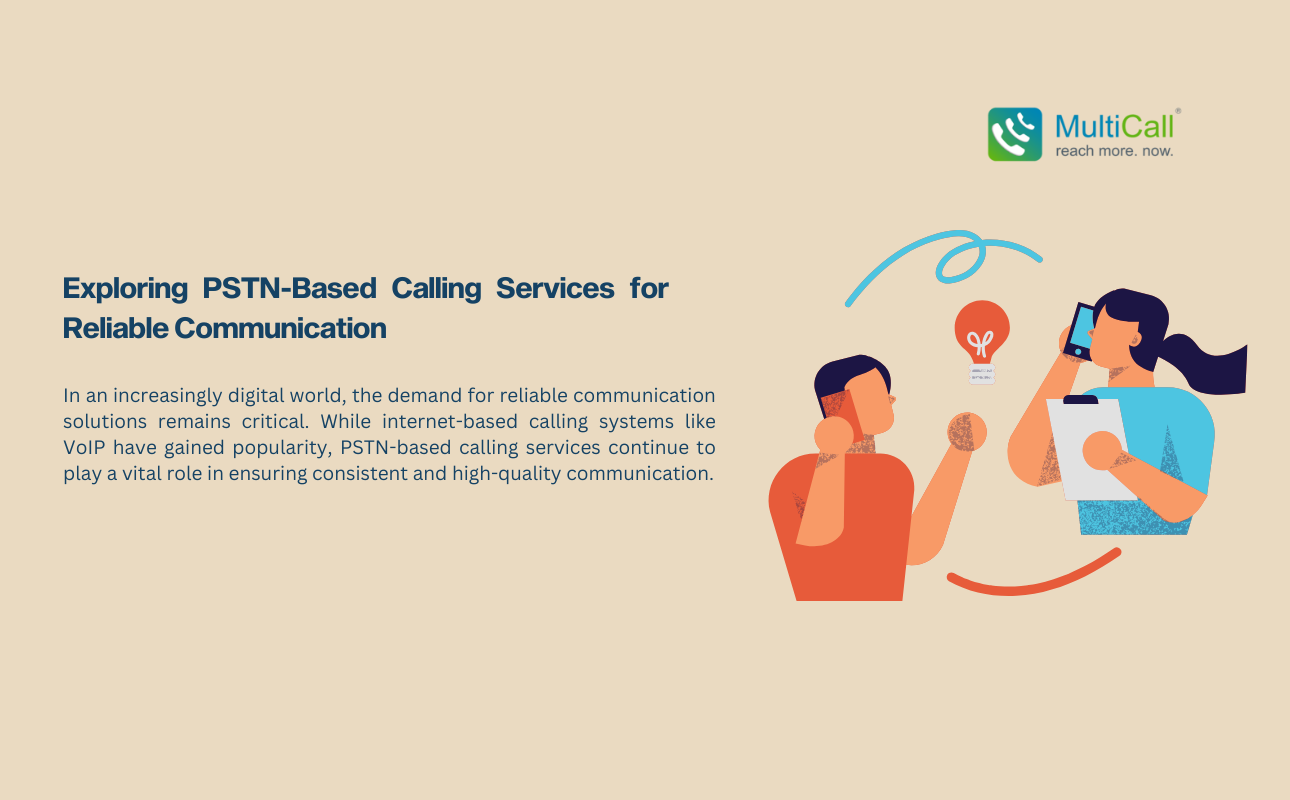
Exploring PSTN-Based Calling Services for Reliable Communication

In an increasingly digital world, the demand for reliable communication solutions remains critical. While internet-based calling systems like VoIP have gained popularity, PSTN-based calling services continue to play a vital role in ensuring consistent and high-quality communication. Platforms like MultiCall leverage the strengths of PSTN (Public Switched Telephone Network) to provide dependable connectivity, making it a go-to choice for seamless business communication.

What is PSTN-Based Calling?

PSTN is the traditional phone network that facilitates voice communication through a dedicated infrastructure of telephone lines, switches, and cables. Unlike internet-based calls that depend on bandwidth, PSTN calls operate independently of internet connectivity, offering superior reliability and clarity.

Why PSTN-Based Calling Services Are Still Relevant

  1. Reliability in Low Connectivity Areas
    PSTN-based services are not dependent on internet availability, making them ideal for group calling without internet. This ensures that users in remote or low-connectivity regions can communicate without interruptions.
  2. Superior Sound Quality
    With PSTN’s robust infrastructure, users enjoy high-quality PSTN calling free from the lags and drops often associated with VoIP calls. This is particularly important for businesses where clear communication is critical.
  3. Secure and Private Communication
    PSTN calls are inherently secure, as they are less susceptible to cyber threats compared to internet-based systems. Features like number masking offered by apps like MultiCall further enhance privacy.

The MultiCall Advantage in PSTN-Based Calling

  1. Instant Group Calling
    MultiCall simplifies communication by enabling instant group calling through PSTN. Users can connect up to 10 participants with just a few clicks, making it ideal for quick team huddles or client discussions.
  2. Scheduled Calls
    With MultiCall’s call scheduling applications, users can plan their calls ahead of time, ensuring better organization and preparedness.
  3. Call Monitoring and Control
    Features like call monitoring allow users to manage participants effectively, ensuring smooth and productive communication.
  4. Cost-Efficiency
    For businesses seeking cost-efficient calling solutions, MultiCall’s PSTN-based services provide a reliable and economical alternative to expensive VoIP systems.

Conclusion

PSTN-based calling services remain a cornerstone of reliable communication, offering unmatched clarity, security, and connectivity. Platforms like MultiCall combine the strengths of PSTN with modern features such as call scheduling and instant group calling, making it an invaluable tool for both personal and business communication.

Contact Form


apple-store-app
google-play-app

YOU MAY ALSO LIKE

audio

Why Multi-Location Businesses Need Instant Audio Coordination

Businesses operating across multiple locations face unique communication challenges. Teams in different offices, cities, or even countries must stay aligned to maintain efficiency, meet deadlines, and serve clients effectively. Instant audio coordination provides a reliable solution that ensures seamless communication across all locations.

Read More »
audio

 How Audio Meetings Keep Teams Focused and Efficient

In fast-paced workplaces, distractions can slow progress and reduce productivity. Meetings are meant to align teams, share updates, and make decisions, but poorly managed sessions can waste time. Audio meetings provide a streamlined way to keep teams focused, engaged, and efficient.

Read More »
collaboration

Why Coordination Matters More Than Collaboration Tools

Many enterprises invest heavily in collaboration tools, expecting them to solve all communication challenges. While tools are helpful, coordination is what truly drives efficiency. Without clear coordination, even the most advanced platforms cannot ensure smooth workflows, timely decision-making, or productive teamwork.

Read More »
communication

 The Competitive Edge of Faster Internal Communication

In today’s fast-moving business environment, speed matters. Teams that communicate quickly can respond to challenges, seize opportunities, and make decisions before competitors. Faster internal communication gives enterprises a strategic advantage, improving collaboration and overall efficiency.

Read More »
communication

Communication Stability as a Business Continuity Tool

Business continuity depends on consistent and reliable communication. During disruptions, whether technical failures, natural events, or sudden operational challenges, teams must stay connected to maintain productivity. Audio conferencing offers a stable solution, allowing enterprises to continue operations seamlessly.

Read More »