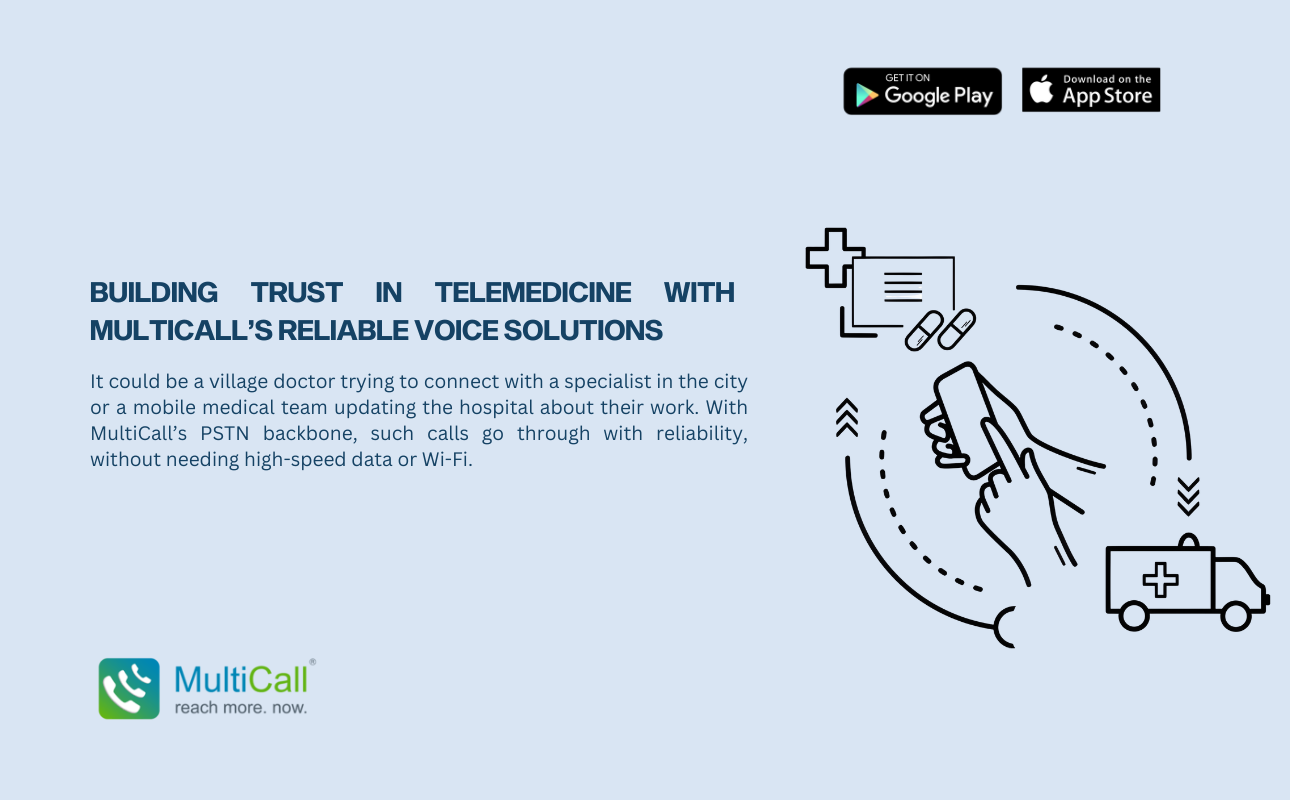
It could be a village doctor trying to connect with a specialist in the city or a mobile medical team updating the hospital about their work. With MultiCall’s PSTN backbone, such calls go through with reliability, without needing high-speed data or Wi-Fi.
This holds for healthcare teams who must stay connected during disaster relief or mobile health drives. The facility to reach patients anywhere in the world builds the trust quotient for telehealth services.
Privacy and Compliance for Patient Communication
Privacy and confidentiality are not just healthcare ethics but also legal mandates. With growing data breach concerns and unauthorized access to patient data, telemedicine applications must address privacy concerns at all communication layers.
MultiCall’s architecture is designed to ensure that conversations are private and compliant with data privacy norms. It does not record or store calls by default and allows healthcare facilities to manage data storage and retention.
Additionally, features such as administrative access control and secure call initiation ensure that the organizations can give access to only those staff who are authorized to manage patient communications. By putting privacy at the forefront without limiting access, MultiCall enables healthcare professionals to take patient trust and legal compliance seriously.
With MultiCall, teams can join instantly through phone numbers, without having to log in or navigate complex apps. This is critical in an industry where saving time during life-saving operations can make a significant difference.
Sample use cases include:
- Multi-specialty case discussion between doctors across multiple hospitals.
- Coordinating emergency transfers between various departments.
- Briefing teams during vaccination drives or controlling a disease outbreak.
Patients, especially those in areas with digital literacy challenges, prefer simple and natural voice communication as opposed to complex telehealth applications. Eliminating technical difficulties and offering them crystal clear audio can make all the difference in bridging the healthcare provider-patient divide.
MultiCall allows patients to use their regular phones to connect without requiring any special apps or data subscriptions. This enables patients to access telehealth services seamlessly and helps create an inclusive environment where no patient is denied healthcare services because of technological disadvantages.
Use Case: Simplifying Remote Diagnostics
Consider a healthcare center in a regional town connecting with its city-based consultants to discuss patient symptoms and findings. Through MultiCall, the local healthcare provider can connect multiple consultants with a single tap. If one participant has poor internet, the call automatically switches to MultiCall’s fallback channel for continued connectivity.
Such seamless experience will not only help the organization build trust but also assure the patients and medical professionals that communication will never become a barrier to receiving or extending healthcare services.
Conclusion
With its unique emphasis on security, clarity, and accessibility, MultiCall is an ideal platform for healthcare professionals to have a fail-safe foundation for patient engagement as well as operational collaboration.
Connect with us now to know how MultiCall can take your healthcare communication experience to the next level by allowing you to build and expand trust while delivering services with utmost reliability.