multicall

CALL QUALITY THAT COUNTS – PREVENTING MISCOMMUNICATION WITH MULTICALL

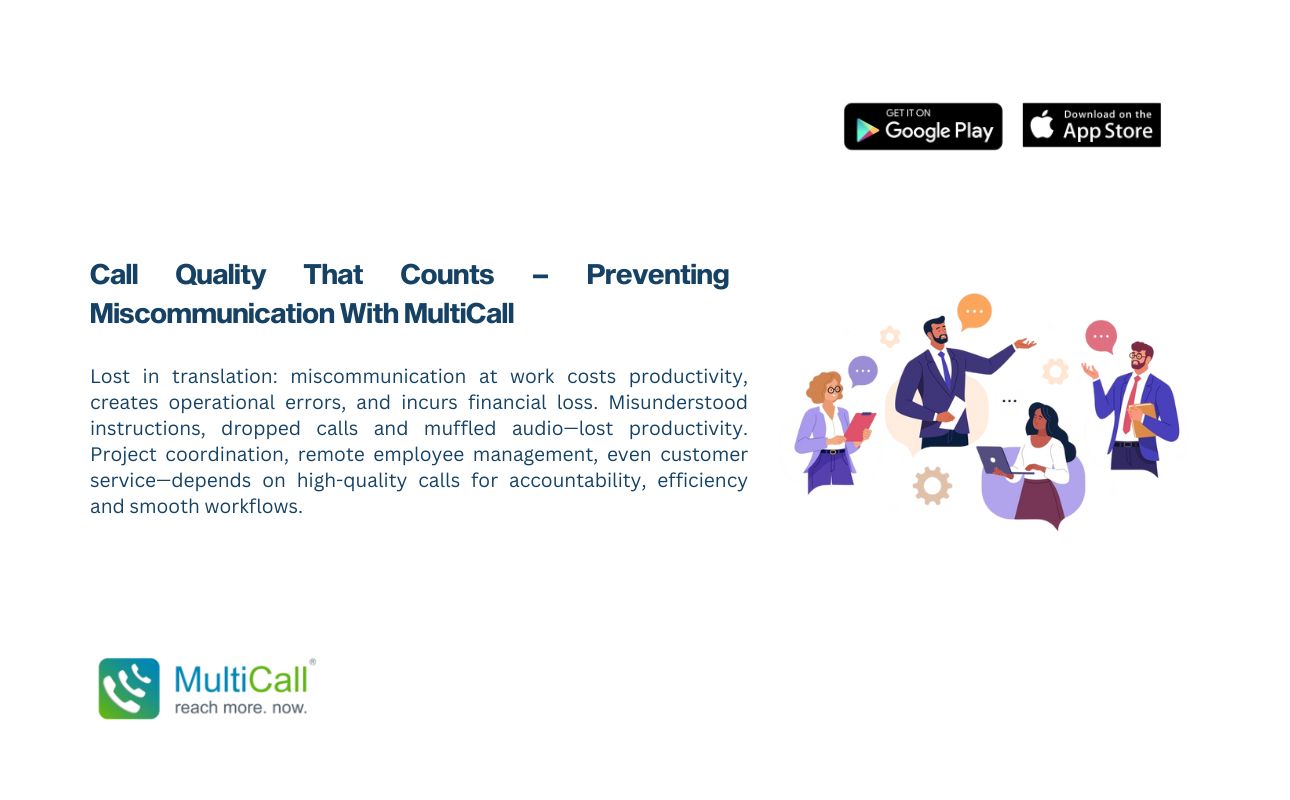
Lost in translation: miscommunication at work costs productivity, creates operational errors, and incurs financial loss. Misunderstood instructions, dropped calls and muffled audio—lost productivity. Project coordination, remote employee management, even customer service—depends on high-quality calls for accountability, efficiency and smooth workflows.

At MultiCall we understand communication is critical, which is why we provide HD voice calls, low-latency connections and smart network optimization to keep your teams connected, focused and productive.

The Cost of Call Quality

Call quality can lead to miscommunication and communication errors:

  • Mislabeled instructions: Important information may be missed or misheard, which can cause errors when completing tasks or projects.

  • Lost time: Teams spend valuable time re-explaining instructions and double-checking details.
  • Customer service: Client interactions can be frustrating with dropped calls or poor audio quality.

Smooth Performance in Low-Bandwidth Areas

Most VoIP applications don’t work well in low-bandwidth areas. MultiCall was designed from the ground up to work quickly and efficiently even in low-bandwidth regions. This means that field teams, remote employees, and international operations can reliably communicate without problems.

Automatic Network Optimization

MultiCall automatically prioritizes voice clarity, seamlessly adapting to current network conditions. This optimization cuts down on garbled, distorted calls and interruptions, ensuring fluid, uninterrupted conversations.

Scenarios Where Call Quality Matters Most

  • Project Management

Project leads relaying task assignments across teams can prevent missteps by ensuring instructions are received clearly by all stakeholders.

  • Customer Support

Support teams that depend on voice calls for client communication can reduce query resolution times and increase accuracy, leading to higher customer satisfaction.

  • Emergency Response

When every second counts in an emergency, MultiCall HD voice cuts down on potentially catastrophic errors and ensures that action items are carried out correctly the first time.

TRAINING AND ONBOARDING

Audio problems and bad internet connections during training sessions mean trainees get incorrect instructions. This is time-consuming and costly. With MultiCall, they’ll receive accurate instructions on first contact.

THE PERKS OF MULTICALL

  • HD Voice: Messages are transmitted to your audience with clarity
  • Low-Latency Connectivity: Automated technology guarantees low latency
  • Network optimization is automatic: Calls have little disruption.
  • Group calls remain high quality: Audio calls for 50 people have the same quality as calls for 5
  • Productivity: There is less time spent making decisions
  • Confidence: Team members don’t have to repeat themselves for quality calls.

CONCLUSION

Call quality is not a luxury. It’s a necessity. When team members, clients, and other stakeholders hear exactly what they need to hear – and when they need to hear it – businesses can operate with more efficiency and fewer errors.

MultiCall’s high-definition voice, network optimization, and low-latency performance deliver just that. Less miscommunication means more time, money, and resources saved.

Talk with a member of our team about how you can begin to enjoy error-free communication. Call us or contact us today to make a difference in your business communication.

Contact Form


apple-store-app
google-play-app

YOU MAY ALSO LIKE

productivity

The Silent Killer of Business Productivity: Poor Coordination

In many organizations, productivity issues are often blamed on workload, lack of resources, or tight deadlines. However, one of the most overlooked factors is poor coordination. When teams are not aligned, even simple tasks can become complicated, leading to delays, confusion, and reduced efficiency. This silent issue can slowly impact overall business performance if not addressed properly.

Read More »
multicall

  How Audio-First Communication Reduces Decision Fatigue

Decision fatigue happens when individuals are required to make too many choices in a short period of time. In business environments, this often comes from constant messages, emails, and multiple communication tools demanding attention. Over time, this overload reduces the ability to think clearly and make effective decisions. A simpler communication approach can help reduce this mental strain

Read More »
multicall

 The Problem With Too Many Tools in Enterprise Communication

Modern enterprises often adopt multiple tools to manage communication across teams. From chat apps to emails and various platforms, the intention is to improve efficiency. However, using too many tools can create confusion instead of clarity. Employees may struggle to keep track of conversations, leading to missed information and reduced productivity.

Read More »
multicall

 Why Leaders Prefer Voice Over Messaging During High-Stakes Decisions

High-stakes decisions require complete clarity and confidence. Leaders cannot afford misunderstandings or delays when making important choices that impact the business. Messaging platforms may seem convenient, but they often lack the depth needed for complex discussions. Voice communication allows leaders to explain ideas clearly, ensuring that every detail is understood. With Best Audio Conferencing Apps, leaders can connect instantly and communicate with precision during crucial moments.

Read More »
multicall

 Communication Delays That Kill Productivity and How to Fix Them

In any business, delays in communication can slow down progress and affect overall productivity. When teams are unable to connect quickly, decisions get postponed, tasks remain incomplete, and workflows become inefficient. These delays may seem small at first, but over time, they can create major challenges for organizations trying to stay competitive.

Read More »
multicall

 Why Instant Audio Collaboration Beats Endless Email Threads

Emails have been a standard form of business communication for years, but long email threads often create more confusion than clarity. Important points get buried in multiple replies, and conversations become difficult to follow. Teams spend time scrolling, re-reading, and trying to understand context instead of focusing on solutions. This slows down progress and affects productivity.

Read More »