MultiCall, is a disruptive group calling app that creates an alternative to your VoIP-based phone meetings, calls, and conferences by taking advantage of the fact that most of the world is already connected to regular phone networks. So, the question is, how exactly does MultiCall stack up against other similar VoIP apps when it comes to the differentiators of scheduling, privacy, and frictionless operation? We answer that question right here.
- Effortless Scheduling
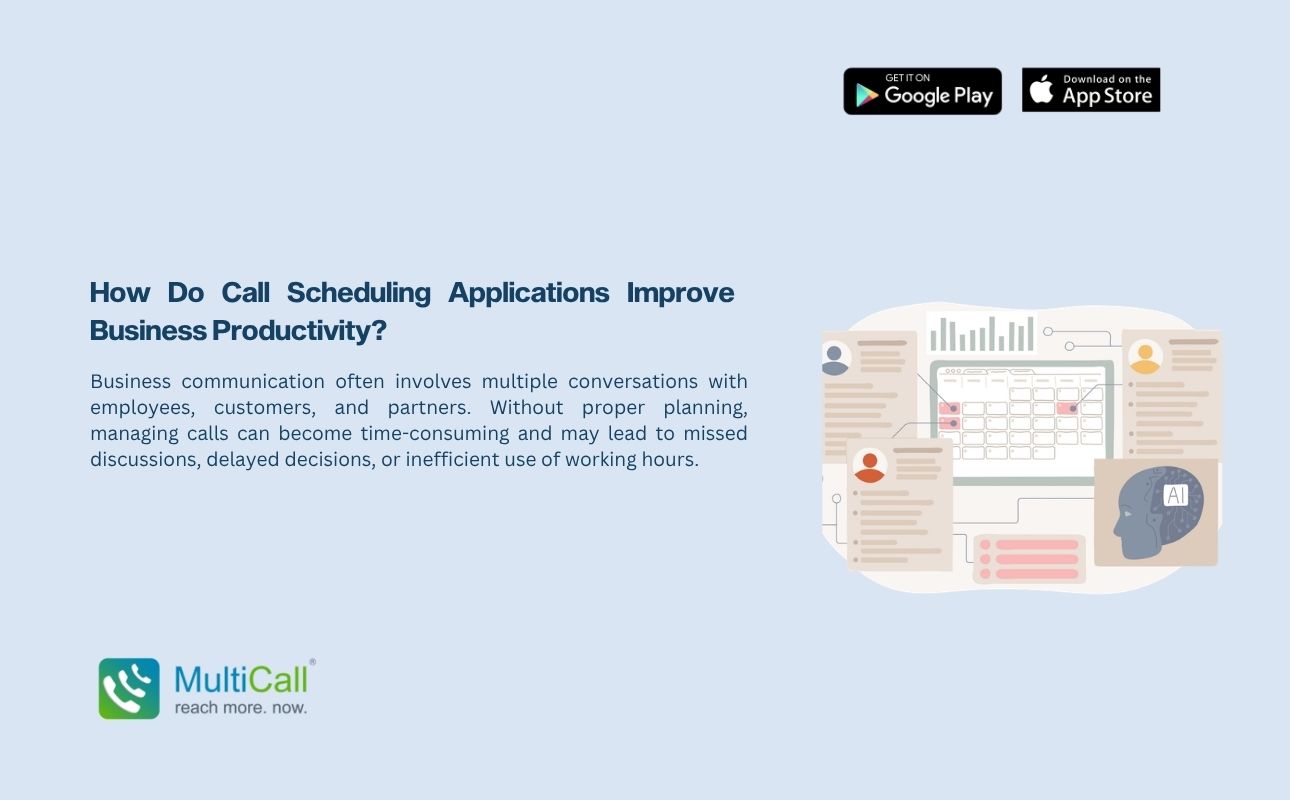
For businesses, scheduling conference calls, meetings, and updates to and from your teams is an important consideration.
Most VoIP apps have some form of scheduling features built into their conference calling services. But they come with certain pre-requisites—download the app, sync calendars, and log in.
Advantages of MultiCall
Some of the advantages of use Multicall are as follows:
- Schedule a call from the mobile app or web dashboard with just a few clicks.
- Participants will get a phone call when it’s time and can join with one tap—no need to punch in numbers, download an app, or even have WiFi.
- Pre-load group lists, recurring calls, or queue an entire set of calling sequences for automation
Common problem with VoIP apps
Install the app or get the meeting link.
Participants may have to set reminders.Fail to join if the meeting passcode is wrong, the link is broken or has expired, or the device is not compatible with the app. They must also enter credentials, or sync with calendars.
MultiCall’s automatic dial scheduling makes it the ideal platform for situations where you may be working with on-ground or field staff, off-site participants in rural or semi-urban locations, and clients or vendors who are not technically savvy. No matter the scenario, people just get called and automatically join the conference.
- Privacy & Number Masking
Protecting data and identity privacy is becoming one of the more sensitive and pressing matters with B2B or business-to-business communication. Be it interacting with external vendors and suppliers, or clients who aren’t familiar with your team, number masking and caller privacy are critical features.
Number masking is already built into MultiCall, and not as an afterthought. Participants in a MultiCall can never see each other’s phone numbers. It also allows you to control for misuse, follow-ups, or unsolicited calls post-call or meeting.
Privacy shortcomings with VoIP apps
- End-to-end data encryption is already the standard on most VoIP platforms, but the actual numbers, email, or in-app messaging handles are often visible and directly exposed between parties.
- Fewer anonymity or privacy features are built into the app at the participant level.
- Privacy cannot always be controlled or enforced from the calling platform.
- Audio Quality: No More Dependence on Internet
On the quality of service, experience, or QoE for customers or users, the quality of audio and voice is critical. Unfortunately, since VoIP apps work over internet data bandwidth, that can be a problem in low-network, weak, or bandwidth-sparse areas, leading to lags, robotic voices, call drops, or missed chunks of important conversation.
Advantage MultiCall
- Independent of poor internet zones, Wi-Fi dead spots, or lags during high-traffic periods.
- Extremely reliable in rural, low-network, or otherwise remote areas that are beyond the reach of good broadband connections or data speeds.
- Perfect for on-the-go users, traveling field staff, or sales teams in challenging environments.
Shortcomings with VoIP apps
- No VoIP app can work over 2G connections or in network dead zones.
- Sound often becomes robotic or muffled, and sync is off when the network is bad
- Devices must be updated regularly to keep apps and user interfaces current.
Imagine making an important sales pitch to a client, giving an update in a client meeting, or conducting a critical business operation and missing a word or chunk of information mid-way through. No? MultiCall provides exactly that kind of reliability, clarity, and quality of service that businesses require.
Conclusion
While the average corporate or office space is already awash in all things Zoom, Microsoft, Google, and Slack, most of those tools are creating new problems rather than solutions for remote workers, independent callers, teams with offline workers, or businesses with ‘multi-layered’ teams.
From scheduling to privacy, ease-of-use, to QoE, MultiCall is not just better—it’s faster, smarter, and more inclusive. Talk to our experts to know better.