



multicall

Avoiding Work Burnout in 5 Steps

Well past a year since COVID-19 first struck, there are those of us who are still getting our job done at home. In simple terms, the trend of working from home (or at least variants of it such as hybrid work) aren’t going away anytime soon.

The multiple conveniences render it a really good option for work-life balance. No long commute. No schedules set in concrete. On a humorous note, if you wanted to immediately get out of bed and start work, you could. But besides all of the advantages, it can be draining, worse than even what office could. With a lot of distractions, distancing, and ever-increasing workloads, one is bound to be exhausted. This is what’s known as work burnout.

The key to addressing said burnout is not to just treat immediate symptoms with another cup of coffee, but to address the individual root causes that are driving it. This can be done in just 5 steps.

Set Boundaries and Limits

It’s true that working from home provides you a greater degree of flexibility in work hours, but that doesn’t mean that you also have to be available 24/7 to get your work done or to reply to emails and messages from work. Remember, you’re not Superman.

But we do understand. It’s quite the struggle in drawing a clear and fine line between work and personal lives. Sometimes this line can get blurry, and employees are left feeling that working 24/7 is the only manner in which loyalty and productivity to a company can be demonstrated. But this isn’t necessary.

Ensure that you set your working hours, and let the teams you’re involved with know about it. In this manner, you’re more likely to be called in only when you’re available for project discussions, meetings and so on. It also helps them to know when they can expect a swift response from you.

Create an effective but comfortable workspace

This is the simplest of the 5 steps. Find a space where the environment isn’t too relaxing, but comfortable enough to let you focus on your work. And no.  You don’t need to remodel your entire room or increase furniture expense are not necessary for this. Just make sure of the following:

  • Does it put you in the work mode?
  • Does it eliminate possible distractions?
  • Is it comfortable enough to work with ease?

Don’t Use Too Many Communications Tools

MultiCall also requires data only to initiate the call and proves to be just as useful as VoIP when you want to be part of a group conversation while on the move. MultiCall also sports a multitude of features, including:

  • One click calling – where you can call your entire team in one go.
  • Call monitoring and scheduling – You have the benefit of business conferencing in scheduling calls ahead and get notifications sent to all participants. The app also lets you mute/unmute participants. This is useful in being able to relay messages while avoiding disturbance due to noise or disruption.

Get Some Air

When working at the office, you’d have colleagues asking you to join them for coffee, lunch or similar breaks. You could take a quick walk and get some fresh air. The very act of walking itself can help you reset and reduce your stress. However, WFH can lead you to become too focused on your work at home, and in the process, you would sometimes forget to get up and move.

Make sure you are allowing enough time for take a break. Be it a walk inside the house or a walk outside to some nearby park for a few minutes, getting some air would help in order to create effective breaks within your workday.

Contact Form


apple-store-app
google-play-app

YOU MAY ALSO LIKE

Why Do Financial Institutions Still Prefer Conference Calls for Sensitive Discussions?

Financial institutions operate in an environment where every conversation matters. Whether discussing investment strategies, regulatory updates, customer information, or internal business decisions, communication must be secure, reliable, and uninterrupted. While video conferencing platforms have become common for daily collaboration, many banks, financial firms, insurance companies, and investment organizations continue to rely on conference calls for sensitive discussions.
Read More »

Is There a Better Alternative to Sharing Meeting Links for Business Calls?

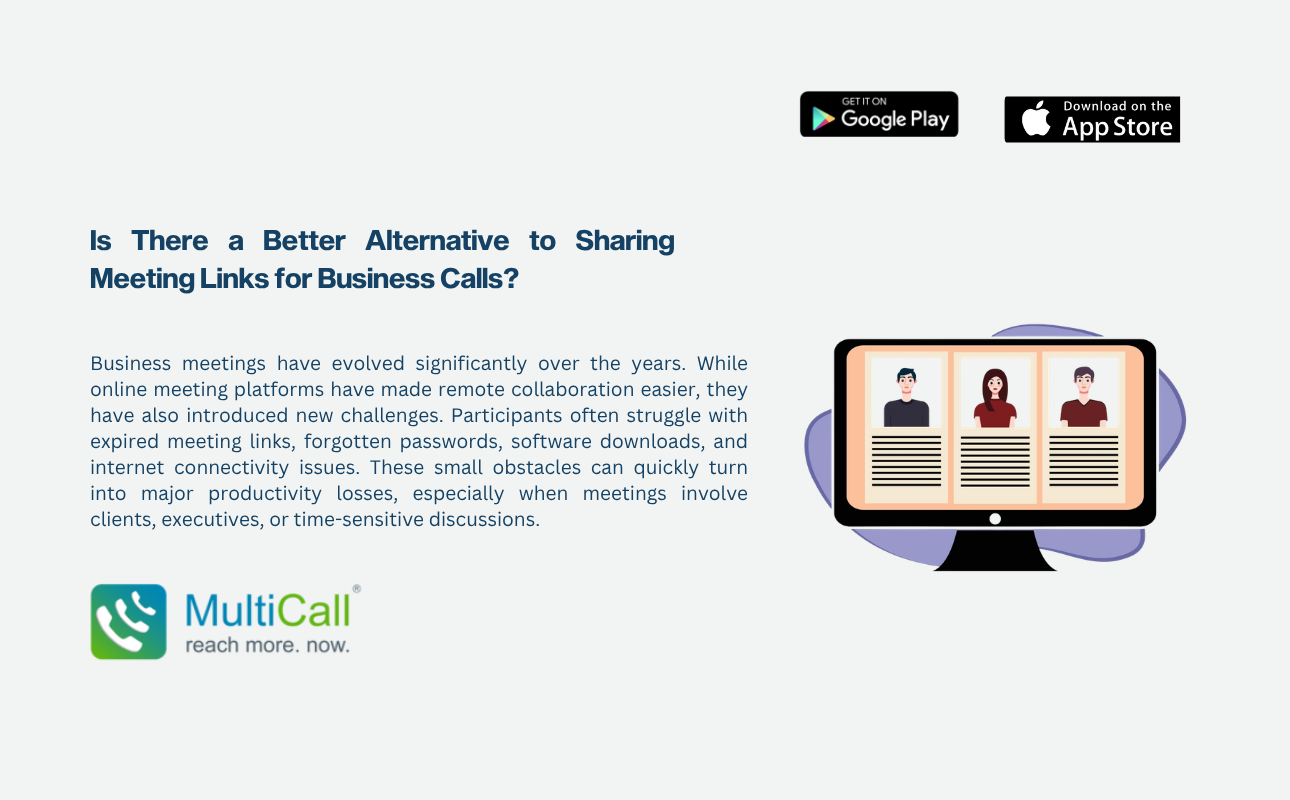
Business meetings have evolved significantly over the years. While online meeting platforms have made remote collaboration easier, they have also introduced new challenges. Participants often struggle with expired meeting links, forgotten passwords, software downloads, and internet connectivity issues. These small obstacles can quickly turn into major productivity losses, especially when meetings involve clients, executives, or time-sensitive discussions.

Read More »

How Do Enterprises Keep Large Teams Connected During Network Disruptions?

Business operations don’t stop when the internet slows down or becomes unavailable. Organizations still need to coordinate with employees, update customers, make operational decisions, and respond to unexpected situations. During network disruptions, communication becomes even more important because delays can lead to missed opportunities, reduced productivity, and operational challenges.

Read More »

Can You Host a Secure Conference Call Without Downloading an App?

Businesses rely on conference calls to connect employees, clients, and stakeholders regardless of their location. However, many virtual meetings begin with familiar frustrations—downloading an application, creating an account, updating software, or troubleshooting technical issues. These delays can waste valuable time, especially when discussions are urgent.

Read More »